
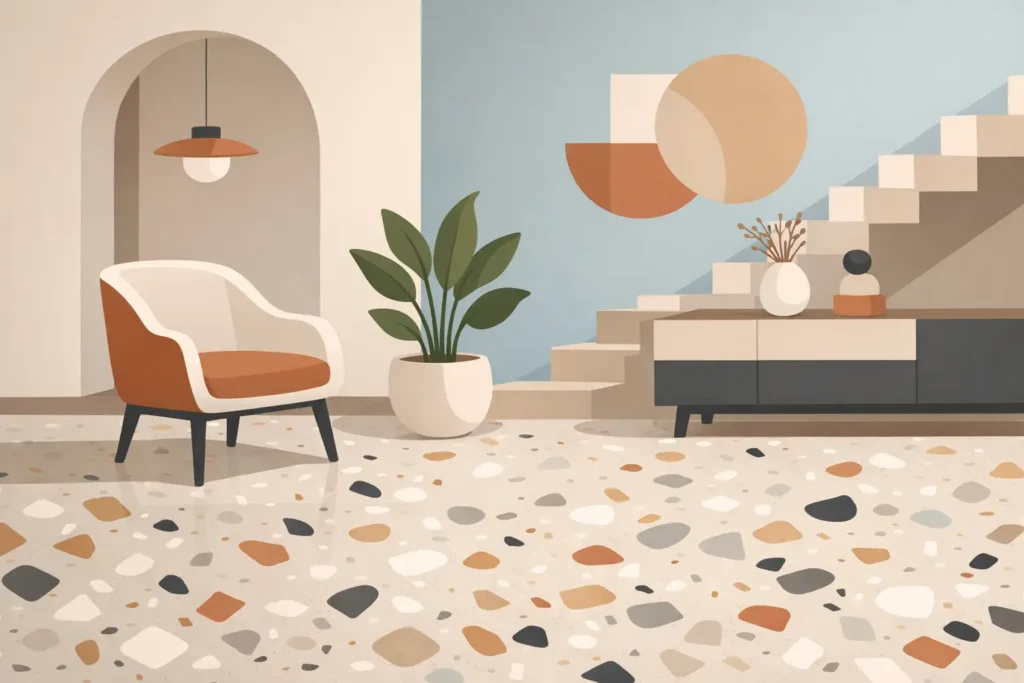
A floor can set the entire mood of a room. If the brief is clean lines, visual depth and a finish that feels considered rather than off-the-shelf, terrazzo resin overlay is one of the most compelling options available. It delivers the character of terrazzo through a smoother, more contemporary system – one that suits design-led homes as comfortably as it suits hardworking commercial interiors.
What makes a terrazzo resin overlay different?
Traditional terrazzo has real heritage, but it also comes with weight, installation complexity and a more involved build-up. A terrazzo resin overlay captures that speckled, architectural look in a resin-based surface applied over a suitable existing substrate. The result is a seamless finish with decorative aggregate or terrazzo-style chips suspended within the resin, then sealed for a refined final appearance.
That matters because the appeal is not purely visual. An overlay approach can reduce disruption compared with removing and replacing an entire floor, while still achieving a bespoke finish with real presence. For clients who want a surface that feels tailored to the space, this balance of artistry and practicality is often exactly the point.
The best projects start with intent. Some clients want something understated – soft neutrals with fine detailing that lift a kitchen or hallway without dominating it. Others want the floor to carry the room – bolder contrast, larger chips, stronger movement and a finish that becomes part of the interior architecture. A well-designed resin overlay can move across that spectrum beautifully.
Why terrazzo resin overlay appeals to design-conscious clients
There is a reason this finish has moved beyond purely commercial settings. It offers visual texture without grout lines, pattern without fuss, and durability without the industrial feel some hardwearing floors can bring.
In residential spaces, that often translates into calmer, more cohesive interiors. Kitchens benefit from the seamless look, especially in open-plan layouts where too many breaks in material can make the room feel busy. Hallways gain a surface that handles daily traffic while still making a strong first impression. Bathrooms and utility spaces benefit from a finish that feels elevated and easy to keep looking fresh.
In commercial settings, the attraction is slightly different but just as powerful. Retail units, studios, salons and customer-facing environments often need to look polished while standing up to daily wear. A terrazzo-inspired resin floor can support brand presentation without becoming precious. It reads as premium, but it is built for use.
There is also an emotional quality to this finish that people respond to. It feels intentional. Rather than selecting a standard floor covering from a catalogue, clients are shaping the character of a space through colour, scale, texture and sheen. That sense of authorship is a significant part of its appeal.
The design flexibility of terrazzo resin overlay
This is where the material really comes into its own. A terrazzo resin overlay is not one look. It is a design system.
Chip size changes the personality of the floor straight away. Fine chips create a more subtle, elegant field of detail. Larger chips feel more expressive and contemporary. Base colour matters just as much. A pale base can brighten a room and create a cleaner architectural backdrop, while deeper tones bring drama and sophistication.
Then there is finish level. A softer sheen can feel more restrained and organic. A glossier finish can sharpen the overall look and increase light reflection, which works particularly well in spaces with minimal detailing and strong geometry. The right choice depends on the room, the lighting and how the space is actually used.
This is also why sampling matters. A floor of this kind is experienced at scale, but the design decisions happen in detail. Looking at tones, chip blends and finish levels before installation gives clients confidence that the final result will sit properly with cabinetry, wall colours, joinery and lighting.
Performance matters as much as appearance
A beautiful floor still has to live well. That is especially true in homes with pets, children or high daily footfall, and in business environments where wear is constant and appearances count.
When correctly specified and installed, resin overlays offer a durable, easy-to-maintain surface with no grout joints to collect dirt and no separate tiles to loosen over time. That seamless quality is part of both the visual appeal and the practical advantage. Cleaning is simpler, and the floor tends to keep its crisp appearance with less effort than many traditional alternatives.
That said, the right expectations are important. No floor is completely immune to wear, and suitability depends on the environment. A decorative finish chosen for a quiet living space may not be specified in exactly the same way for a busy retail entrance or a garage. Slip resistance, chemical exposure, impact, UV conditions and maintenance habits all need to be considered from the outset.
This is where specialist guidance makes the difference between a surface that merely looks good on day one and one that continues to perform with confidence.
Where a terrazzo resin overlay works best
One of the strengths of this finish is its versatility. In homes, it works particularly well in kitchens, dining areas, hallways, bathrooms and garden rooms where continuity of surface helps spaces feel larger and more resolved. It can also be used to bring a more architectural identity to renovations where a standard floor choice would undersell the rest of the scheme.
In commercial settings, it suits boutiques, showrooms, reception areas, cafés, offices and studios that want a distinctive visual language without sacrificing resilience. It can even bridge the gap between decorative and practical requirements in mixed-use spaces where the floor needs to support both customer experience and day-to-day activity.
There are, however, situations where a different resin system may be more appropriate. Heavy industrial settings, for example, may require a specification driven less by decorative value and more by load-bearing performance, anti-slip requirements or chemical resistance. A design-led overlay can still play a role, but only if the technical brief supports it.
What the installation process involves
The elegance of the finished floor can make it look deceptively simple, but achieving that level of refinement depends on careful preparation. The condition of the existing substrate is critical. Any movement, contamination, moisture issues or weakness in the base needs to be identified before the decorative work begins.
Once the substrate is properly assessed and prepared, the overlay system is applied in controlled stages. Depending on the design and specification, this can include priming, levelling, the decorative resin layer and the final seal or topcoat. Curing times matter, and so does site environment. Temperature, humidity and programme planning all affect the end result.
Clients often ask whether resin means a quick installation. Sometimes it can be more efficient than a full floor replacement, but speed should never come at the expense of finish quality. The value lies in precision. A floor that appears effortless usually involves a great deal of discipline behind the scenes.
Is it worth choosing over tiles, polished concrete or vinyl?
It depends on what matters most to you. Tiles can offer pattern and durability, but grout lines inevitably change the visual rhythm of a room and create more cleaning points. Polished concrete has a strong architectural presence, yet it can feel colder and less flexible in design terms. Vinyl can be practical and cost-effective, but it rarely delivers the same sense of permanence or crafted finish.
A terrazzo resin overlay sits in an interesting middle ground. It can feel more bespoke than vinyl, more seamless than tile, and more design-flexible than concrete. It is not automatically the cheapest option, nor should it be approached as one. It is usually chosen by clients who care about the overall statement of the space and want a finish that supports that ambition every day.
For many, that is exactly the value. The floor stops being a background decision and becomes part of the architecture.
Choosing the right specialist for terrazzo resin overlay
Because this finish depends so heavily on both technical accuracy and aesthetic judgement, the installer matters enormously. You are not simply buying materials. You are commissioning a surface.
A strong specialist should be able to talk with equal confidence about design intent, substrate preparation, finish options and real-world performance. They should help you weigh visual preferences against practical demands, rather than pushing a one-size-fits-all solution. That is especially important with bespoke work, where the most successful result is often the one that feels quietly right rather than loudly fashionable.
At its best, this process is collaborative. You bring the vision for the space, and the installer translates that into a surface that is both beautiful and technically sound. That is where craftsmanship shows.
A terrazzo-inspired resin floor has a rare ability to make a room feel calmer, sharper and more complete all at once. If you are choosing finishes with the same care you would give to lighting, joinery or furniture, terrazzo resin overlay is not just a flooring option – it is a design decision worth making well.