
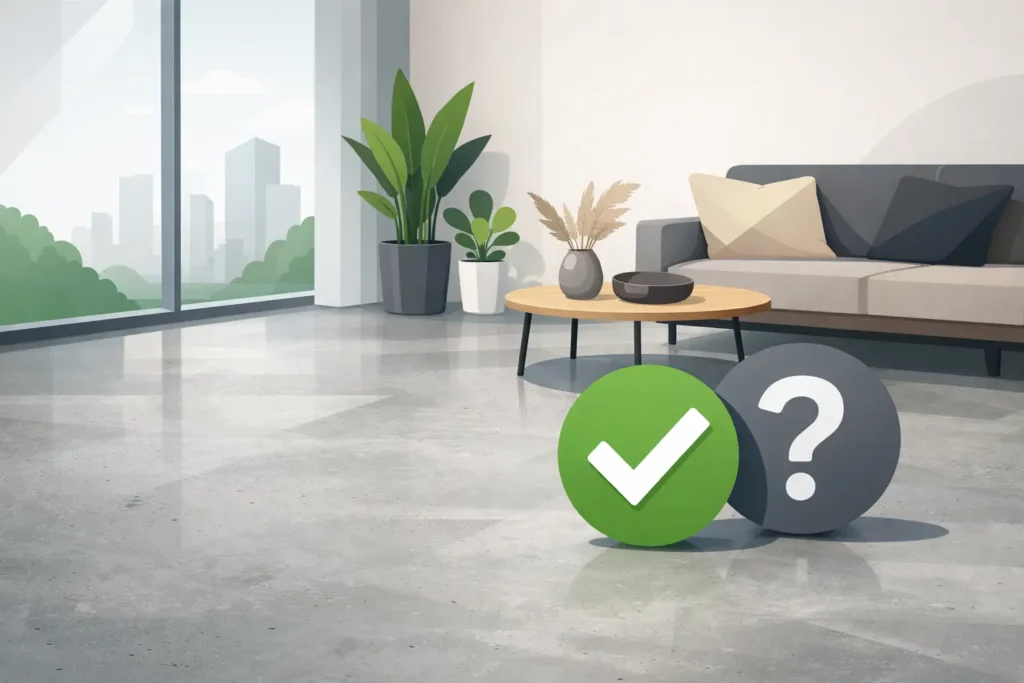
The appeal of a concrete effect resin floor is easy to understand the moment you walk into a space that gets it right. You get the calm, architectural look of poured concrete, but without the same level of weight, dust, cracking risk or visual harshness that can make real concrete feel cold and unforgiving. For homeowners and commercial clients alike, it offers something more refined – a surface with industrial character, finished with design intent.
This is not simply a practical floor in a fashionable shade of grey. A well-crafted concrete effect resin floor sits in that rare middle ground between performance and atmosphere. It can anchor an open-plan kitchen, bring discipline to a retail interior, or give a bathroom a cleaner, more sculpted finish. The result is seamless, contemporary and quietly striking.
What a concrete effect resin floor actually is
At its best, this finish is designed to capture the softened movement, tonal variation and understated texture associated with concrete, while using resin systems to create a more controlled and versatile surface. It is not trying to mimic every imperfection of structural concrete slab. The goal is usually more architectural than literal.
That distinction matters. Real concrete has beauty, but it also has limits. It can crack, stain and produce a look that feels rougher than many interiors can comfortably carry. Resin allows a greater degree of design control. The tone can be cooler or warmer. The movement can be subtle and cloud-like or more pronounced and expressive. The final sheen can be matte, satin or slightly polished depending on the setting.
For design-conscious interiors, this control is often the difference between a floor that merely follows a trend and one that genuinely belongs in the scheme.
Why this finish works so well in modern interiors
A concrete-effect surface has a grounding quality. It gives a room presence without demanding attention in the way bold tiles, timber patterns or high-contrast stone often do. That makes it particularly effective in spaces where the architecture, joinery or furniture should remain the main story.
In kitchens and dining areas, it creates visual continuity and helps larger layouts feel calmer. In hallways, it can make compact spaces read as cleaner and more expansive. In bathrooms, the seamless finish removes the visual interruption of grout lines, which instantly feels more considered. Commercially, it offers a polished backdrop that supports branding rather than competing with it.
There is also a practical elegance to the material. Because the floor is seamless, it tends to look more resolved than many traditional coverings. That uninterrupted finish gives the room a sense of flow, which is especially valuable in contemporary refurbishments and extensions where clients want spaces to feel open and cohesive.
Concrete effect resin floor vs real concrete
The comparison comes up often, and fairly so. If you love the concrete look, why not install concrete?
Sometimes that is the right route, especially in new-build settings where the slab is already part of the architectural language and the client accepts the natural variation that comes with it. But in many residential and retrofit projects, resin is the more practical answer.
A concrete effect resin floor is typically lighter in build-up, more adaptable to existing substrates and easier to integrate into finished interiors. It avoids some of the disruption associated with laying or exposing concrete, and it can offer a more forgiving finish underfoot. It is also generally easier to clean and maintain, especially in kitchens, bathrooms and busy commercial environments.
That said, it depends on the brief. If a client wants the raw honesty of true concrete, including its marks and movement, resin may feel too refined. If they want the mood of concrete with a more elevated and controlled finish, resin is often the better fit.
Where it performs best
This type of floor suits far more than minimalist living rooms. It works particularly well in spaces where appearance and endurance need to sit side by side.
In residential settings, it is a strong choice for kitchens, utility rooms, hallways, bathrooms and open-plan ground floors. These are spaces that see regular use, occasional spills and plenty of footfall, so a surface that is easy to live with matters as much as appearance. The seamless finish also helps smaller homes feel less visually broken up.
In commercial interiors, the value is just as clear. Retail units benefit from a surface that looks sharp without constant upkeep. Studios, showrooms and hospitality settings often use concrete-effect resin to create a contemporary canvas that feels premium but not overworked. In harder-working environments such as garages or back-of-house spaces, the specification may need to prioritise slip resistance and durability over decorative nuance, but the look can still be carried through.
The design details that make the difference
Not all concrete-look floors are equal. The quality of the finish depends heavily on tone selection, movement within the surface and the way the resin is applied. A flat grey floor with no depth can feel lifeless. Too much variation, on the other hand, can start to look theatrical rather than architectural.
The most successful schemes usually rely on restraint. Soft layering, balanced tonal shifts and a finish level that suits the room create a more convincing result. Warmer greys can soften a family home, while cooler mineral tones often suit sharper commercial spaces. The surrounding materials matter too. Oak joinery, black steel, brushed brass, plaster walls and stone details all interact differently with the floor.
This is where sample-led design becomes valuable. Looking at one swatch in isolation rarely tells the full story. Light changes the floor. Adjacent finishes change it too. A concrete effect resin floor should feel integrated into the wider palette, not chosen as an afterthought.
Practical expectations before you choose it
Resin flooring is durable, but premium finishes still need the right expectations. A decorative concrete-effect floor is not a licence to ignore wear altogether. Like any high-quality surface, it performs best when the specification matches the environment.
For example, a family kitchen needs resistance to spills, regular cleaning and daily traffic. A garage may need greater impact resistance and a different texture underfoot. A bathroom requires close attention to moisture, detailing and slip considerations. The aesthetic can remain consistent across these spaces, but the build-up and protective topcoat may need to change.
Preparation is equally important. The final look is only as good as the substrate beneath it and the care taken during installation. Moisture levels, cracks, movement and existing floor condition all need proper assessment. This is not the kind of finish that benefits from shortcuts. The craftsmanship behind it is what gives the floor its clarity and longevity.
Maintenance and day-to-day living
One reason clients are drawn to this finish is that it supports a cleaner, simpler way of living. With no grout lines and no awkward joins, day-to-day maintenance is straightforward. Dust, dirt and spills are easier to manage than on many textured or tiled surfaces.
That does not mean maintenance disappears altogether. Using appropriate cleaning products, avoiding unnecessary abrasion and protecting high-wear areas where possible will preserve the finish for longer. In commercial spaces, a planned maintenance routine is sensible. In homes, it is mostly about treating the floor as a crafted surface rather than a disposable one.
The good news is that this kind of care tends to be minimal compared with the visual payoff. The floor keeps its composure with relatively little effort, which is a major part of its appeal.
Is it a trend or a lasting design choice?
Concrete-look interiors have been around long enough to prove they are more than a passing moment. What changes is the way they are interpreted. The harsher industrial schemes of years past have given way to something warmer, quieter and more sophisticated. That shift suits resin particularly well.
A concrete effect resin floor has longevity because it is versatile. It can feel pared-back and minimal, or rich and layered depending on the materials around it. It works in contemporary architecture, but also in period homes where a clean contrast brings old features into sharper focus. When handled well, it does not date quickly because it is built around texture, tone and proportion rather than novelty.
For clients who want a surface that feels modern without being restless, it remains a strong choice. Companies such as Resinize have helped shape that shift by treating resin as a design finish first and a flooring product second.
Choosing this kind of floor is really about deciding how you want a room to feel. If you want warmth through timber grain or decorative pattern, there are other routes. But if you want a space to feel calm, architectural and confidently resolved, a concrete-effect resin finish has a rare ability to do that while standing up to real life. The best results come when practicality and artistry are given equal weight.