
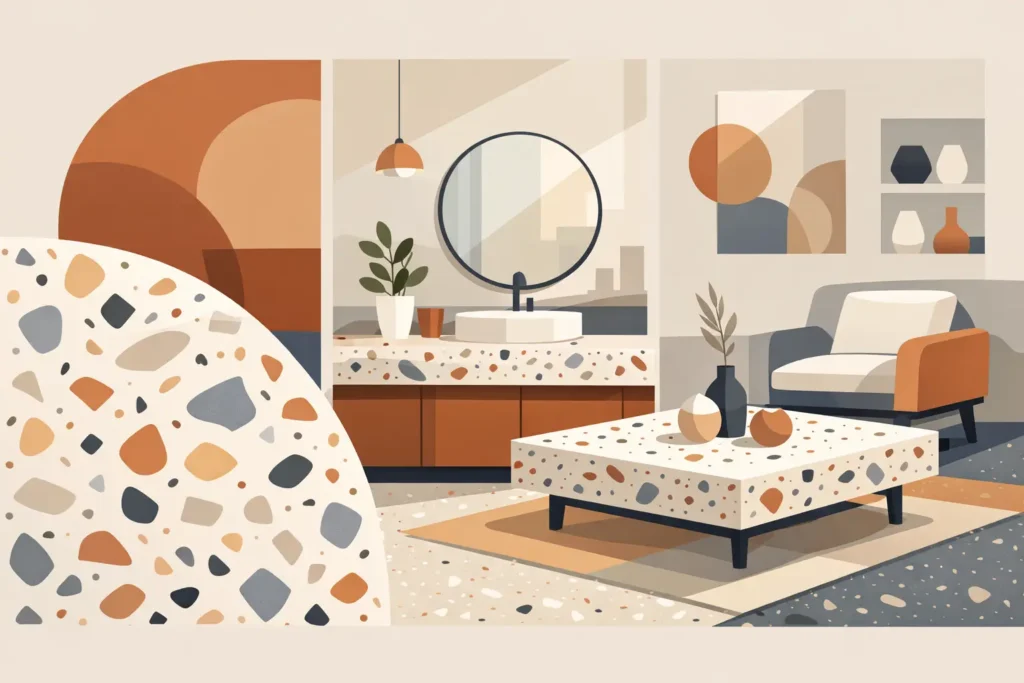
Terrazzo has never really gone away – it has simply moved from grand civic buildings into kitchens, bathrooms, retail spaces and design-led commercial interiors. For anyone planning a surface upgrade, its appeal is easy to understand: character, movement, durability and a finish that feels both architectural and expressive.
What makes terrazzo so enduring is its balance of artistry and practicality. It can be bold or restrained, playful or refined, and it has the rare ability to feel luxurious without appearing overly polished. That matters when you want a surface that does more than cover a floor – it shapes the atmosphere of the entire room.
What terrazzo actually is
Traditional terrazzo is made by embedding chips of marble, quartz, granite or glass into a binder, then grinding and polishing the surface to reveal the aggregate. The result is a dense, decorative finish with a distinctive speckled appearance. No two installations look exactly the same, which is part of the charm.
Historically, terrazzo was associated with high-traffic public settings because it wears exceptionally well. Today, it is equally at home in residential interiors, particularly where clean lines and statement materials are part of the brief. Hallways, open-plan kitchen spaces, bathrooms and feature walls all suit it well.
Why terrazzo still feels current
Design trends change quickly, but terrazzo keeps its place because it adapts. A fine aggregate in muted tones can feel calm and contemporary. Larger chips with stronger contrast create more visual drama. The same material language can work in a minimalist extension, a boutique retail unit or a hospitality space that needs personality without sacrificing resilience.
That flexibility is one reason designers return to it. Another is that terrazzo works beautifully with other modern finishes. Timber softens it. Black detailing sharpens it. Concrete-effect surfaces, brushed metals and warm neutrals all sit comfortably alongside it.
Where terrazzo works best
Terrazzo performs particularly well in areas where appearance and durability need to work together. In a family home, that might mean a kitchen floor that handles daily traffic while still feeling elevated. In a commercial setting, it might be a reception area or retail interior where first impressions count.
Bathrooms are another strong fit, especially when a seamless, curated look is the goal. Used on floors or walls, terrazzo introduces pattern without relying on repeating tile layouts. It can make compact spaces feel more considered and larger rooms feel more composed.
There are, however, practical considerations. Traditional terrazzo can be heavier, more labour-intensive to install and more expensive than many clients initially expect. In renovation projects, substrate condition, build-up height and programme timing all need careful thought.
Terrazzo and modern resin alternatives
For many contemporary projects, terrazzo-inspired resin systems offer a compelling alternative. They capture the visual interest of terrazzo while introducing the benefits of a seamless resin finish – lower maintenance, design flexibility and a cleaner, more unified look.
This is where the conversation becomes less about copying a classic material and more about reinterpreting it. A terrazzo-style resin overlay can be crafted to suit the proportions, colours and mood of the space, whether that means soft mineral tones for a calm interior or higher contrast for a stronger architectural statement.
For homeowners and commercial clients alike, that level of design control is valuable. You are not choosing from a narrow, standardised finish. You are shaping a surface that aligns with the wider scheme, lighting and intended use. That is a very different proposition from off-the-shelf flooring.
What to think about before choosing terrazzo
The right finish depends on more than appearance. Budget, installation method, maintenance expectations and the existing space all matter. Traditional terrazzo delivers authenticity and longevity, but it is not always the most practical route for every property or timeline.
If you want the terrazzo aesthetic with a more streamlined installation process, resin-based systems can make more sense. They are especially attractive where seamlessness is a priority or where clients want a decorative surface without the complexity of a full traditional build-up.
Colour selection also deserves more attention than people often give it. Terrazzo can dominate a room if the palette is too busy, or disappear if the contrast is too subtle. The best results come from treating it as part of the architectural scheme, not a last-minute surface decision.
Is terrazzo right for your project?
If you want a finish with depth, individuality and proven staying power, terrazzo remains one of the most compelling choices available. It brings texture and rhythm to a space in a way that flat, uniform materials rarely can. More importantly, it offers substance as well as style.
For some projects, traditional terrazzo will be the perfect fit. For others, a bespoke terrazzo-inspired resin surface may offer the same visual confidence with greater flexibility. At Resinize, that design-led approach is exactly what turns a functional surface into a defining feature – one that feels crafted, considered and built to last.