
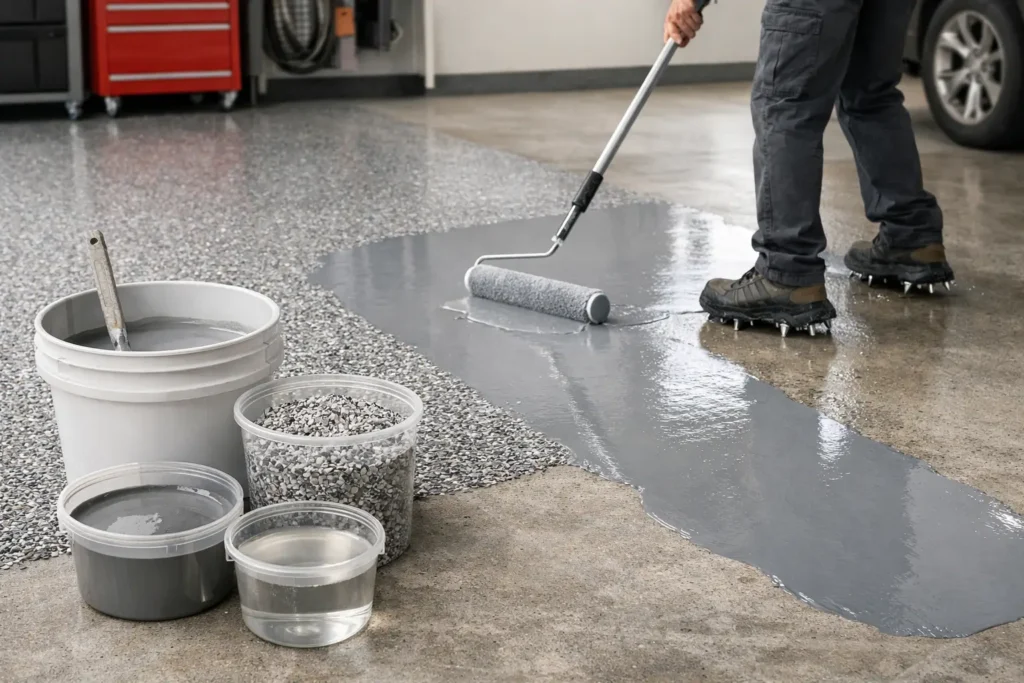
A garage usually earns its keep the hard way. It takes muddy tyres, dropped tools, oil marks, foot traffic, stored bikes, garden equipment and the general wear that comes with being the most overlooked room in the property. That is why garage floor coating systems matter more than many people expect. The right finish does not simply tidy the space up. It changes how the garage looks, how it performs and how confidently you can use it every day.
For some homeowners, the goal is a cleaner, brighter backdrop for a well-organised utility space or home gym. For others, it is about creating a polished setting for a prized vehicle, workshop or multifunctional room that feels considered rather than forgotten. In commercial settings, the priorities may lean more heavily towards durability, slip resistance and ease of maintenance. Either way, the coating system has to do more than sit on the surface. It has to work with the space, the traffic and the look you want to achieve.
What garage floor coating systems actually include
A coating system is not just the visible top layer. It is a build-up of compatible materials designed to bond to the substrate, protect the floor and deliver a specific finish. That usually starts with preparation, because even the most refined resin finish will only perform as well as the concrete beneath it allows.
In practical terms, garage floor coating systems often include mechanical preparation of the slab, repairs to cracks or damaged areas, a primer, one or more body coats and a sealed topcoat. Depending on the brief, there may also be decorative elements such as flake, quartz texture or metallic effects. The exact build depends on how the garage is used and how design-led the outcome needs to be.
This is where many off-the-shelf solutions fall short. A single tin sold as a quick weekend fix may improve appearance for a while, but it rarely offers the depth, adhesion or longevity of a professionally specified system. If the floor has moisture issues, weak surface laitance or previous contamination, a cosmetic coating alone will struggle.
Why the substrate matters as much as the finish
The floor you see is only half the story. Concrete moves, absorbs moisture and often carries years of hidden wear. A beautiful coating laid over a poorly prepared base can blister, peel or wear unevenly, however premium the product itself may be.
That is why proper assessment comes first. A newer slab may still contain residual moisture. An older garage may have oil penetration, surface dusting or minor settlement cracks. None of these problems automatically rule out resin-based systems, but they do influence what is appropriate. Sometimes the best option is a heavy-duty epoxy build. In other cases, a more flexible or breathable approach may be worth considering.
The design ambition also plays a part. If you want a crisp, contemporary finish with a refined sheen, the underlying floor needs to be level and stable enough to support that standard. Decorative coatings reveal the quality of workmanship. They do not hide it.
Types of garage floor coating systems
Epoxy systems
Epoxy remains one of the most popular choices for garages because it offers strong adhesion, excellent wear resistance and a clean, substantial finish. It suits domestic garages particularly well when clients want a durable, easy-to-clean surface with a more elevated appearance than bare concrete.
It is also versatile. A plain solid-colour epoxy can create a sharp, minimalist look. A flake system softens the visual impact of dust and everyday debris while adding texture and interest. For garages that need to feel more like an extension of the home than a service area, epoxy gives plenty of creative scope.
The trade-off is that not every epoxy system behaves the same way. Lower-grade products can yellow, scratch more visibly or struggle in demanding conditions. Professional specification matters.
Polyurethane topcoats
Polyurethane is often used as a topcoat within garage floor coating systems rather than as a standalone answer. Its value lies in added UV stability, scratch resistance and finish refinement. If a garage gets regular daylight exposure or the visual brief is especially important, this can make a meaningful difference.
It also helps tailor the final appearance. Matt, satin and gloss options each create a different mood. A gloss finish may feel sleek and dramatic, while satin often gives a more understated architectural look.
Decorative resin finishes
Some garages deserve more than pure utility. If the space is part workshop, part showroom, or integrated into a wider renovation, decorative resin systems can turn the floor into a design feature. Metallic effects, terrazzo-inspired visuals and seamless contemporary finishes are all possible where the brief calls for something distinctive.
This is not the right route for every garage. If the space sees heavy mechanical abuse, practicality may outweigh visual expression. But where appearance matters and the usage is compatible, decorative resin can lift the entire room from functional to considered.
Choosing the right system for the way you use the garage
The best choice is rarely about the product alone. It is about the relationship between use, maintenance and aesthetic ambition.
If the garage is mainly for parking and storage, the priorities are usually stain resistance, tyre tolerance and easy cleaning. A well-built epoxy system is often a strong fit here. If it doubles as a home gym, studio or hobby room, comfort underfoot, brightness and finish character may become more important. In those cases, the visual and tactile qualities of the topcoat deserve more attention.
For commercial garages, workshops or heavier-duty environments, the coating needs to withstand more aggressive wear. That might include frequent turning tyres, equipment loads, spillages or stricter health and safety requirements. A heavier build-up with specific anti-slip properties may be necessary, even if that means accepting a slightly more industrial appearance.
The key is to be honest about how the floor will really be used. Many people describe their ideal garage as pristine, but use it like a working utility zone. A good specification respects both aspiration and reality.
Appearance is not a luxury in a garage
There is a tendency to treat design as optional in hardworking spaces. In practice, a garage that looks refined is often used better and maintained better. Clean lines, balanced colour and a seamless finish can make the room feel brighter, larger and more intentional.
Lighter tones help reflect light and improve usability. Mid-grey remains a favourite because it feels contemporary without being stark. Charcoal can look striking, though it tends to show dust more readily. Decorative flake blends are useful when clients want a practical surface with visual depth. They soften minor marks and bring texture without making the space feel busy.
For design-conscious homeowners, this is where the project becomes more interesting. A garage floor does not have to imitate an industrial unit. It can align with the rest of the property and carry the same level of visual care as a kitchen, utility or garden room.
Maintenance and long-term value
One of the main appeals of resin-based coatings is that they simplify upkeep. A seamless floor gives dirt fewer places to settle, and a properly sealed surface is far easier to wipe clean than raw concrete. That said, low maintenance does not mean no maintenance.
Grit should be swept away regularly to reduce surface abrasion. Spillages are best cleaned promptly, especially oils and chemicals. The occasional wash with suitable products will keep the finish looking sharper for longer. In most cases, sensible day-to-day care does more for longevity than any miracle cleaner ever will.
Value also depends on getting the installation right first time. Preparation, detailing and material compatibility are where professional workmanship shows. A garage floor coating is one of those upgrades that feels simple once finished, but the quality lies in everything you no longer have to think about: dusting concrete, stubborn stains, patchy paint or a floor that always looks tired.
When a cheaper option costs more
Budget matters, but garages are notorious for attracting false economy. Quick paint kits can seem appealing, especially when compared with a fully installed resin system. The issue is not that every low-cost option fails instantly. It is that many do not last under real use, particularly where hot tyres, poor preparation or damp substrates are involved.
Once peeling starts, the floor often needs stripping back before it can be redone properly. That turns a modest saving into a larger disruption and a larger bill. For clients who care about finish quality, longevity and a result that genuinely transforms the space, it usually makes more sense to invest in a system designed around the condition of the floor rather than the lowest upfront price.
For homes and commercial properties across Essex and London, that often means treating the garage as part of the wider architecture rather than a forgotten box at the front of the house. When the floor is crafted with the same attention as the rest of the interior, the whole space feels more complete.
A well-chosen garage floor is not just protection for concrete. It is a quiet upgrade in how the space works, how it looks and how much pride it gives back every time the door opens.