
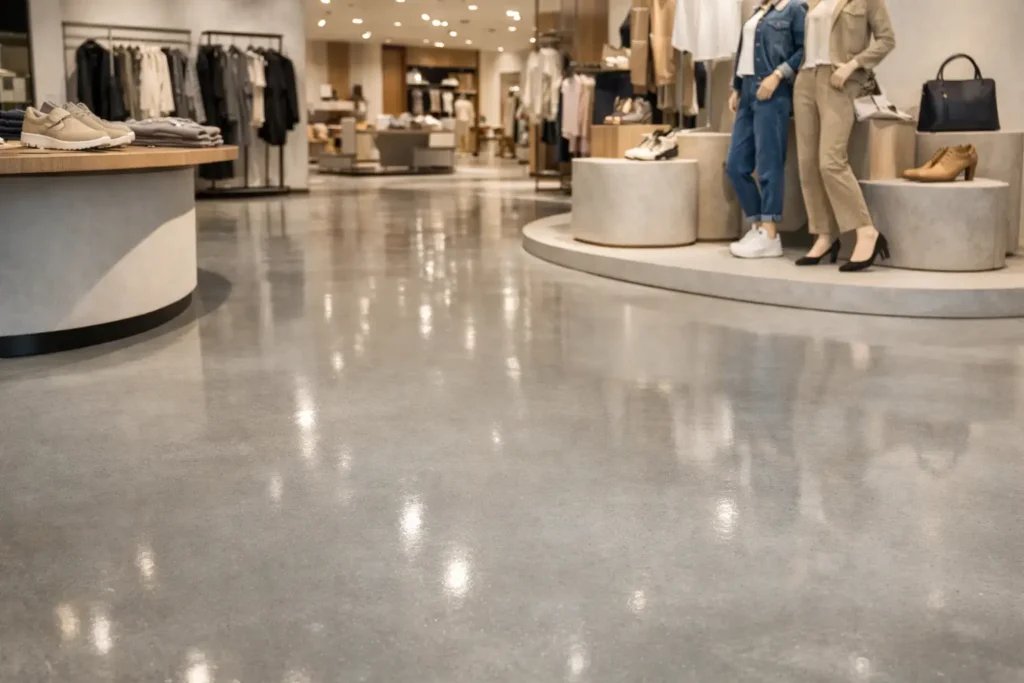
The floor is one of the first things customers register when they step into a shop, even if they never consciously think about it. It sets the tone, affects how light moves through the space, and quietly takes the punishment of footfall, trolleys, spills and constant cleaning. That is why retail resin flooring has become such a compelling choice for brands that want more from a surface than basic durability.
In a retail setting, flooring has to perform on two levels at once. It needs to support the practical rhythm of the business, but it also needs to contribute to the atmosphere customers experience. A surface that looks tired, scuffed or patchy can flatten the feel of an otherwise well-designed interior. A resin finish, by contrast, offers the chance to create something cleaner, more deliberate and far more design-led.
Why retail resin flooring suits modern shop interiors
Retail spaces are under pressure to do more than simply display products. They need to express brand identity, guide movement and feel polished from opening to close. Flooring plays a bigger role in that than many retailers expect.
Retail resin flooring works well because it is seamless, hard-wearing and visually flexible. The absence of grout lines or joints creates a calmer, more refined look, which is especially valuable in spaces where every detail contributes to the customer experience. It can be understated and architectural, or it can become part of the visual signature of the store through tone, texture and finish.
There is also a practical advantage to that clean, uninterrupted surface. In busy retail units, dirt tends to collect in joins, edges and weak points. Resin reduces those problem areas, making the floor easier to keep looking fresh. For shops where presentation matters every hour of the day, that makes a noticeable difference.
Design matters as much as durability
One of the most common misconceptions about resin is that it belongs only in industrial environments. That may be where many people first encountered it, but retail has very different demands. Here, performance still matters, but appearance carries equal weight.
A well-specified resin floor can be tailored to suit a luxury boutique, a fashion showroom, a salon-style retail concept, or a high-traffic convenience space. Matte finishes can feel soft and contemporary. Slightly reflective surfaces can lift light levels and make a compact unit feel more open. Decorative systems can introduce movement, depth or a terrazzo-inspired look without the maintenance issues that often come with more traditional materials.
This is where resin starts to stand apart from standard commercial flooring. It does not have to look purely functional. It can be crafted to complement joinery, display fixtures and brand colours, giving the space a more considered and cohesive finish.
Choosing the right finish for the brand
Not every retail environment needs the same visual language. A high-end fashion retailer may want something minimal and elegant, allowing the products to take centre stage. A lifestyle store may prefer a finish with more texture and character. A beauty-led retail space might benefit from a floor that reflects light gently and supports a clean, premium atmosphere.
The best result usually comes from matching the resin finish to the wider interior concept, rather than treating the floor as an afterthought. Colour temperature, aggregate choice, sheen level and pattern all affect how the space reads. Small decisions at sample stage often shape the final impression more than people expect.
The performance side of retail resin flooring
However design-led the project may be, a retail floor still needs to cope with real life. Constant pedestrian traffic, moved shelving, stock deliveries, wheeled equipment and regular cleaning all put pressure on the surface. A flooring system that looks beautiful on day one but struggles after a few months is not a good investment.
Retail resin flooring earns its place because it combines visual control with resilience. When installed correctly and specified for the use of the unit, it offers strong wear resistance and good longevity. It can also be finished with slip-resistant properties where needed, which is particularly useful in entrance zones, service areas or shops where wet conditions are likely.
Maintenance is another part of the appeal. Resin floors are generally straightforward to clean and do not demand the same attention as surfaces with porous joints or delicate finishes. For retail teams, that means less time fighting grime build-up and more confidence that the shop floor can be kept presentable without specialist routines.
That said, there is no single resin system that suits every store. The right build depends on the size of the unit, the condition of the substrate, the expected traffic and the visual brief. A showroom with light footfall has different requirements from a busy convenience store or a retail unit with stockroom access and rolling loads. Good design always needs good technical judgement behind it.
Where resin works especially well in retail
Some retail settings benefit more obviously from resin than others. Shops that rely on strong visual merchandising tend to appreciate the uninterrupted look, because it allows shelving, furniture and product displays to stand out cleanly. Spaces with a contemporary architectural style also suit resin naturally, particularly where minimal lines and cohesive finishes are part of the concept.
It can also be a smart option for mixed-use retail interiors where public-facing and back-of-house areas need to feel connected. Rather than shifting between several floor types, a resin system can create consistency while still being adapted to different zones. That helps the whole fit-out feel more intentional.
For retailers updating older units, resin overlays can sometimes offer a way to transform the appearance of a floor without introducing the visual heaviness of many traditional coverings. That depends on the condition of the existing base, of course, but when the substrate allows, the change can be dramatic.
Trade-offs worth knowing before you specify
Resin is not a magic answer to every flooring brief. If the substrate is poor, preparation becomes critical. If installation is rushed, the final finish will show it. And because resin is a crafted system rather than an off-the-shelf sheet product, the quality of application matters enormously.
There is also the question of timing. Retail fit-outs often work to demanding schedules, and resin systems need the correct preparation, curing and finishing windows. Trying to compress those stages can compromise the result. For businesses planning a refurbishment, that usually means discussing flooring early rather than leaving it to the final week.
Cost is another factor. Resin may sit above basic commercial flooring in upfront spend, especially where the design is bespoke or the preparation is extensive. But that higher initial investment often reflects a very different outcome – both in visual quality and in how well the floor stands up over time. For brands that care about presentation, the value is not only in lifespan but in the experience the space creates every day.
What a good retail resin flooring project looks like
The strongest projects begin with a clear idea of what the space needs to achieve. That includes practical questions such as expected traffic and cleaning demands, but it should also include the atmosphere the retailer wants customers to feel. Energetic, calm, luxurious, pared-back, bold – these are design decisions, and the floor supports them all.
From there, sampling becomes essential. Resin is a tactile, visual material. Seeing tone, texture and sheen in person gives far more confidence than relying on a general description. It also helps retailers understand subtle differences that can completely change the mood of a space.
Experienced installers will guide the process with that balance of creativity and technical precision. The substrate needs to be assessed properly, the system needs to be matched to use, and the finish needs to be delivered with consistency. In premium retail, those details matter. They are often what separates a floor that simply covers the area from one that genuinely elevates the interior.
For design-conscious businesses in places like Essex and London, that blend of performance and aesthetic control is often the reason resin stands out. It answers the commercial brief without flattening the character of the space.
A well-made shop floor should do more than survive the day. It should sharpen the whole environment, support the brand and keep giving the space that polished first impression, long after the opening week has passed.