
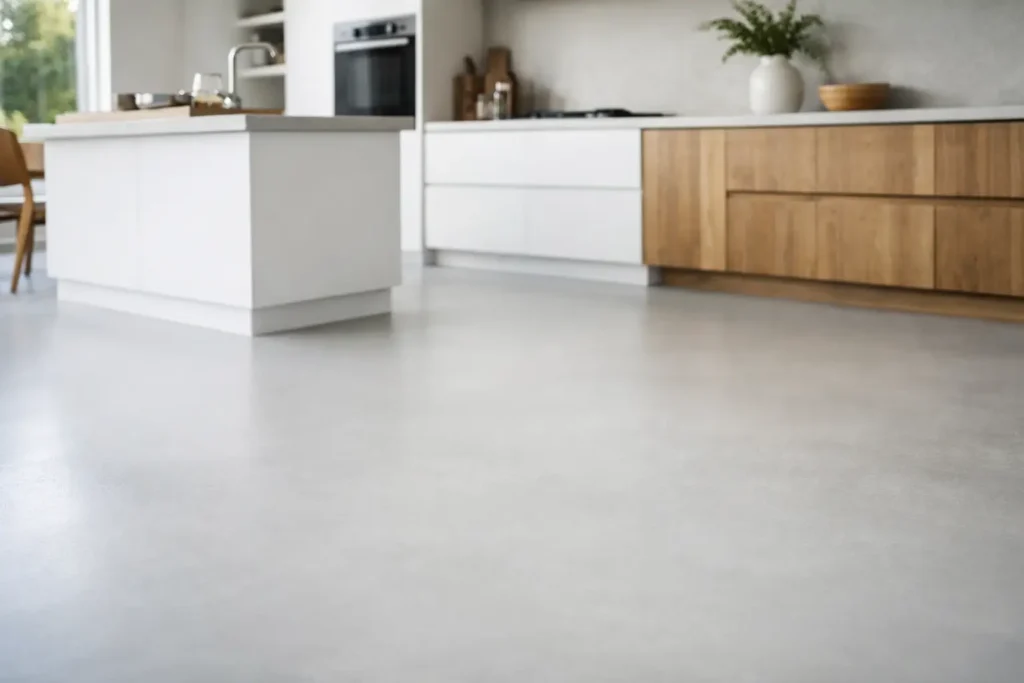
A dropped pan, a splash of oil, chairs scraping back from the island – the kitchen floor takes more punishment than almost any other surface in the home. That is exactly why a seamless kitchen floor finish has become such a strong choice for design-led renovations. It offers the clean visual line people want in contemporary spaces, but its appeal runs deeper than looks alone.
When the floor runs wall to wall without grout joints, bevels or pattern interruptions, the whole room feels calmer and more considered. Sightlines lengthen. Light moves more evenly. In open-plan homes especially, the floor stops behaving like a practical afterthought and starts acting as part of the architecture. The result can be striking, but the right finish still depends on how you use your kitchen, what aesthetic you want to create, and how much wear the space sees every day.
Why a seamless kitchen floor finish changes the room
Most people first respond to the visual effect. A continuous floor makes cabinetry look sharper, islands appear more sculptural, and compact kitchens feel less busy. If you have invested in joinery, lighting and worktops, it makes sense to choose a floor that supports that level of detail rather than competing with it.
There is also a practical advantage to removing joins and grout lines. Traditional tiled floors often collect dirt in the very places that are hardest to keep looking fresh. In a kitchen, where crumbs, spills and regular foot traffic are simply part of daily life, that can become tiring rather quickly. A continuous resin surface is easier to wipe down and easier to keep looking polished.
That said, appearance should never be separated from performance. A beautiful floor that marks too easily or feels unsuitable underfoot is a poor design decision, however good it looks on installation day. The best projects balance visual simplicity with the realities of cooking, cleaning and living.
What makes resin such a strong fit for kitchens
Resin has moved well beyond industrial associations. In the right hands, it can deliver a refined, architectural finish with real depth of tone and a highly tailored look. For kitchens, that balance of beauty and resilience is what makes it so compelling.
A resin floor can be created in a broad range of colours and effects, from soft mineral tones and concrete-style surfaces to bolder statement finishes with more movement and character. That flexibility matters because kitchens are rarely generic spaces now. Some homeowners want a muted backdrop that lets timber joinery and stone worktops lead. Others want the floor to carry the design and give the room its identity.
Beyond appearance, resin performs well in spaces where spills, heat changes and daily traffic are constant factors. A properly installed system can be highly durable and comfortable to maintain. Because the finish is laid as a continuous surface, it creates a cleaner, more cohesive result than many conventional flooring materials.
The caveat is that specification and installation matter enormously. Not every resin product is right for every kitchen, and not every subfloor is ready to receive it without preparation. A design-led surface still relies on technical discipline underneath.
The design freedom people often overlook
One of the biggest advantages of resin is not simply that it looks smooth. It is that it can be crafted to suit the mood of the room. A satin finish can soften a kitchen and feel understated. A more reflective finish can increase brightness and sharpen the contemporary look. Decorative effects can add subtle variation so the floor feels rich rather than flat.
This is where bespoke work stands apart from off-the-shelf flooring. The finish can be developed around cabinetry colour, wall tones, lighting conditions and the wider interior palette. In open-plan spaces, that level of control is especially useful because the kitchen floor often needs to relate beautifully to dining and living areas as well.
Where it works brilliantly, and where it depends
A seamless kitchen floor finish is particularly effective in modern extensions, open-plan renovations and high-spec refurbishments where continuity is part of the design language. It suits spaces with underfloor heating, minimal detailing and a preference for calm, uncluttered materials.
It can also work well in busy family kitchens because maintenance is straightforward and the surface can be specified for durability. For commercial kitchens or hospitality spaces, the conversation shifts slightly. Performance requirements may be stricter, with greater focus on slip resistance, chemical exposure and heavier wear. In those settings, the right resin system can still be an excellent solution, but the specification needs to reflect operational demands rather than domestic aesthetics alone.
There are, however, situations where choices need more thought. If your property has significant substrate movement, historic unevenness or moisture issues, preparation becomes more involved. If you want a heavily textured, traditional farmhouse style, a sleek continuous floor may feel visually out of step with the rest of the room. And if you are comparing purely on initial cost, resin may not be the cheapest option against basic vinyl or standard tile.
That does not make it poor value. It simply means it should be chosen for the right reasons – finish quality, longevity, ease of maintenance and design impact – rather than as a budget shortcut.
Choosing the right look for a kitchen that lasts
A floor should still feel right five years after installation, not only in the sample stage. That is why colour and finish selection deserve a slower, more considered approach than many people expect.
Mid-toned neutrals tend to age well because they soften dust, minor marks and everyday debris between cleans. Very dark floors can look dramatic, especially with pale cabinetry, but may show flour, pet hair and light dust more readily. Very light floors can feel airy and sophisticated, though the exact shade needs to suit the kitchen’s natural light and the warmth of surrounding materials.
Texture plays a role too. An ultra-flat, highly reflective finish can look sharp in a showroom-style setting, but some clients prefer a softer sheen that feels more grounded and forgiving in everyday use. In kitchens, the best choice is often the one that balances elegance with a lived-in practicality.
Thinking beyond the floor alone
The most successful kitchen floors are designed in relationship with everything around them. The floor should support the island, enhance the cabinetry and connect naturally with thresholds, skirting details and adjacent rooms. If the space opens into a dining area or hallway, consistency matters. A continuous resin finish can be especially effective here because it allows the home to feel composed rather than chopped into zones.
This is often where specialist guidance adds real value. Looking at individual samples is useful, but seeing how a finish behaves within the whole scheme is what leads to confident decisions.
Maintenance without the fuss
No floor is truly maintenance-free, and anyone promising that is overselling. The real advantage of resin is that maintenance is simpler and more predictable than with many jointed surfaces.
For most domestic kitchens, regular sweeping and gentle mopping are enough to keep the floor looking smart. Because there are no grout lines to trap dirt, cleaning tends to be quicker and more satisfying. Spills should still be dealt with promptly, especially strongly coloured substances, but day-to-day upkeep is refreshingly straightforward.
Long-term care depends on the exact system used and the wear the room receives. Some floors may benefit from periodic refreshing to maintain their appearance, particularly in very busy spaces. That is not a flaw. It is simply part of treating a design finish with the same respect you would give quality joinery, stone or paintwork.
The installation question people should ask earlier
A flawless result relies on preparation as much as finish. Subfloor condition, moisture levels, existing coverings and site environment all affect the final outcome. If you are planning a full kitchen renovation, the flooring conversation should happen early rather than once the cabinetry is already on order.
That early planning helps with build-up heights, thresholds, sequencing and drying times. It also allows the floor finish to be integrated into the wider design instead of squeezed in at the end as a practical necessity. In premium interiors, that difference shows.
For homeowners and commercial clients across Essex and London, this is often the stage where the idea of resin shifts from a material choice to a design decision. A specialist installer can talk through finish options, practical demands and the level of customisation available, which usually leads to a much stronger result than selecting on photographs alone.
Is it worth it?
If you want a kitchen floor that feels cleaner visually, easier to maintain and more aligned with contemporary interior design, the answer is often yes. A well-specified resin surface brings together practicality and artistry in a way that few other materials manage.
It is not the right answer for every budget, every property or every style. But for clients who care about finish quality and want the kitchen to feel composed from the ground up, it offers something more thoughtful than a standard flooring solution. Sometimes the most effective design move in a room is the surface you stop noticing because everything else suddenly looks better around it.