
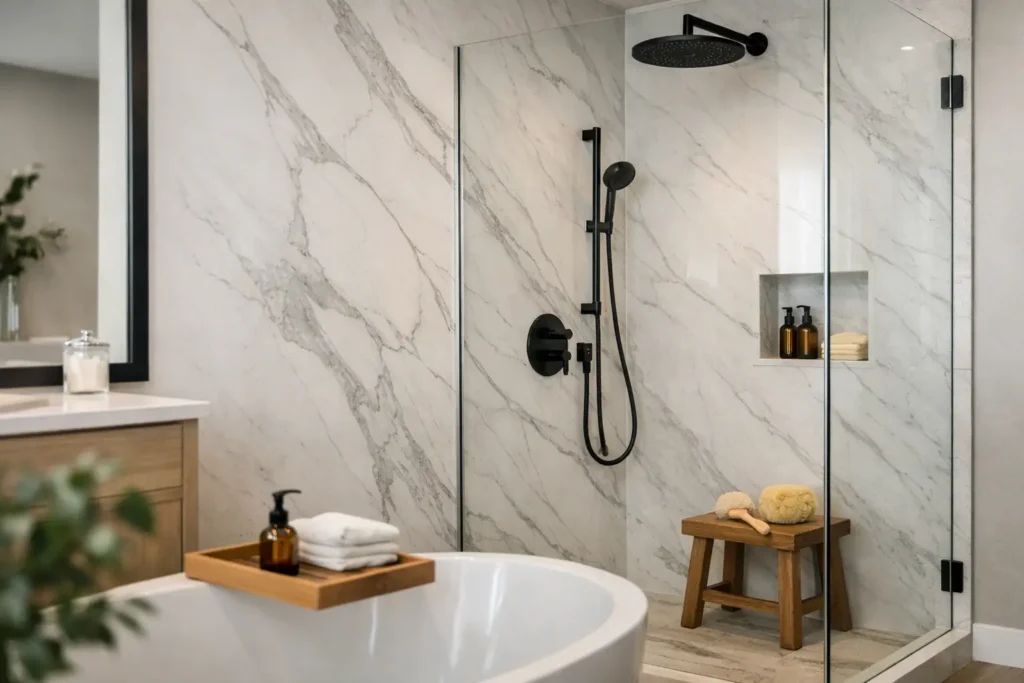
A beautiful bathroom can be undone by one familiar problem – too many joints, too much maintenance, and finishes that start to look tired far sooner than they should. That is exactly why bathroom resin wall panels are getting serious attention from homeowners and designers who want more from the space. They bring together a cleaner visual line, strong water resistance and a more considered, architectural finish than many standard wall coverings can offer.
Bathrooms are no longer treated as purely practical rooms. They are part of the overall interior story of a home, and the wall finish plays a major role in how the room feels. Resin has appeal because it can look refined and contemporary while still standing up to daily use. For anyone aiming for a bathroom that feels calm, polished and easy to live with, it is a material worth understanding properly.
What bathroom resin wall panels actually are
The term can mean slightly different things depending on the system being specified. In most cases, bathroom resin wall panels refer to wall panelling or resin-based surface systems designed to create a waterproof, durable and visually streamlined finish. Some are prefabricated panels with a resin-rich decorative face. Others are bespoke resin finishes applied over prepared wall surfaces to create a near-seamless result.
That distinction matters. If you are comparing products, one option may be about speed and convenience, while another is about craftsmanship, design freedom and a more tailored final appearance. Both sit within the same wider conversation, but they do not deliver exactly the same experience.
For design-conscious homeowners, the attraction is often the same either way. You get away from the visual interruption of grout lines, reduce ongoing cleaning, and create a room that feels more composed. In a compact bathroom especially, uninterrupted surfaces can make the space appear larger and more expensive.
Why bathroom resin wall panels appeal in modern bathrooms
There is a reason these finishes feel current without being trend-driven. They suit the way people want bathrooms to work now. Clean lines, low maintenance and material consistency all contribute to a space that feels intentional rather than pieced together.
Traditional tiles still have their place, but they come with compromises. Grout can discolour, joints can collect moisture and visual busyness can make a room feel cluttered. Bathroom resin wall panels answer that with a quieter, more sculpted look. The effect is not just practical. It is aesthetic. Walls become part of the architecture rather than a backdrop covered in repeated units.
This is especially effective in wet rooms, walk-in showers and contemporary en-suites where continuity matters. A soft concrete effect, terrazzo-inspired finish or subtle metallic note can transform the room from functional to distinctive without tipping into excess.
The design advantages of resin on bathroom walls
Resin’s strongest quality is that it can be technically capable and visually expressive at the same time. That is rare. Many bathroom materials are chosen either because they are practical or because they are attractive. Resin sits comfortably in both camps when specified and installed well.
Colour choice is one clear advantage. Instead of being limited to a small set of standard patterns, a resin finish can often be developed around the mood of the room. That could mean warm mineral tones, cool stone-inspired shades or a more dramatic statement surface. Texture also plays a role. Some clients want a smooth, light-reflective look. Others prefer a softer, more natural matte finish.
Then there is continuity. Resin-based finishes can complement floors, niches, vanity walls and shower enclosures in a way that feels cohesive. When the palette and texture are handled carefully, the room feels designed as one complete environment.
Practical benefits and the trade-offs
Bathroom resin wall panels are popular for good reason, but they are not a magic fix for every bathroom. The benefits are real, yet the right choice still depends on the space, the budget and the finish you want.
On the practical side, water resistance is a major plus. In splash zones and shower areas, that matters immediately. Cleaning is usually straightforward as there are fewer places for grime and soap residue to settle. The lack of grout lines also reduces one of the most common bathroom frustrations.
Durability is another strength, especially in busy family bathrooms or commercial washrooms where surfaces need to cope with regular use. A well-executed resin system can resist wear very effectively.
That said, the final result depends heavily on preparation and installation quality. Poor substrate preparation will compromise even the best-looking finish. Cost is also part of the picture. Bespoke resin work is generally a premium choice, and it should be viewed that way. You are paying not just for a material, but for finish quality, detailing and specialist workmanship.
There is also the matter of style preference. If you love the character of handmade tiles or traditional period detailing, resin may feel too pared-back unless it is balanced with other textures in the room. It works best when the overall scheme supports its clean, design-led character.
Where these panels work best
Not every bathroom needs the same wall treatment throughout. In some spaces, full wall coverage creates the strongest effect. In others, a more selective approach gives better balance.
Shower enclosures are an obvious fit because they benefit most from waterproof performance and easy maintenance. Wet rooms also suit resin particularly well because continuity is part of the visual success of the design. In en-suites and cloakrooms, using resin wall finishes on a feature wall can create impact without overwhelming a smaller room.
Commercial settings can benefit too. Boutiques, hospitality venues and design-conscious workplace interiors often need washrooms that feel polished but are easy to maintain. A refined resin finish can support brand image while still handling daily traffic.
For projects across Essex and London, where bathroom space is often at a premium and finish quality makes a visible difference, this kind of surface can be especially valuable.
What to ask before choosing bathroom resin wall panels
If you are seriously considering bathroom resin wall panels, the best starting point is not simply colour or price. It is suitability. Ask what system is being proposed, how it will be installed and what level of finish you should realistically expect.
It is worth understanding whether the solution is panel-based, fully hand-applied or a hybrid approach. Ask how corners, trims, niches and transitions will be handled. These details shape the final impression more than many people expect.
You should also ask about the substrate behind the finish. A premium surface is only as dependable as the structure beneath it. In refurbishment projects, existing walls may need correction before any decorative layer goes on.
Samples are invaluable here. Resin is tactile and light-sensitive, so the same finish can feel different in a showroom compared with your own bathroom. Looking at samples in the actual room helps you judge tone, reflectivity and how the material sits with brassware, flooring and lighting.
Is resin better than tiles?
Better is the wrong word if it is treated as universal. More suitable is usually the better question.
Tiles remain a strong option for many bathrooms. They offer variety, familiarity and broad price ranges. But if your priorities are visual calm, reduced maintenance and a more bespoke finish, resin often has the edge. It feels more architectural and less segmented.
If your budget is tighter or your project is highly traditional, tiles may be the easier fit. If you are aiming for a statement bathroom with a premium, contemporary finish, resin becomes very compelling. The choice is less about replacing one material entirely and more about matching the surface to the atmosphere you want to create.
The value of specialist installation
This is not a finish to treat as an off-the-shelf afterthought. The difference between average and exceptional comes down to precision. Surface preparation, moisture management, detailing and finish control all matter.
That is why specialist input is so important. A design-led installer can help you think beyond whether the wall is waterproof. They can guide the overall composition of the room, the interaction of textures, and the small finish decisions that make a bathroom feel resolved rather than merely renovated.
At its best, resin does more than protect the wall. It changes the way the room is experienced. It can soften visual noise, introduce depth, and give even a modest bathroom a stronger sense of intention.
If you are drawn to bathrooms that feel calm, crafted and confidently modern, bathroom resin wall panels are worth serious consideration. The best results come when the material is chosen not as a shortcut, but as part of a clear design vision – one that values both performance and beauty in equal measure.