
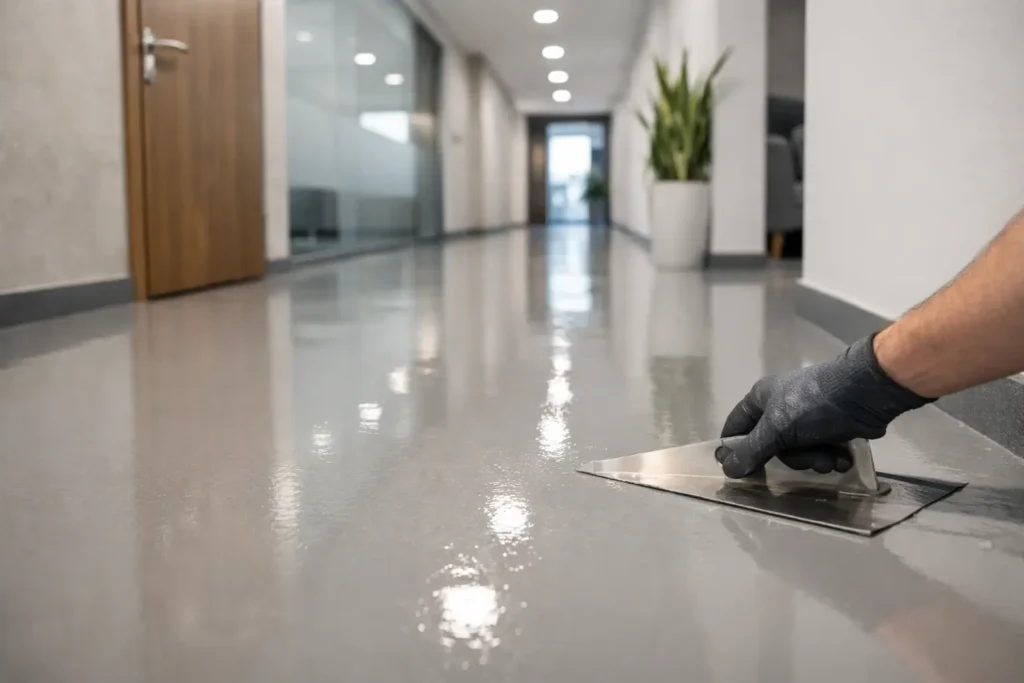
The hallway works harder than almost any other part of a property. It catches muddy shoes, school bags, shopping, pet traffic and the daily rush in and out, yet it is also the first interior moment people see. That is exactly why resin flooring for hallways has become such a compelling choice – it brings together visual clarity, durability and a cleaner, more considered finish than many traditional floor coverings.
A well-designed hallway floor has to do two jobs at once. It needs to cope with wear without looking tired, and it needs to set the tone for the rest of the space. Resin does that particularly well because it is not just a practical surface. In the right hands, it becomes part of the architecture.
Why resin flooring for hallways works so well
Hallways are transition spaces, but they should never feel like an afterthought. They frame the experience of arriving home or entering a commercial setting, and the flooring has a huge influence on that first impression. Grout lines, lifting edges and worn thresholds can make even a stylish interior feel fragmented. A seamless resin finish creates a calmer, more intentional look.
That visual simplicity has practical value too. Because resin flooring is smooth and joint-free, there are fewer places for dirt to gather. Day-to-day cleaning is easier, and the floor tends to hold its appearance more consistently than surfaces with deep texture or multiple seams. In a busy family home, that matters. In a client-facing business, it matters even more.
There is also a design advantage that often gets overlooked. Hallways are usually narrower than other rooms, sometimes short on natural light, and often interrupted by doors, stairs or awkward corners. Resin can make these spaces feel more open because the finish runs continuously across the floor without visual breaks. The result is sharper, quieter and more refined.
The aesthetic advantage of hallway resin floors
Resin has moved far beyond the purely industrial look people once associated with it. For hallways, that opens up a wide design palette. Soft stone effects, terrazzo-inspired finishes, muted concrete tones and gentle marbling can all bring personality without overwhelming the space.
If your interior leans minimal, a clean matte or satin finish in a warm neutral can give the entrance a gallery-like feel. If you want something more expressive, decorative resin can introduce depth, movement and subtle pattern. The beauty of the material is that it can be tailored to suit both restrained and statement-led schemes.
This is particularly valuable in homes where the hallway connects several rooms with different finishes and colours. A bespoke resin floor can act as the visual bridge between them, helping the whole property feel more cohesive. In commercial interiors, it can support brand identity while still standing up to serious use.
That said, not every finish suits every hallway. A very high-gloss look can be striking, but in an entrance that sees constant footfall it may show marks more readily than a softer sheen. Equally, darker colours can look dramatic, though they may reveal dust faster than mid-tones. The best results usually come from balancing design ambition with how the space is genuinely used.
What makes resin a practical choice
The appeal of resin is not only surface deep. Hallways demand resilience, especially around the front door where grit, moisture and repeated impact are part of everyday life. A professionally installed resin floor is designed to cope with that kind of wear while maintaining a polished appearance.
Its seamless structure helps here again. There are no joints to crack or grout lines to discolour, and the finished surface can be easier to keep hygienic than many traditional options. For households with children or pets, that low-maintenance quality is often one of the biggest selling points.
Resin can also work well with underfloor heating, which appeals to homeowners looking to create a more comfortable entrance space. Cold tiles in winter are a familiar complaint in many British homes. A resin system paired with underfloor heating offers a more contemporary answer, though the suitability will depend on the existing floor build-up and the specification chosen.
Slip resistance is another point worth considering. Hallways can become hazardous in wet weather, so the finish needs to be selected carefully. A decorative resin floor does not have to feel rough or overly utilitarian to offer grip, but the right balance must be built into the design from the start.
Is resin flooring right for every hallway?
Not automatically, and that honesty matters.
A beautiful resin floor depends heavily on preparation and installation quality. If the substrate beneath has movement issues, moisture problems or significant damage, those conditions must be addressed properly first. Resin is a premium finish, and it rewards proper groundwork. Cutting corners on prep tends to show later.
It is also worth being realistic about project expectations. Hallways are often central circulation spaces, so timing and access need to be planned carefully during installation. In some properties, especially busy homes or commercial units, that means coordinating the work around how the building functions day to day.
Cost is part of the conversation as well. Resin is not the cheapest flooring route, and it should not be positioned as one. Its value lies in the combination of bespoke design, technical performance and long-term visual impact. For clients who want a statement finish that also earns its keep, that investment often makes sense. For those simply looking for the lowest upfront spend, another surface may be more appropriate.
Choosing the right finish for your hallway
The most successful hallway floors usually begin with a simple question: what do you want the space to feel like?
If the answer is calm and architectural, a soft mineral tone with a subtle texture can create a sophisticated entrance without dominating it. If you want drama, metallic detailing or deeper colour movement can turn a narrow hallway into a design feature. Terrazzo-style resin is especially effective where you want a more decorative feel but still need the practicality of a continuous floor.
Lighting plays a major role here. In darker hallways, lighter finishes can help reflect available light and prevent the space from feeling enclosed. In larger entrances with stronger daylight, richer tones and more expressive effects can be handled well. The finish should also sit comfortably with skirting, wall colour, staircase materials and adjoining rooms. Good resin design never happens in isolation.
This is where sample-led decision making becomes so useful. Looking at a finish in the abstract is rarely enough. Seeing how tone, texture and sheen respond to your actual interior gives far more confidence than choosing from a standard swatch alone.
Installation quality is what separates a good result from a great one
Resin flooring lives or dies on craftsmanship. The surface may look effortless when complete, but achieving that level of finish takes precision at every stage – substrate preparation, product selection, layering, curing and final detailing around edges and thresholds.
In hallway spaces, those details are especially visible. The floor sits right at eye level when people enter, and awkward transitions or uneven finishing stand out quickly. A bespoke installation should feel deliberate from wall to wall, not merely fitted.
For homeowners and commercial clients in Essex and London, that is often the difference between buying a flooring product and commissioning a surface with architectural presence. Resinize approaches hallway projects with that design-led mindset, shaping the finish around the character of the property rather than forcing a one-size-fits-all look.
Long-term value beyond first impressions
A hallway floor should still look considered after years of use, not just in the first weeks after installation. That is one of resin’s strongest qualities when specified well. It offers a durable, easy-to-maintain foundation for a space that experiences constant wear, while continuing to support the wider design of the interior.
And there is an emotional value to that as well. Entering a home through a thoughtfully finished hallway changes the feel of daily life in subtle but real ways. The space feels cleaner, calmer and more complete. In a commercial setting, it communicates standards before a word is spoken.
The best hallway surfaces do not shout for attention. They simply make the whole environment feel better resolved. Resin does that with unusual confidence, blending artistry with resilience in a part of the property that rarely gets enough credit.
If your hallway deserves more than a floor that merely copes, resin offers the chance to give it presence as well as performance.