
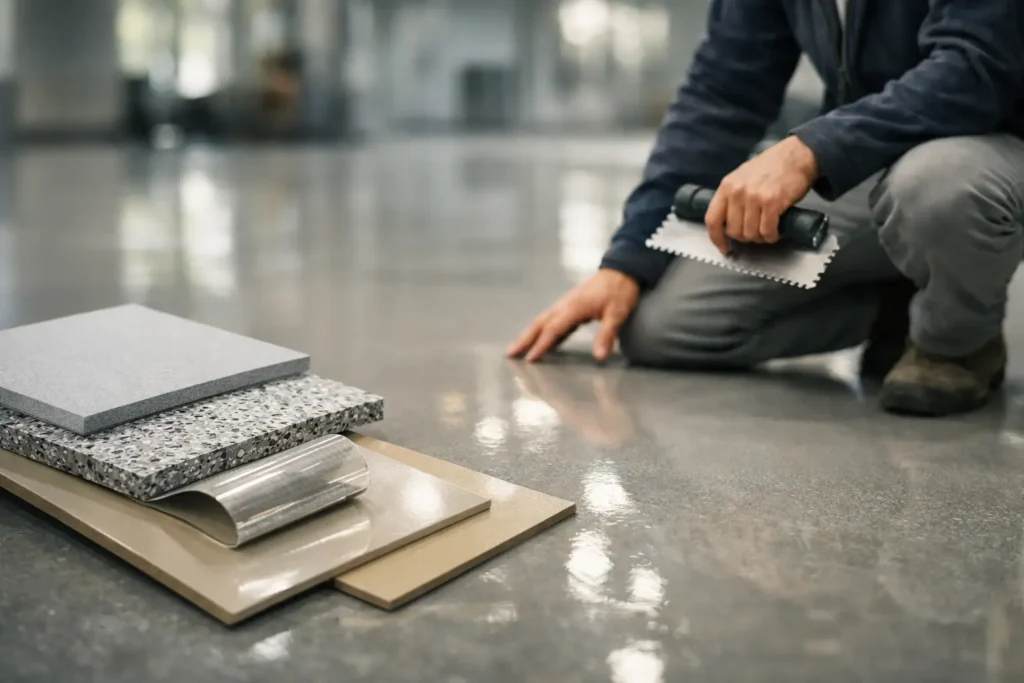
A resin floor can change the entire feel of a room before you add a single piece of furniture. It can make a narrow hallway feel calmer, give a kitchen a sharper architectural edge, or turn a garage or retail space into something far more polished than people expect. That is why knowing how to choose resin flooring is not just a technical decision. It is a design decision with practical consequences.
The mistake people often make is treating resin as one product. It is not. Resin flooring covers a range of finishes, systems and performance levels, and the right choice depends on how you want the space to look, how hard it needs to work, and how much individuality you want to bring into the final scheme.
How to choose resin flooring for the way you live or work
Start with the room itself. A family kitchen, a boutique showroom, a warehouse and a bathroom may all suit resin, but they do not need the same specification. The best choice comes from matching visual ambition with daily use.
In a home, the priority is often a balance of appearance, comfort and easy upkeep. People want a floor that feels clean-lined and contemporary, but still forgiving enough for real life – muddy shoes, dropped pans, pets, children, regular foot traffic. In commercial settings, the brief can shift. Durability, chemical resistance, slip performance and maintenance schedules may matter more, although appearance still plays a powerful role in customer-facing spaces.
This is where a bespoke approach matters. A decorative metallic finish that looks stunning in a feature room may not be the right answer for a busy commercial kitchen. Equally, a heavy-duty industrial coating may perform brilliantly, but feel too utilitarian for an open-plan living area. Good resin flooring sits at the intersection of performance and atmosphere.
Choose the resin flooring type before you choose the colour
People are naturally drawn to samples and shades first, but the system comes before the styling. The base resin type will shape not only the look, but also how the floor behaves over time.
Epoxy resin is often chosen for its strength, smooth finish and design versatility. It suits many domestic and commercial interiors, particularly where you want a refined, seamless surface with room for decorative effects. Polyurethane systems can offer a little more flexibility underfoot and may be better suited to environments with temperature fluctuation or specific performance demands. Resin overlays and terrazzo-inspired finishes open up more expressive possibilities, especially when the floor is expected to contribute to the overall interior concept rather than fade into the background.
That does not mean one type is better than another across the board. It depends on substrate condition, location, intended use and finish preference. If you begin with colour alone, you risk choosing a look that is either over-specified, under-specified or simply wrong for the setting.
The finish should suit the architecture
A resin floor always reads as part of the wider space. In a period property, that might mean introducing a contemporary contrast with a concrete-effect finish. In a new extension, it could mean reinforcing clean lines with a soft matte tone. In a retail or hospitality setting, it may be about creating a floor that feels aligned with the brand rather than just hard-wearing.
Gloss level matters more than many people expect. A higher sheen can feel more dramatic and light-reflective, but it also shows more of the environment and may not suit every interior. A satin or matte finish often feels more understated and architectural. If the goal is quiet sophistication, restraint usually works better than excess.
Think honestly about wear, impact and maintenance
One of the great strengths of resin is that it can be crafted for serious durability. Even so, no floor is indestructible, and the right choice depends on being realistic about the demands of the space.
A hallway or kitchen in a busy home will face constant traffic and regular cleaning. A garage may need to handle vehicle weight, tyre contact and occasional spills. A warehouse or workshop may require a much tougher specification altogether. If the floor is likely to deal with oils, chemicals, heat or heavy loads, those details should shape the recommendation from the start.
Maintenance is another area where expectations need to be clear. Resin floors are popular because they are seamless and easier to clean than many jointed alternatives, but ease of maintenance does not mean no maintenance. The finish you choose, the level of traffic, and the cleaning products used will all affect long-term appearance. A beautifully installed floor deserves the right aftercare if you want it to retain its depth and clarity.
Slip resistance is part of the design brief
This is especially important in bathrooms, kitchens, entrances and commercial environments. A very smooth finish can be visually striking, but in the wrong setting it may not offer the underfoot reassurance the space needs.
Slip resistance can often be built into the system without losing the overall design direction. The key is to address it early rather than treating it as an afterthought. The best results come when safety and aesthetics are planned together, not forced into compromise at the last minute.
Subfloor condition will influence what is possible
Even the most refined resin finish relies on what sits beneath it. If the substrate is uneven, cracked, contaminated or damp, that needs to be dealt with properly before the final surface is installed.
This is where resin differs from some flooring options that can hide imperfections more easily. A seamless finish tends to reveal the quality of preparation. Done well, the result feels crisp, fluid and intentional. Done badly, even an expensive system can disappoint.
That is why site assessment matters. The floor slab, moisture levels, previous coverings and overall condition all play a role in determining what can be achieved and how the system should be built up. For clients in Essex and London, where property types vary widely from modern commercial units to older domestic interiors, this early stage can make a significant difference to the final specification.
How to choose resin flooring that feels bespoke
If you are drawn to resin because it offers more than a standard floor, lean into that. One of its strongest advantages is creative freedom. Tone, texture, aggregate, movement, pattern influence and finish level can all be tailored to suit the space.
This is particularly valuable in interiors where flooring needs to do more than sit quietly in the background. A terrazzo-inspired overlay can bring detail and character without visual clutter. A metallic resin floor can add depth and atmosphere in a feature area. A concrete-effect surface can deliver a softer, more curated alternative to raw industrial materials.
The important thing is not to chase novelty for its own sake. The most successful resin floors feel integrated with the wider palette of the room – cabinetry, lighting, wall finishes, furniture and natural light. Bespoke does not have to mean loud. Often it means considered.
Samples are useful, but context matters more
A small sample helps you understand tone and texture, but it will never tell the whole story. Resin behaves differently across a larger area, and light changes throughout the day. A shade that looks cool and minimal in one setting may feel flat in another. A decorative finish that appears subtle on a board may become much more expressive once laid across an entire room.
That is why decision-making works best when samples are viewed alongside the actual space. Consider wall colours, joinery, natural daylight and how the room is used. A floor should not just look impressive in isolation. It should make the whole room feel more resolved.
Installation quality is as important as the material
A premium resin floor is not a commodity purchase. Specification matters, but workmanship matters just as much. Surface preparation, mixing accuracy, timing, environmental conditions and finishing technique all influence the end result.
This is particularly true with design-led finishes where consistency, tone variation and detailing need a skilled hand. The difference between a floor that feels refined and one that feels merely functional often comes down to craftsmanship. That is one reason clients looking for statement surfaces tend to prefer a consultation-led process rather than choosing from a generic menu.
If you are comparing suppliers, ask how they guide finish selection, how they assess the existing substrate, and how they approach bespoke work. A resin floor should feel like it has been designed for the space, not dropped into it.
Budget should reflect both lifespan and impact
Price always matters, but cheapest rarely means best value where resin is concerned. A lower upfront cost can lead to compromises in preparation, product quality or finish control, and those shortcuts usually show later.
A better way to think about budget is in layers: how the floor will perform, how long it is expected to last, and how much visual value it adds to the property or business. In a home, the right floor can elevate everyday spaces and make the interior feel more complete. In a commercial environment, it can support brand perception while standing up to constant use.
Choosing resin flooring well means resisting one-size-fits-all answers. The right floor is the one that supports the life of the space, expresses its character and still performs beautifully long after the installation day has passed. If you begin with how the room should feel, then match that vision to the right system and craftsmanship, the final result tends to speak for itself.