
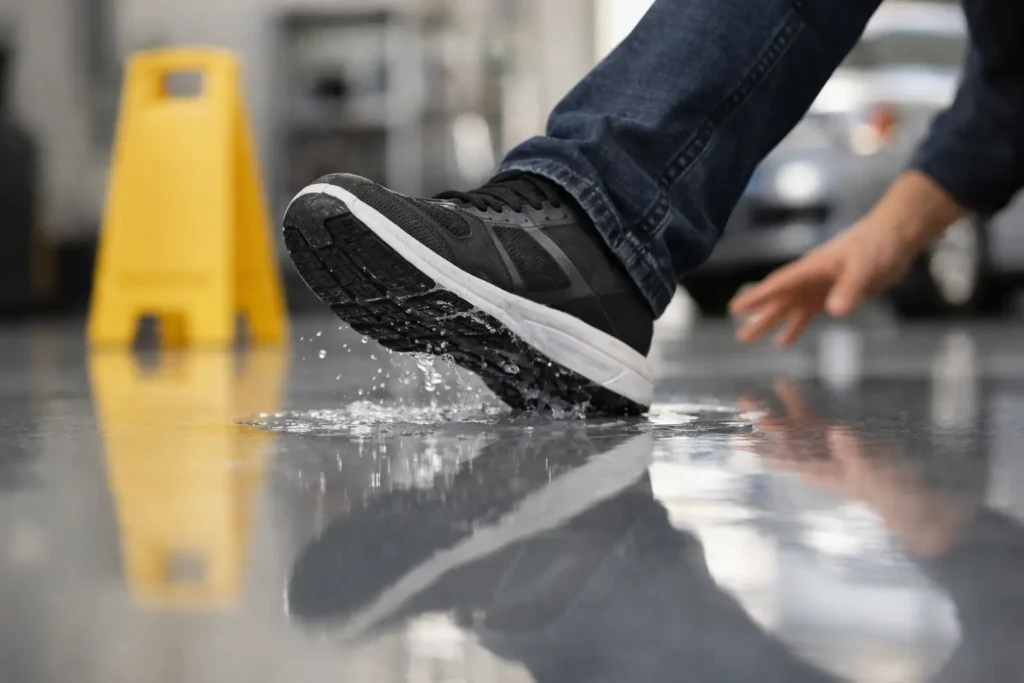
A glossy resin floor can look beautifully sleek, but the question most people ask once they picture it in a kitchen, garage or commercial space is simple: are epoxy floors slippery? The honest answer is that they can be – but only in certain conditions, and only if the finish is specified without enough thought for how the space will actually be used.
That distinction matters. Epoxy is not automatically dangerous, just as tile, polished concrete or natural stone are not automatically dangerous. Slip resistance comes down to the relationship between finish, texture, footwear, moisture and the day-to-day demands of the room. When a floor is designed properly, epoxy can deliver the clean, seamless look people love without compromising practicality.
Are epoxy floors slippery in everyday use?
In dry conditions, many epoxy floors feel no more slippery than other hard flooring surfaces. A professionally installed epoxy floor with the right topcoat can offer a comfortable, secure feel underfoot in homes, retail settings and light commercial interiors. Problems tend to arise when people assume all epoxy is the same and choose a finish based on appearance alone.
A high-gloss surface in a dry showroom has very different requirements from a utility room, bathroom or warehouse entrance where water, dust or oil may be present. The more contaminants introduced, the more likely any hard floor is to lose grip. Epoxy is simply honest in that respect – if you want visual impact and dependable traction, the finish needs to be tailored rather than treated as one-size-fits-all.
This is where design and performance should meet. A resin floor is not just a coating poured down and forgotten. It is a crafted surface, and that means the final texture can be adjusted to suit the environment.
What makes an epoxy floor feel slippery?
The main factor is surface texture. A mirror-like finish reflects light beautifully and can create a striking architectural effect, but if it is completely smooth and exposed to water or spills, it will usually feel slicker than a satin or lightly textured alternative.
Moisture is the next big variable. In a hallway on a wet day, in a bathroom after showers, or in a garage where rain and road grime come in on tyres, the presence of water changes how the floor performs. Add oils, soaps or cleaning residue and slip risk rises further.
Contamination from dust can also be overlooked. In workshops and commercial units, fine dust on a smooth floor can behave almost like a film, reducing traction even when the surface appears dry. The same applies in domestic spaces where over-polished cleaning products leave a residue behind.
Then there is footwear. Bare feet, trainers, work boots and heels all interact with the same floor differently. A resin finish that feels excellent in a family kitchen may need more texture in a back-of-house commercial area where wet boots are common.
Gloss does not always mean dangerous
One of the most persistent misconceptions is that shine equals slipperiness. It is easy to see why. A polished, reflective floor looks smooth, so people naturally associate it with reduced grip. In reality, visual sheen and slip resistance are related, but they are not the same thing.
An epoxy floor can retain a refined, contemporary appearance while incorporating anti-slip additives or a more considered topcoat. Equally, a matt floor is not automatically safer if it has been installed poorly or allowed to build up residue.
For design-conscious interiors, this is reassuring. You do not always have to choose between a premium finish and practical performance. The better approach is to decide where on that spectrum your space needs to sit. In a feature room, you may lean more towards visual clarity. In a utility area or commercial threshold, you may prioritise extra grip.
Where epoxy floors are most likely to need anti-slip features
Some spaces simply demand more caution. Bathrooms, wet rooms, poolside settings and external covered areas are obvious examples because water is a routine part of the environment. Kitchens can also benefit from a more slip-resistant finish, especially in busy family homes or commercial settings where spills are frequent.
Garages are another key area. Oil drips, rainwater and tyre residue all affect footing, so a decorative epoxy finish in a garage should never be specified on looks alone. The same goes for warehouses, service corridors and entrances where people move quickly and the floor has to cope with changing conditions throughout the day.
By contrast, a dry lounge, bedroom or boutique retail space may allow for a smoother finish without creating the same level of risk. The setting changes the answer.
How epoxy floors are made safer
The most effective way to improve grip is to build slip resistance into the system from the start. That may mean using anti-slip aggregates in the topcoat, adjusting the texture, or choosing a finish with a softer sheen rather than an ultra-gloss look.
These details can be subtle. Anti-slip does not have to mean rough, industrial or visually heavy. In well-designed interiors, the goal is usually a refined surface that still feels elegant while giving better traction underfoot. A skilled installer can balance those elements so the floor still supports the wider aesthetic of the space.
Preparation matters too. Even the best topcoat cannot compensate for poor installation. If the substrate is not prepared correctly or the coating system is badly applied, performance can become inconsistent. That is one reason bespoke specification is so valuable, particularly when a project needs to combine durability, design ambition and practical day-to-day use.
Are epoxy floors slippery when wet?
This is the version of the question that deserves the clearest answer: yes, epoxy floors can be slippery when wet, especially if the finish is smooth and glossy. But that is not unique to epoxy. Most hard flooring materials become more hazardous once water sits on the surface.
What matters is whether the floor has been designed with that risk in mind. In a bathroom, boot room or commercial wash area, a plain smooth finish may not be the right choice. A more slip-resistant resin system, however, can make the space far safer while still keeping the clean, seamless appearance that draws people to resin in the first place.
If a room regularly gets wet, it should be treated as a wet-use environment from the outset. That sounds obvious, but many flooring problems start when a product is chosen because it looks right on a sample board rather than because it suits real life.
Maintenance plays a bigger role than people expect
Even a well-specified floor can become slippery if it is cleaned badly. Soap build-up, grease, dust and unsuitable polishing products can all alter the feel of the surface. One of the strengths of epoxy is that it is easy to clean, but easy does not mean careless.
Using the correct cleaning method helps preserve both appearance and traction. In most settings, that means keeping the floor free from residue, dealing with spills quickly and avoiding products that leave a shiny film. In commercial environments, routine maintenance schedules are particularly important because foot traffic spreads contaminants quickly.
A floor should be judged not only by how it looks on installation day, but by how it performs after months of normal use. Good resin systems are designed for that reality.
Choosing the right finish for your space
If you are deciding whether epoxy is suitable, the better question is not simply are epoxy floors slippery. It is: what level of slip resistance does this particular room need? A design-led home renovation, a statement retail interior and a hard-working garage all ask different things of a floor.
This is why consultation matters. The best resin surfaces are not selected from a generic shelf of finishes. They are shaped around the atmosphere you want to create, the traffic the floor will take and the way the space behaves across ordinary days and busy ones. In Essex and London, where residential and commercial interiors often need to balance visual impact with genuine resilience, that tailored approach makes all the difference.
A beautifully crafted epoxy floor should feel considered in every sense – striking to look at, durable enough for modern life and appropriate for the way people move through the room. If slipperiness is a concern, it is not a reason to rule resin out. It is a reason to specify it properly.
The smartest flooring choices are rarely about chasing the glossiest finish or the toughest specification in isolation. They come from understanding how a space will live, then creating a surface that supports both safety and style with quiet confidence.