
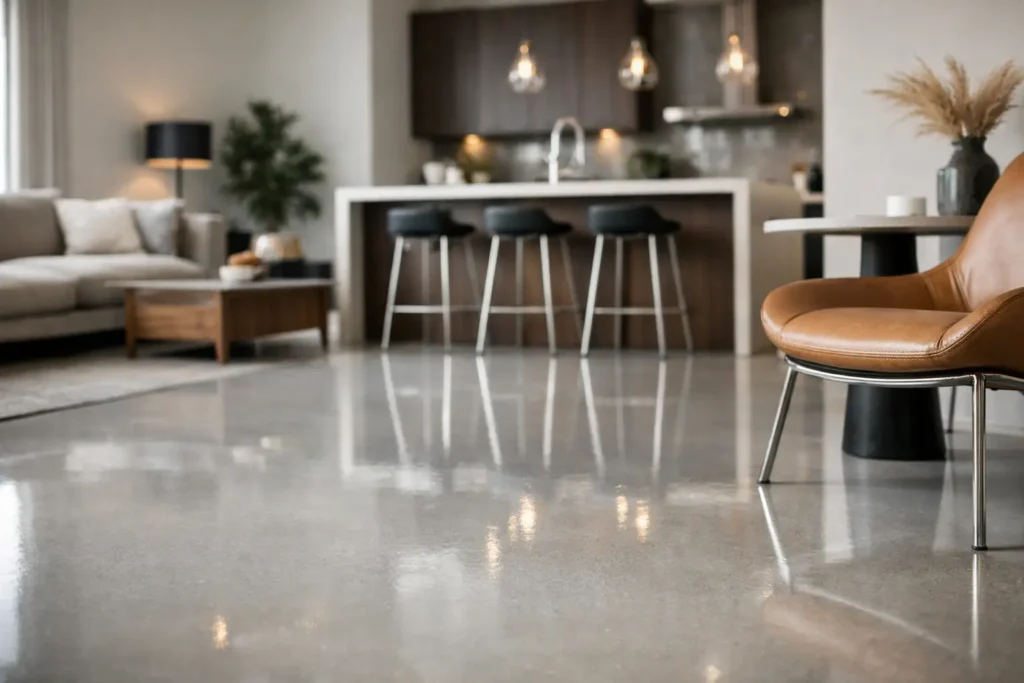
A resin floor can completely change how a space feels. The right finish makes a kitchen look sharper, a showroom feel more premium, or a garage work harder without looking purely industrial. This resin flooring buyers guide is designed to help you choose with confidence, not just by colour or price, but by how the surface will live, wear and perform in the real world.
Resin is often treated as a practical flooring category. That misses the point. At its best, resin is an architectural finish – clean-lined, tactile, light-responsive and tailored to the way a room is used. For some buyers, that means a polished, seamless statement floor in an open-plan home. For others, it means a heavy-duty coating that can tolerate vehicles, footfall, spills and cleaning without losing its edge. The best choice depends on where it is going, what it needs to withstand and what you want the space to say.
What this resin flooring buyers guide should help you decide
Before looking at samples, it helps to answer three questions. First, is this floor primarily about appearance, performance or both? Second, what kind of traffic and wear will it face each day? Third, are you buying for a private interior, a customer-facing setting or a hard-working operational space?
Those questions matter because resin is not one single finish. Decorative epoxy coatings, terrazzo-style overlays, metallic effects, concrete-look systems and commercial-grade coatings all sit under the same broad umbrella, but they do different jobs. Some are chosen for visual depth and design character. Others are specified because they are dependable, hygienic and easy to maintain. The strongest projects usually balance both.
Choosing the right resin flooring system
For residential interiors, the appeal often starts with the visual calm of a seamless floor. No grout lines, no awkward transitions, and a surface that can make a room feel larger and more resolved. In kitchens, hallways and bathrooms, that uninterrupted finish creates a contemporary backdrop that works especially well with clean joinery, bold lighting and natural materials. If your priority is a design-led interior, decorative resin finishes can deliver a refined look that feels bespoke rather than off-the-shelf.
For commercial settings, durability tends to lead the conversation, but appearance still matters. A retail unit, studio, salon or hospitality space needs flooring that stands up to regular use while supporting the brand experience. This is where resin often excels. It can be specified to handle foot traffic and cleaning regimes without sacrificing presentation, and it offers more design control than many standard commercial flooring options.
Industrial and utility spaces bring a different set of demands. Garages, workshops and warehouses may require chemical resistance, slip resistance or greater build strength. In these environments, a buyer should be less focused on decorative trends and more interested in the substrate condition, load requirements and expected abuse. A floor that looks impressive on day one but is not built for the site conditions will not stay impressive for long.
Epoxy, decorative and specialist finishes
Epoxy systems are among the most widely used because they offer a strong balance of durability, finish quality and versatility. They can be sleek and understated or more expressive, depending on the pigments, aggregates and topcoats used. Decorative epoxy is often a strong choice where buyers want a premium appearance with everyday resilience.
Metallic finishes are more dramatic. They create movement, depth and a reflective quality that can turn a floor into a focal point. They suit feature areas, statement interiors and commercial spaces that want a stronger visual identity. They are less about subtlety and more about impact.
Terrazzo-inspired resin overlays appeal to buyers who want texture and pattern without the thickness, disruption or cost often associated with traditional terrazzo. They can feel elevated and design-conscious while still retaining the practical benefits of a resin-based surface.
Concrete-effect finishes sit somewhere else entirely. They offer the pared-back, architectural feel many clients want, but with a more controlled and seamless application. For contemporary homes and design-led commercial interiors, this can be an elegant middle ground between raw industrial character and polished refinement.
What good buyers pay attention to before price
Cost matters, but price alone is a poor way to compare resin flooring proposals. One quote may cover extensive preparation, moisture testing, repair work and a specification suited to the space. Another may appear cheaper because it assumes the substrate is ready when it is not. The visible finish is only part of the story.
Subfloor condition is one of the biggest variables in any resin project. If the existing base has cracks, contamination, unevenness or moisture issues, those need to be addressed properly. Resin is only as reliable as the surface beneath it. Buyers who overlook preparation often end up paying more later through repairs, coating failure or a finish that never quite looks right.
Thickness and system build also affect value. A light-duty decorative coating for a spare room is not directly comparable with a heavy-duty commercial system built for traffic, impact or chemical exposure. If two prices seem far apart, it is worth asking whether you are actually looking at two different standards of floor.
Installation time is another practical consideration. Some spaces can tolerate downtime more easily than others. In a home, this might mean coordinating around a renovation schedule. In a business, it can affect opening hours, staff movement and revenue. A well-planned installation programme is part of the buying decision, not a detail to leave until later.
Design choices that make a resin floor feel premium
Colour is usually the first decision buyers think about, but sheen, texture and tone variation often have a bigger effect on the final impression. A soft matt or satin finish can feel calm and architectural. Higher gloss can create drama and light play, but it also reveals more of the environment and may not suit every setting.
Texture deserves careful thought. In bathrooms, entrances and commercial spaces, some slip resistance may be sensible. But the more texture you introduce, the less mirror-smooth the finish will feel underfoot and the more it can collect surface dirt. There is always a balance between appearance, safety and maintenance.
The best resin floors are usually the ones that relate to the wider interior rather than trying to dominate it. A concrete-effect surface might complement timber joinery and black metal details. A terrazzo-inspired overlay may pick up tones from stone worktops or wall finishes. A metallic floor may suit a bold retail concept but feel too theatrical in a family kitchen. Samples are useful, but they should be viewed in the context of the whole room.
A practical resin flooring buyers guide to durability and upkeep
One of resin’s biggest strengths is that it is easy to live with when correctly specified. Seamless surfaces are straightforward to clean, resist dust traps and can handle regular maintenance well. That makes them attractive in both busy homes and commercial environments where hygiene and presentation matter.
Still, low maintenance does not mean no maintenance. Different systems respond differently to abrasion, impact and cleaning products. A beautiful decorative floor in a domestic setting may perform brilliantly with normal household use, but a workshop dealing with oils, tools and heavy rolling loads needs a different level of protection. Buyers should be wary of one-size-fits-all claims.
It is also worth being realistic about wear. Any floor will age. The goal is not to freeze it in time, but to choose a finish that wears gracefully in the environment it was designed for. Good resin floors tend to retain their clarity and integrity well, but the right specification is what makes that possible.
How to choose the right installer
A resin floor is not simply purchased; it is crafted on site. That is why the installer matters as much as the material. Buyers should look for a company that can talk clearly about preparation, system choice, finish options and likely outcomes, without reducing the conversation to sales language.
A strong installer will guide you through samples, explain where compromises may sit and be honest about what works best in your space. They should understand both design and performance. That combination is particularly valuable when the floor is expected to make a visual statement as well as stand up to daily use.
For clients in Essex and London, that local knowledge can also help when projects involve varied property types, renovation constraints or commercial deadlines. Resinize, for example, approaches resin as a crafted surface rather than a commodity finish, which is often the difference between a floor that simply covers a substrate and one that genuinely transforms a room.
When resin flooring is the right choice – and when it may not be
Resin is an excellent option when you want a seamless, contemporary finish with strong practical performance and genuine design flexibility. It suits buyers who care about clean lines, custom aesthetics and a floor that feels integrated into the architecture of the space.
It may be less suitable if you want a surface with natural variation that develops patina in a more traditional way, or if the existing subfloor conditions make the preparation cost disproportionate to the project. It also requires skilled installation, so it is not the category to treat as a bargain-basement purchase.
The smartest way to buy resin flooring is to treat it as both a design decision and a technical one. When those two elements are considered together, the result is more than durable flooring. It becomes part of the atmosphere of the space – something you notice every day not because it demands attention, but because everything around it looks better.