
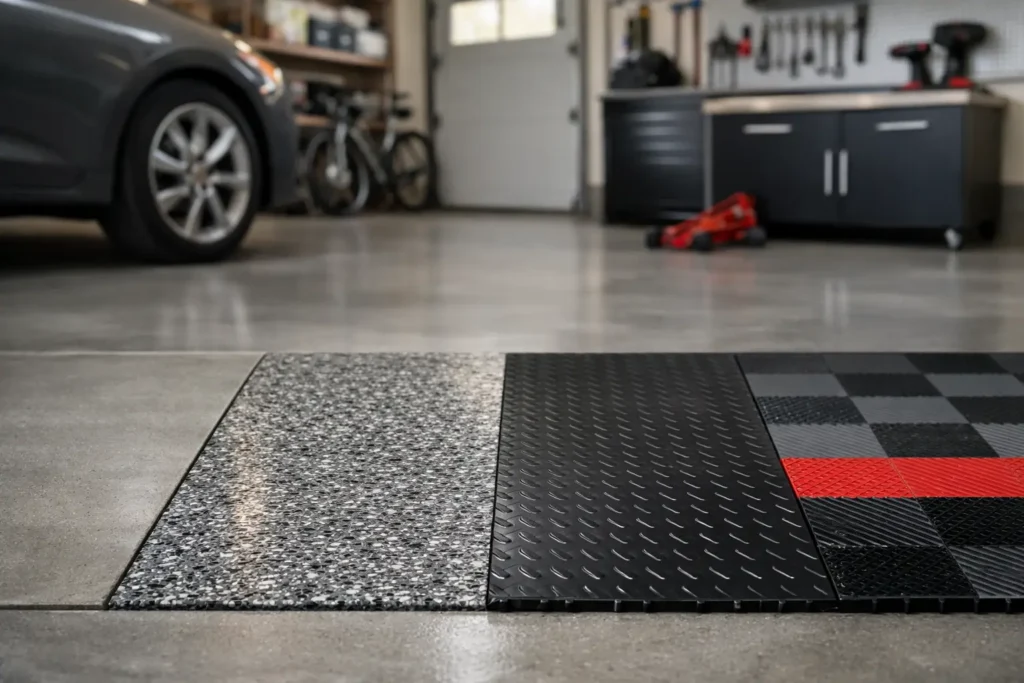
A garage floor has a hard life. It takes the weight of vehicles, the grit from tyres, the occasional oil spill, muddy foot traffic, dropped tools, and often a fair amount of neglect. That is exactly why choosing the best flooring for garages is not just about toughness. It is also about how you want the space to feel, how easy it is to maintain, and whether the finish supports a practical room or a polished extension of the property.
For some people, a garage is still a place to park the car. For others, it is a workshop, home gym, storage zone, studio or hybrid utility space. The right floor should reflect that. A plain concrete slab may do the job at a basic level, but it rarely offers the finish, comfort or longevity most upgraded spaces deserve.
What makes the best flooring for garages?
The answer depends on how the space is used day to day. A domestic garage with light traffic has very different demands from a commercial unit with regular vehicle movement or equipment loads. Even in residential settings, there is a difference between a garage used for storage and one designed as a clean, design-led multi-use room.
The best flooring for garages usually needs to perform in five areas. It should resist stains, cope with impact, handle tyre traffic, clean easily, and still look good after years of use. That last point is often overlooked. Flooring is one of the largest visual surfaces in the room, so it has a huge effect on whether the garage feels forgotten or properly finished.
That is where material choice matters. Some options are cheap to install but underwhelming in appearance. Others offer a far more architectural result, turning the garage into a seamless and considered part of the property.
Concrete: functional, but limited
Bare concrete is the default starting point for many garages. It is strong, widely used, and already present in most spaces. If the slab is in decent condition, sealing it can improve dust control and make cleaning easier.
Even so, concrete has its limits. It stains quite easily, can crack over time, and tends to look tired quickly in a hard-working environment. It also lacks the refined finish many homeowners now want, especially when the garage is visible from the house or used for more than parking.
A concrete sealer can help, but it does not fully transform the feel of the space. Think of it as a maintenance improvement rather than a design upgrade.
Garage floor paint: affordable, but short-term
Paint is often chosen because it appears budget-friendly. On paper, it sounds like a simple fix – add colour, tidy the floor, improve appearance. In reality, standard garage floor paints can wear quite quickly, especially under hot tyres, repeated cleaning, and abrasion from tools or stored items.
For light use, paint can be enough for a cosmetic refresh. But if you want a finish with depth, durability and a premium look, it tends to fall short. Peeling, scuffing and patchiness are common problems, particularly where preparation has been rushed.
It is best viewed as an entry-level option rather than a long-term flooring solution.
Interlocking garage tiles: practical, but visually busy
Interlocking tiles have a place in some garages, especially where a quick installation is needed or access to the subfloor is useful. They are available in different colours and can be replaced individually if damaged.
The compromise is aesthetic and, sometimes, maintenance. Tiled systems can look segmented and utilitarian, which may not suit a more refined residential finish. Dirt and moisture can also find their way beneath the tiles, creating extra cleaning issues over time.
In workshops or temporary setups, that may be acceptable. In a premium home improvement project, they rarely offer the same level of visual coherence as a seamless floor.
Epoxy and resin flooring: where performance meets design
If you are looking for a surface that feels durable, modern and visually resolved, resin-based systems are often the strongest choice. This is why epoxy and resin finishes are regularly considered the best flooring for garages where appearance matters as much as resilience.
A professionally installed resin floor creates a smooth, seamless surface that is hard-wearing, easy to clean and highly customisable. It can be tailored to suit a practical utility garage or elevated into a more design-conscious environment with carefully chosen tones, textures and effects.
The performance benefits are clear. Resin flooring can offer strong resistance to stains, impact, abrasion and general wear. Because there are no grout lines or loose sections, maintenance is straightforward. Dust, grit and spills sit on the surface rather than settling into joints.
The visual benefit is just as important. A seamless resin floor immediately gives the garage a more intentional finish. Instead of looking like an afterthought, the room feels integrated with the rest of the property. For homeowners investing in contemporary interiors, that shift can be significant.
Not all resin floors are the same
This is where nuance matters. People often use epoxy as a catch-all term, but garage flooring systems vary depending on the substrate, required performance and desired finish.
A straightforward heavy-duty epoxy coating may suit a more functional garage where durability is the priority. A decorative resin overlay or quartz-enhanced system can add texture and visual detail while still delivering practical performance. In some settings, a metallic or concrete-effect resin may create a more architectural, lifestyle-driven result.
The best option depends on the brief. If the garage is being used as a workshop, slip resistance may matter more than a high-gloss finish. If it is part garage, part home gym, comfort underfoot and aesthetic quality might carry more weight. If vehicles are coming in daily, tyre heat resistance and substrate preparation become critical.
That is why bespoke specification matters more than simply choosing a product category.
What to consider before choosing garage flooring
Before deciding on a finish, it helps to look closely at how the space functions now and how you want it to work in future. A floor that suits your current needs but limits the room later is rarely the best investment.
Start with usage. Is the garage used for one car, two cars, bicycles, storage, DIY, fitness, or occasional entertaining? The answer shapes the level of durability required and the type of finish that will feel appropriate.
Then think about the condition of the existing floor. Cracks, damp issues, surface contamination and uneven areas all affect what can be installed successfully. Good preparation is not the glamorous part of the project, but it is what supports long-term performance.
Finally, consider the visual direction. Do you want the garage to feel purely functional, or do you want it to echo the quality of the rest of the home? A premium resin finish can create a sleek, cohesive look that works particularly well in modern properties and high-spec refurbishments.
Is resin always the best flooring for garages?
Not always. If budget is the only deciding factor and the garage sees minimal use, a simple paint or sealant may be enough. If you need a temporary system or access panels beneath the floor, tiles may make more sense.
But when the goal is long-term durability, easy maintenance and a stronger visual finish, resin consistently stands out. It bridges the gap between industrial-grade performance and design-led living, which is exactly why it works so well in garages that need to do more than just house a vehicle.
For property owners in Essex and London, where garages are increasingly treated as valuable flexible space, that combination is especially relevant. A well-finished garage can support day-to-day practicality while adding to the overall quality of the property.
The real value of a better garage floor
A better garage floor changes how the room is used. It becomes easier to clean, more pleasant to spend time in, and far more aligned with the standard of the rest of the space. That matters whether you are storing a car collection, creating a sharper workshop, or simply wanting the garage to feel less forgotten.
The best flooring choice is rarely the cheapest one upfront. It is the one that performs properly, suits the way you live, and still looks right years later. When a garage floor is crafted with that balance in mind, the whole room feels more complete – and far more worth stepping into.