
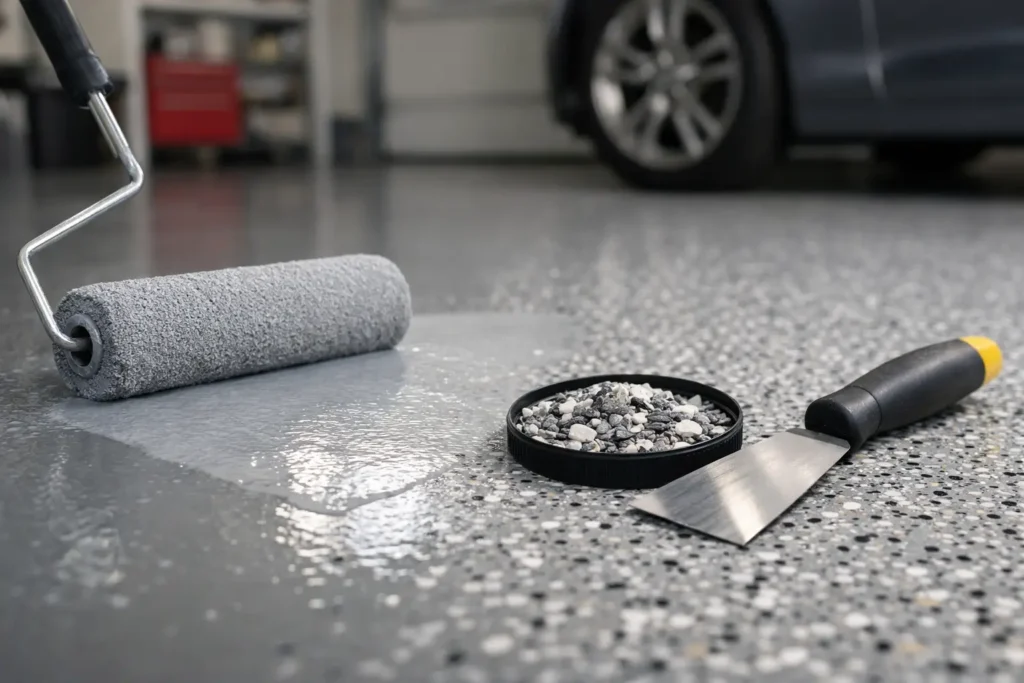
A garage floor usually tells the truth about a space before anything else does. Tyre marks, dusting concrete, oil staining and patchy repairs can make even a well-designed property feel unfinished. A good garage epoxy coating buyer’s guide starts there – not with chemistry, but with the fact that the floor changes how the whole room looks, performs and feels to use.
For some buyers, the priority is resilience. For others, it is a cleaner, more considered finish that turns a practical zone into part of the wider design of the property. In most cases, it is both. The right epoxy coating should handle daily wear while giving the garage a sharper, more deliberate identity.
What to look for in a garage epoxy coating buyer’s guide
Not all epoxy garage floors are created to the same standard, and that is where many buying decisions go wrong. People often compare coatings on price alone, when the bigger difference is usually in preparation, build-up, finish quality and suitability for the way the space is actually used.
A decorative domestic garage that stores one family car needs something different from a workshop with heavier traffic, tool drops and occasional chemical exposure. A showroom-style garage, where appearance matters as much as performance, may call for a more refined system again. The best starting point is not asking which epoxy is “best” in general, but which system is right for your floor, your use and your expectations.
That means looking at five things together: surface preparation, durability, slip resistance, appearance and aftercare. If one of those is overlooked, the final result can look impressive at first and disappoint later.
The coating is only as good as the preparation
This is the least glamorous part of the process, but it is the part that decides whether the floor lasts. Proper preparation usually involves mechanical grinding, removal of contamination, crack and defect repair, and moisture assessment where needed. If the substrate is weak, dusty or previously sealed, simply applying epoxy over the top will not create a reliable bond.
This is why very cheap coating quotes should be treated carefully. Lower pricing often comes from lighter prep, thinner systems or fewer remedial steps. That does not always mean poor work, but it often means more risk. If a floor peels, lifts or wears unevenly, the issue is usually beneath the surface rather than in the topcoat itself.
For older garages in particular, preparation matters even more. Concrete can hold years of oil, salts and general contamination. A premium finish depends on creating a clean, stable canvas first.
Ask how the installer handles existing floor issues
Hairline cracks, minor pitting and old paint remnants are common in garage floors. They are not necessarily a problem if they are dealt with properly. What matters is whether the installer has allowed for them and whether the chosen system is designed to bridge or disguise minor imperfections where appropriate.
If you want a visually polished result, this conversation is essential. Decorative coatings can elevate a garage dramatically, but they do not erase poor groundwork.
Choosing the right finish for the space
Epoxy is not one look. That is one of the reasons it has become more attractive to design-conscious homeowners and commercial clients alike. A garage floor can be clean and understated, bold and architectural, or more practical and industrial, depending on the finish selected.
A solid colour system creates a crisp, contemporary surface and works well where minimalism is the aim. Flake finishes add texture, visual depth and help disguise dust between cleans. Metallic effects bring a more design-led, statement quality, though they are usually better suited to garages where appearance takes centre stage rather than heavy workshop abuse.
The right choice depends on how you want the garage to sit within the wider property. If it connects to a utility, hallway or converted zone, the coating should feel intentional rather than purely functional. This is where a bespoke approach adds value. The floor is not just there to cope with wear. It should also complement the character of the interior.
Gloss, satin or something in between?
Many buyers are drawn to high-gloss imagery, and understandably so. Gloss finishes can make a garage feel brighter, sharper and more premium. They reflect light beautifully and create a polished visual effect.
That said, gloss is not always the perfect answer. It can show dust more readily, and in some settings a softer sheen feels more refined. A satin or lower-sheen finish may be the better fit if you want a more understated surface or reduced visual glare. This is one of those decisions where lifestyle matters more than trend.
Durability is about more than hardness
A garage coating needs to cope with hot tyres, abrasion, occasional impact and the realities of everyday use. But durability is not simply about choosing the hardest product available. Very rigid systems can be excellent in some environments and less forgiving in others.
The better question is how the full system performs under the conditions of that specific garage. Does it resist staining from oil or chemicals? Can it tolerate repeated vehicle traffic? Will it maintain its appearance if tools are dragged across it or if bikes and storage units are moved regularly?
For domestic garages, a professionally specified epoxy system usually offers an excellent balance of resilience and visual appeal. For heavier-duty commercial or workshop settings, it may make sense to explore systems that incorporate additional performance layers or alternative resin technologies in certain areas. It depends on the traffic, the load and the finish standard expected over time.
Slip resistance without sacrificing design
One of the most common concerns with epoxy is slipperiness. The answer is not as simple as saying epoxy is slippery or safe. It depends on the finish, the texture and whether the floor is likely to get wet.
A smooth gloss floor in a dry, tidy garage may be perfectly suitable. A garage used for valeting, mechanical work or regular wet foot traffic may require added slip resistance. This can be built into the system without making the surface look coarse or overtly industrial.
That balance matters. A well-crafted floor should feel refined, but it should also suit real use. If safety is part of the brief, it should be discussed at specification stage rather than treated as an afterthought.
What affects cost in a garage epoxy coating buyer’s guide?
Cost varies for good reason. Floor size plays a part, but the biggest factors are usually the condition of the existing concrete, the amount of preparation required, the type of coating system specified and the finish level you want to achieve.
A simple, single-colour coating over sound concrete will generally cost less than a decorative multi-layer system with repairs, edging detail and a more bespoke aesthetic. If the garage has significant cracks, moisture issues or existing failed coatings, the price may rise because the substrate needs more work before the finish can begin.
This is why comparing quotes line by line is more useful than comparing totals alone. One proposal may include extensive prep and a premium topcoat, while another may appear cheaper because key stages are missing. The lower figure is not necessarily better value if it shortens the life of the floor.
Questions worth asking before you buy
A worthwhile buyer conversation should feel clear, not evasive. Ask what preparation is included, what finish options suit your use, how long the installation will take, and what curing time is needed before parking on the floor. Also ask how the surface will age and what maintenance is realistically required.
It is also sensible to ask for examples of similar completed projects. A garage floor is partly a technical installation and partly a design decision. You want proof that the installer can manage both.
For clients across Essex and London, this is often where a specialist design-led contractor stands apart from a basic floor painting service. The details are sharper, the finish is more considered and the recommendation is shaped around the space rather than forced from a one-size-fits-all package.
Maintenance should be easy, not fussy
One of epoxy’s strongest selling points is that it creates a sealed, low-maintenance surface. Dusting is reduced, sweeping is easier and spills can usually be cleaned before they soak in. That alone can transform how often the garage is actually enjoyed and used.
Still, low maintenance does not mean no maintenance. Grit should not be left to grind into the surface, and harsh cleaning methods are unnecessary. A simple, suitable cleaning routine will preserve both appearance and performance far better than aggressive scrubbing ever will.
If the floor has been chosen well, it should make the garage feel more composed from day one. Not precious. Not high-drama. Just easier to live with and better to look at.
The best garage floors do more than protect concrete. They bring order, clarity and visual confidence to a space that is often overlooked. If you choose with equal attention to craftsmanship and aesthetics, the result will not feel like a coating added at the end. It will feel like the room was always meant to look that way.