
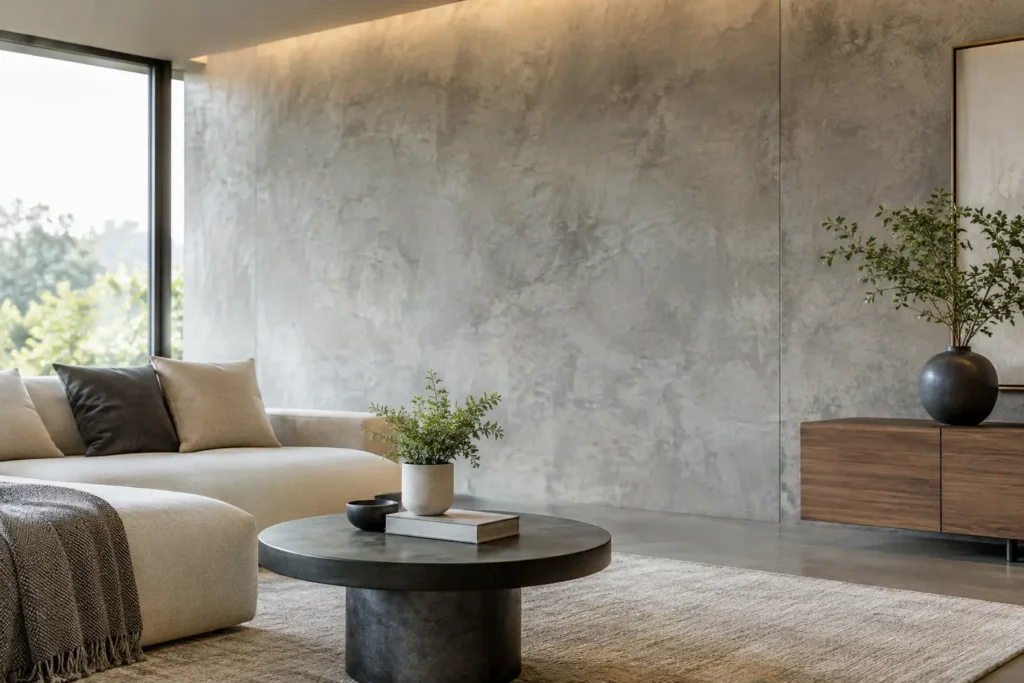
A wall does not need artwork, shelving or a busy palette to hold attention. When the surface itself has movement, tonal depth and a considered texture, it becomes the feature. Creating concrete effect walls is about achieving that quiet architectural presence: a finish that feels grounded and contemporary, while still belonging naturally to the room around it.
Unlike a raw concrete wall, a professionally applied concrete-effect finish can be tailored to the scale, light and purpose of the space. It can be soft and cloud-like in a bedroom, dark and dramatic behind a reception desk, or finely textured around a kitchen dining area. The result is not a flat grey backdrop. It is a crafted surface with character.
Why concrete-effect walls have lasting appeal
Concrete has become a design reference point because it brings honesty and restraint to an interior. Its appeal lies in the subtle variations: pale and dark areas, gentle trowel marks, and the sense that the material has been shaped by hand rather than printed from a pattern.
A concrete-effect wall offers this visual language without asking the building to accommodate the weight, cost or structural demands of poured concrete. It is particularly effective in refurbishment projects, where homeowners want a sharper, more contemporary feel without rebuilding the room around the finish.
The look also works across more than one interior style. In a minimal scheme, it creates a calm backdrop for timber, linen and sculptural lighting. In an industrial-inspired space, it sits naturally beside black metal, exposed services and dark joinery. Paired with brass, rich timber or upholstered furniture, it becomes warmer and more refined than its name suggests.
For commercial interiors, the same quality can help a space feel intentional from the moment someone enters. A concrete-effect feature wall can give a retail unit, salon, office or hospitality setting a distinctive identity without relying on short-lived decorative trends.
Creating concrete effect walls starts with the right surface
The best finishes begin before the decorative material is applied. Walls need to be sound, dry and suitably prepared. Hairline cracks, loose paint, damp patches and uneven areas can all affect the final appearance, particularly when the desired finish is intentionally understated.
Preparation may involve repairing imperfections, smoothing the substrate, applying a suitable primer and protecting adjoining surfaces. This work is rarely the glamorous part of a project, but it is what allows the final wall to look composed rather than patchy. A handcrafted concrete effect should show controlled variation, not accidental flaws.
The existing wall construction matters too. Plasterboard, previously painted plaster, masonry and tiled surfaces can each require a different approach. In bathrooms, kitchens and other moisture-prone areas, the full system must be selected with water resistance and long-term durability in mind. The aesthetic can be similar across locations, but the specification should never be copied blindly from one room to another.
The difference is in the movement and tone
Concrete effect is not one colour, one texture or one fixed formula. It is a family of finishes. Some clients prefer a pale mineral grey with barely visible movement, which can make a compact room feel lighter and more open. Others choose deeper charcoal, warm stone or greige tones for a more enveloping result.
The hand-applied technique is what gives the wall its depth. Layers are built up and worked across the surface to create tonal shifts and gentle texture. This is where craftsmanship matters most. Too much contrast can make the wall appear theatrical or overly busy. Too little can leave it looking like ordinary grey paint.
Samples are valuable because colour changes dramatically with light. A finish that appears cool in a north-facing room may look softer beneath warm evening lighting. Natural daylight, artificial light, surrounding paint colours, flooring and timber all influence what the eye sees. Reviewing a sample next to the proposed wall, rather than in isolation, leads to a more confident decision.
Where a concrete-effect wall works best
Feature walls are an obvious starting point, but the strongest applications often consider the whole room. Behind a bed, the finish can replace a conventional headboard wall with something more tactile and restful. Around a fireplace or media wall, it gives visual weight without the joints and repetition of tiles.
In kitchens, a concrete-effect wall can create a composed backdrop for cabinetry, especially when paired with oak, walnut, matt black or muted painted finishes. It is worth considering how splashes, heat and daily use will affect the chosen location. A decorative wall away from the hob has different requirements from a surface directly exposed to cooking activity.
Bathrooms can be particularly striking. The absence of grout lines creates a cleaner, more continuous look than many tiled schemes, helping smaller spaces feel less interrupted. Here, professional application and appropriate sealing are essential. Beauty in a wet room depends on the finish performing properly as well as looking exceptional.
In commercial settings, concrete-effect walls often earn their place because they are both expressive and adaptable. They can frame a brand sign, add depth to a waiting area, or bring a premium edge to a changing room, studio or showroom. The finish should support the identity of the business, not compete with it.
Choosing between subtle texture and statement texture
A wall should be designed at the same time as the rest of the interior, not selected as a last-minute decorative add-on. If the room already includes veined stone, patterned tiles, bold wallpaper or highly figured timber, a quieter concrete effect may provide the balance the scheme needs.
A more expressive finish suits spaces with simpler furniture and clean architectural lines. It can introduce interest where the palette is deliberately limited. The trade-off is that dramatic movement becomes a major visual element, so it deserves room to breathe. Covering it with oversized artwork, crowded shelving or frequent colour changes can dilute its impact.
Texture also affects how a wall feels at close range. Fine, gentle movement tends to be more versatile and easier to live with over time. A heavier trowelled finish has greater tactile drama, but may be better reserved for a single focal area. There is no universal right answer. The best choice depends on the room’s light, scale and the atmosphere you want to create.
A seamless finish still needs thoughtful care
Concrete-effect walls are often chosen because they look refined without appearing precious. Once properly finished and sealed where required, they are generally straightforward to maintain. Dust can be removed with a soft cloth, while light marks should be addressed with a gentle cleaner suitable for the specific surface system.
Avoid abrasive pads, harsh chemical products and repeated scrubbing in one area. These can damage the protective layer or alter the sheen. In high-contact spaces such as hallways, retail areas or around switches and doorways, a durable specification and sensible placement make a genuine difference.
The goal is not to create a wall that must be protected from everyday life. It is to choose a finish that has been designed for the way the space will actually be used.
Why professional application changes the outcome
Concrete-effect finishes may look effortless, but that appearance relies on control. The installer needs to read the surface, maintain consistency across larger areas and know when to soften or build texture. Corners, reveals, sockets and transitions into ceilings or adjoining materials all need the same attention as the centre of the wall.
This is also why a bespoke approach matters. At Resinize, the process is centred on discussing the atmosphere, colour direction and practical demands of the room before a finish is developed. The aim is not to reproduce a generic concrete look, but to create a surface with the right level of movement for that particular interior.
A well-crafted concrete-effect wall does more than follow a trend. It gives a room a sense of permanence, texture and intention. Start with the feeling you want the space to hold, then let the wall become part of the architecture rather than simply something placed on it.