
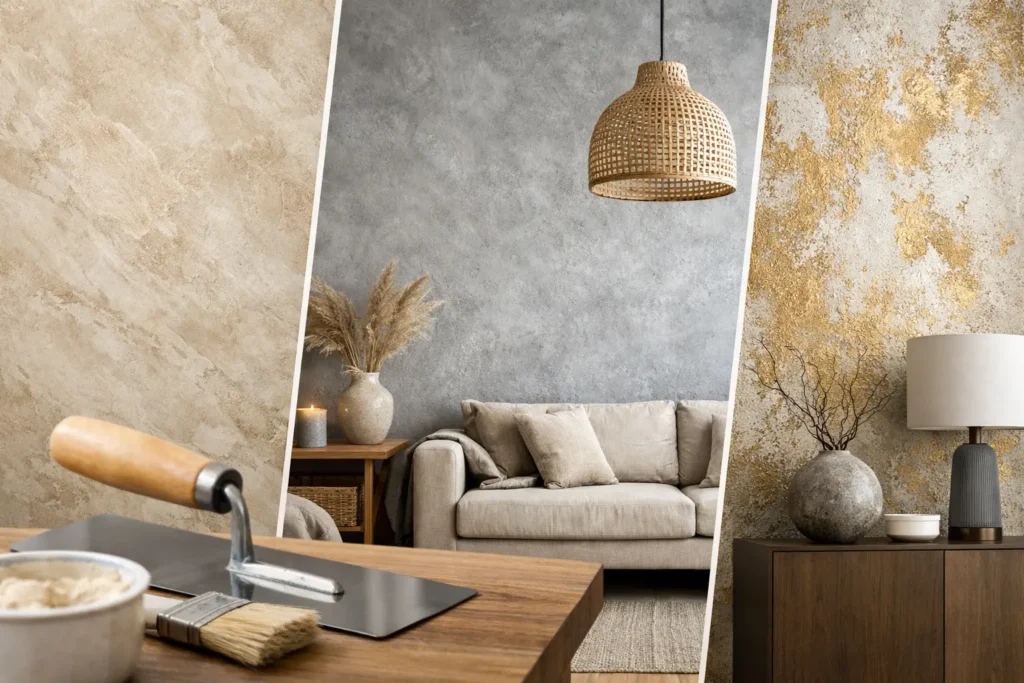
A wall can do far more than carry a paint colour. It can set the temperature of a room, reflect light through a hallway, give a bathroom its calm, spa-like quality, or make a retail interior feel unmistakably its own. This decorative wall coating design guide is for homeowners and commercial decision-makers who want that visual impact without choosing a finish that cannot cope with daily life.
Decorative resin wall coatings bring artistry and performance together. Unlike wallpaper, tiled feature walls or standard paint systems, a professionally applied resin finish can be seamless, tactile, highly personalised and easy to maintain. The best result starts not with a swatch, but with a clear idea of how the space should feel and how it will be used.
Start with the atmosphere, not the trend
A metallic wall with deep movement can be dramatic in the right setting, yet it may overpower a compact room with limited natural light. A concrete-effect surface can make an open-plan kitchen feel considered and architectural, but its cooler character needs warmth elsewhere through timber, textiles or lighting. The coating should belong to the whole interior, rather than compete with it.
Begin by deciding what role the wall will play. Is it a quiet backdrop for furniture and artwork, a focal point behind a reception desk, or the element that gives an otherwise simple bathroom its identity? A feature wall can carry stronger colour, pronounced texture or reflective detail. Where every wall is to be coated, a softer tonal variation is often more enduring.
This is where samples matter. Resin has depth that photographs do not always show accurately. Light catches metallic pigments, terrazzo-style flecks and hand-worked texture differently through the day. Viewing a sample beside cabinetry, flooring, fabric and paint colours prevents expensive surprises later.
Choose a decorative wall coating with purpose
There is no single best decorative finish. The right specification depends on the visual brief, the wall condition and the environment.
Metallic resin for movement and light
Metallic resin wall finishes create fluid, layered patterns that can feel like polished stone, cloud formations or liquid metal. They suit statement spaces: entrance halls, dining rooms, boutique retail interiors, bars and feature areas where light can travel across the surface.
The appeal lies in individuality. Each installation is hand-crafted, so the final movement is unique rather than repeated like a printed pattern. Dark graphite, bronze and charcoal tones create atmosphere; pale pearl, silver and soft gold can lift light levels in a more restrained scheme.
There is a trade-off. A high-movement metallic finish is intentionally expressive, so it works best when surrounding materials are relatively calm. It also needs thoughtful lighting. Downlights, wall washers and pendant lighting can all reveal its depth, while flat, poorly positioned lighting may leave the effect looking quieter than expected.
Concrete-effect coatings for understated architecture
Concrete-effect wall coatings offer a contemporary mineral appearance without the joints, weight or dust associated with raw concrete. They are particularly effective in kitchens, bathrooms, loft-inspired interiors and commercial settings that need a refined industrial edge.
A seamless concrete-effect finish is not limited to grey. Warm stone, mushroom, sand and greige tones often feel more liveable in British homes, particularly where daylight is limited. The surface can be kept smooth and elegant or given subtle trowel marks for a more hand-finished character.
This style rewards restraint. It works beautifully with black metal, pale oak, brushed brass and natural stone, but a room filled with competing industrial details can feel cold. Use it to establish a grounded backdrop, then layer warmth into the wider design.
Terrazzo-inspired resin for colour and character
Terrazzo-inspired resin overlays bring a playful yet polished quality to interiors. Flecks can be selected to echo cabinet handles, joinery colours, signage or existing flooring, making this a strong choice for creative commercial spaces, kitchens, washrooms and contemporary hallways.
The scale and density of the aggregate change the mood considerably. Fine, closely matched flecks feel subtle from a distance; larger contrasting chips become a design feature in their own right. A bespoke blend can connect different areas of a project without making every surface identical.
For busy spaces, consider whether the wall needs to hide occasional marks and scuffs. Mid-toned bases with varied flecks are generally more forgiving than an uninterrupted pale finish. That is a practical decision, but it also gives the design greater visual depth.
Let the room dictate the finish
A decorative coating should respond to moisture, impact, cleaning routines and traffic around it. This is especially relevant in bathrooms, kitchens and commercial premises.
In a bathroom, seamless resin walls reduce grout lines, making the room easier to clean and visually calmer. Correct preparation and a suitable protective system are essential around shower areas and basins, where moisture resistance matters as much as appearance. Soft mineral tones, muted metallics and gentle texture can create a luxurious finish without making a small room feel busy.
In kitchens, think about splash zones and the practical realities of cooking. A wipeable coating behind worktops can offer a continuous alternative to tiles, though the final specification should account for heat exposure, cleaning products and the condition of the substrate. A warm concrete effect or a subtly veined metallic finish can bring character to a kitchen without relying on a conventional tiled splashback.
In hallways and stairwells, durability and cleanability are priorities. These are the spaces that receive bags, shoes, fingertips and constant movement, so a finish with tonal variation is often the more sensible choice. It can still be striking. A deep mineral wall paired with considered lighting gives an entrance immediate presence.
For retail, hospitality and workplace settings, the wall finish should support the brand experience. A decorative resin surface behind a counter, within a treatment room or at a customer-facing reception can become a memorable part of the interior. The design needs to sit alongside signage, furniture and lighting rather than distract from them.
Plan colour, texture and sheen together
Colour alone does not define a wall coating. Texture and sheen alter how that colour reads. A matte finish absorbs more light and can feel calm, soft and architectural. A satin or gloss finish reflects light, highlighting depth and movement but also making surface preparation more critical.
Very dark glossy walls can be impressive, particularly in larger commercial interiors or dramatic dining spaces. In a small domestic room, however, they may reveal fingerprints more easily and can make the room feel enclosed unless balanced with good lighting. Similarly, a very pale, heavily textured finish can be beautiful but may need more careful cleaning in a high-contact area.
Consider the light from every direction. North-facing rooms often benefit from warmer undertones: soft taupe, clay, sand or warm grey. South-facing rooms can carry cooler stone shades, graphite or silvery metallics with greater ease. Artificial lighting matters just as much. Test samples in daylight and again in the evening under the fittings you plan to keep.
Preparation is where premium finishes are won
Decorative wall coatings are only as convincing as the surface beneath them. Resin does not disguise major movement, loose plaster, damp problems or poor repairs. Before application, the installer should assess the substrate, repair imperfections, stabilise vulnerable areas and choose the preparation system that suits the wall.
This stage is not glamorous, but it is where crisp edges, consistent sheen and long-term adhesion begin. Existing wallpaper, flaky paint, hairline cracking and uneven plaster all require different approaches. Rushing preparation to save time can compromise the finish and create visible faults later.
It is also worth agreeing the boundaries of the coating before work begins. Will it run around reveals, into alcoves, behind radiators or across ceilings? Will sockets and switches be removed or masked? These details separate an adequate feature wall from an integrated architectural surface.
A decorative wall coating design guide for better decisions
The most successful projects balance ambition with proportion. A bold finish may be exactly right for one wall, while a quieter complementary surface gives the room breathing space. Equally, a minimalist coating can be the better choice when the furniture, artwork or view beyond the windows already provides plenty of interest.
Ask to see physical samples and discuss how the chosen finish will age in its setting. Be clear about the level of variation you want: some clients prefer controlled, subtle movement, while others want visible artistry and one-off pattern. Neither is better, but expectation should be shared before application begins.
For properties in Essex and London, this sample-led approach is particularly valuable because the same resin finish can look entirely different in a Victorian hallway, a new-build kitchen or a polished commercial unit. Scale, daylight and adjacent materials always shape the final impression.
A decorative wall should feel deliberate from the moment you enter the room. With the right finish, careful preparation and a design that respects the way the space is actually used, it becomes more than a background surface. It becomes part of the architecture – a lasting expression of colour, craft and character.