
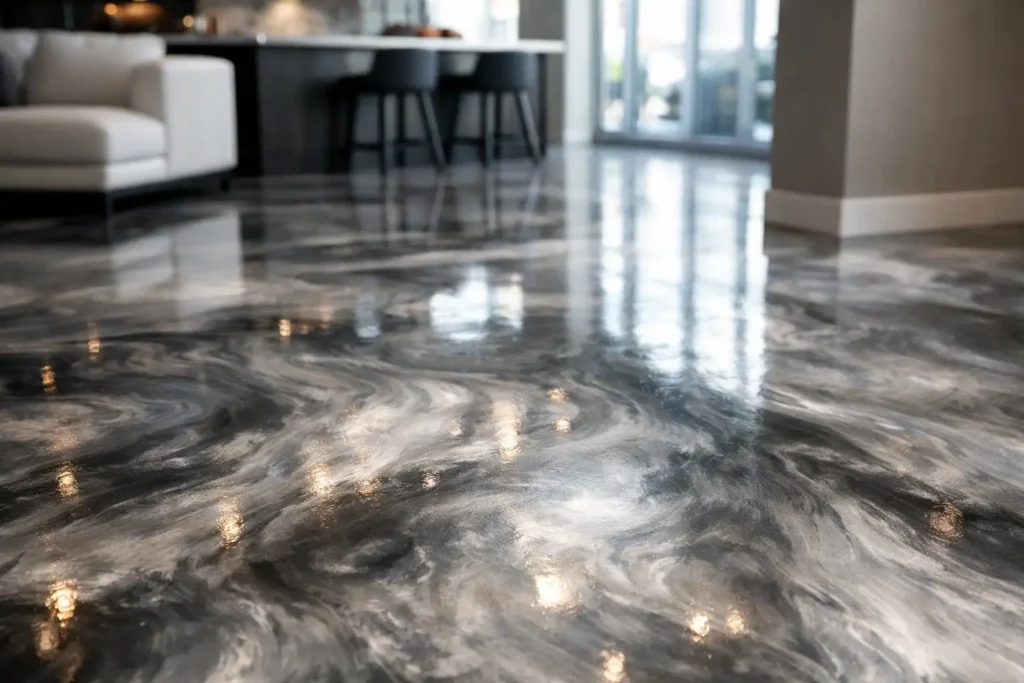
Some floors simply cover a surface. A metallic epoxy floor finish changes the whole feel of a room.
That shift is why it keeps appearing in design-led homes, retail interiors and statement commercial spaces. When it is specified well, the floor does more than add shine – it creates depth, movement and atmosphere, almost like light has been built into the surface itself. For clients who want something more distinctive than tile, vinyl or polished concrete, it offers a very different kind of visual impact.
What makes a metallic epoxy floor finish different?
At its core, metallic epoxy is a resin floor system enhanced with metallic pigments that move through the material during application. Rather than sitting flat, those pigments create variation, flow and a sense of dimension. Depending on the palette and the technique used, the finished floor can feel soft and smoky, high-gloss and dramatic, or subtly reflective with a stone-like quality.
This is where the finish stands apart from standard decorative coatings. It is not trying to mimic a printed pattern or repeat a factory-made look. Every installation has its own character. The movement in the floor is created by hand, which means no two spaces will ever be exactly alike.
For design-conscious clients, that individuality matters. In a hallway, kitchen extension, showroom or feature room, the floor becomes part of the architecture rather than a background material.
Where metallic epoxy flooring works best
Metallic finishes tend to perform best in spaces where you want the floor to be noticed. Open-plan living areas are a natural fit because light can travel across the surface and reveal the shifting tones through the day. In contemporary kitchens, they pair particularly well with clean joinery, dark-framed glazing and minimal detailing.
They also suit commercial interiors that want to feel polished but memorable. A boutique retail unit, reception area, salon or creative studio can all benefit from a finish that feels bespoke rather than off-the-shelf. In those settings, the floor contributes to brand experience as much as practicality.
That said, it is not always the right answer everywhere. If a client wants a completely uniform, understated floor with almost no variation, metallic epoxy may feel too expressive. Likewise, in highly traditional interiors with lots of rustic texture and period detailing, it can work beautifully, but only if the surrounding scheme is handled with care. The finish has a contemporary edge, and it needs to sit comfortably within the wider design language.
The appeal is visual, but performance still matters
A floor can look extraordinary and still need to cope with daily life. That is part of the appeal here. A professionally installed resin system creates a seamless, hard-wearing surface that is easier to keep clean than many jointed flooring options. There are no grout lines to trap dirt, and the smooth finish lends itself well to spaces where hygiene and maintenance matter.
For homeowners, that often means kitchens, utility spaces, garden rooms and converted garages. For businesses, it can mean customer-facing floors that need to hold their appearance under foot traffic. The right topcoat can also be selected to influence gloss level, slip resistance and wear characteristics.
Still, performance depends on specification. A decorative resin floor is not a one-size-fits-all product. The substrate, the expected use of the space, moisture conditions and finish level all affect how the system should be built. This is one of the biggest differences between a premium installation and a cheaper quote that looks attractive on paper.
Metallic epoxy floor finish options are more flexible than people expect
Many people picture metallic epoxy as a dramatic silver swirl with a mirror-like gloss. That look exists, but it is only one direction.
A more refined scheme might use bronze, graphite, pewter or warm pearl tones for a softer architectural effect. Some interiors benefit from deep charcoal and black with subtle movement, while others come alive with lighter mineral shades that reflect natural light without feeling flashy. The finish can be bold, but it can also be restrained.
Gloss level makes a major difference too. High shine creates drama and gives the floor a luxurious, fluid appearance. A satin or more moderated sheen can feel calmer and easier to integrate into everyday interiors. This is why samples and design consultation matter so much. The same material family can lean glamorous, industrial, contemporary or quietly elegant depending on the choices made around colour, movement and surface sheen.
What to expect from the installation process
The finished look may appear effortless, but achieving it takes precision. Preparation comes first. The existing substrate needs to be assessed properly, repaired where necessary and prepared so the new system bonds correctly. Any weakness underneath will compromise the final result, however attractive the top layer may be.
Once the base is ready, the resin system is applied in stages. Metallic pigments are then worked through the epoxy to create the desired movement and depth. This is the artistic part of the process, but it still relies on technical control. Timing, product behaviour, room conditions and application method all influence the final pattern.
After that, protective coats complete the system and help determine the final performance and appearance. Drying and curing times vary, so access to the space has to be planned carefully. For clients refurbishing a home or trading premises, that programme matters just as much as the finish itself.
Because the effect is created live on site, expectations should be realistic. A reference image can guide the direction, but metallic epoxy is not about exact replication. The beauty lies in variation. Good installers will explain that clearly rather than promise a carbon copy of a photograph.
The trade-offs worth knowing before you choose
This is a premium, design-led finish, and it should be approached that way. If budget is the only deciding factor, there are cheaper flooring products available. Metallic epoxy earns its place through visual impact, individuality and the combination of aesthetics with durability.
It is also worth knowing that high-gloss floors can show more of their environment. Dust, footprints and general day-to-day marks may be more visible between cleans than on a matte textured surface. That does not make them impractical, but it does mean the finish should match the client’s lifestyle and tolerance for visual perfection.
Another point is sunlight and space planning. In very bright rooms, reflections can be striking and beautiful, but they need to be considered as part of the overall scheme. The floor will interact with glazing, artificial lighting and surrounding materials in a very active way.
For busy commercial settings, slip resistance needs careful discussion. A highly polished decorative finish may not be suitable in every environment without the right topcoat or texture adjustment. This is where expert guidance matters more than trend-led decision making.
How to know if it is right for your project
The best projects usually start with a simple question: do you want the floor to quietly disappear, or do you want it to shape the room?
If the answer is the second, metallic epoxy becomes very compelling. It works especially well for clients who care about finish quality, who want something bespoke, and who are prepared to treat the floor as part of the design story rather than a practical afterthought. It can transform a kitchen extension from functional to architectural, or turn a commercial unit into a more memorable branded environment.
If, however, your priority is a completely even, understated look with minimal visual movement, another resin finish may suit you better. Concrete-effect systems, terrazzo-inspired overlays or more uniform pigmented resin floors can sometimes offer a calmer aesthetic while keeping the seamless practicality people come to resin for.
That is often the real value of working with a specialist rather than a general flooring contractor. The conversation is not only about product. It is about how the surface should feel in the space, how it will perform over time, and what kind of impression it should leave.
For property owners in Essex and London, where interior standards are often high and design decisions carry long-term value, that distinction matters. A metallic floor done well feels intentional, not decorative for the sake of it.
A metallic epoxy floor finish is at its best when it is chosen with confidence, specified with care and crafted to suit the room around it. The result is not just a floor you walk on, but a surface that gives the whole interior more presence.