
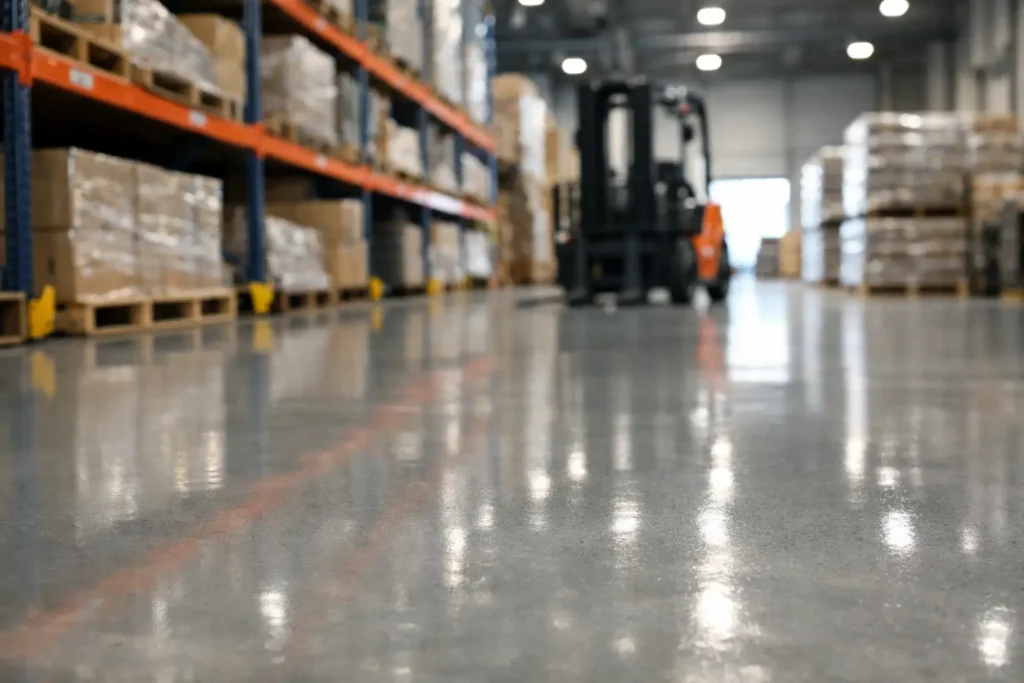
A warehouse floor has to absorb more than traffic. It takes pallet movement, tyre marks, loading stress, cleaning chemicals, dust, spills and constant pressure from daily operations. That is why warehouse resin flooring is rarely just a finishing touch. It is part of how the building performs.
For some sites, the priority is outright durability. For others, it is presentation, hygiene or easier maintenance. The best resin floors do not force you to choose one over the other. They bring hard-working performance together with a cleaner, more considered finish that supports the way a commercial space looks and feels.
Why warehouse resin flooring earns its place
Concrete on its own can seem like the practical choice, especially in large industrial spaces. But bare concrete has limits. It can dust, stain, crack, absorb oils and begin to look tired far sooner than most operators expect. Once surface wear sets in, cleaning becomes harder and the whole environment can start to feel neglected, even when the business itself is highly organised.
Warehouse resin flooring changes that relationship with the space. Instead of a porous, unfinished substrate, you get a sealed surface designed to cope with use while staying visually sharp. Forklift routes look more defined, light levels often improve through reflectivity, and routine cleaning becomes quicker because dirt sits on the surface rather than disappearing into it.
There is also a branding dimension that is often overlooked. A warehouse may be operational first, but for many businesses it is also part of the customer journey, the staff experience and the wider impression of the company. If clients visit the site, if employees move between warehouse and office areas, or if the business prides itself on high standards, the floor should support that identity rather than undermine it.
What makes a good warehouse resin flooring system?
Not every resin floor belongs in a warehouse. The right system depends on load, traffic type, spill risk, temperature changes and how the space is cleaned. This is where a design-led, specification-first approach matters.
A good warehouse resin flooring system starts with the substrate. If the concrete is unsound, damp or heavily damaged, no topcoat will hide that for long. Surface preparation is what gives the finished floor its longevity. Grinding, repair work and moisture assessment are not the glamorous part of the job, but they are often the difference between a floor that lasts and one that fails early.
After that, the specification should match the environment rather than following a standard formula. A warehouse storing boxed goods on light pallet traffic will not need the same build-up as a site handling machinery, chemical exposure or heavy wheeled movement. Thickness, resin type, slip resistance and finish level all need to be chosen with purpose.
This is also where visual decisions come in. Industrial does not have to mean dull. Clean block colours, zoned walkways, safety markings and a more refined finish can transform a warehouse from purely functional to professionally composed. For businesses that care about presentation as much as performance, that shift matters.
Epoxy, polyurethane and where the differences matter
Epoxy is often the first material people think of, and for good reason. It offers excellent hardness, strong adhesion and an attractive, polished appearance. In many warehouse settings, epoxy provides the right balance of resilience and visual quality. It is especially well suited to spaces where durability, chemical resistance and ease of cleaning are central concerns.
That said, epoxy is not always the answer. In environments with thermal shock, frequent temperature fluctuation or more demanding impact conditions, polyurethane systems may be a better fit. They can offer greater flexibility and improved resistance in harsher operational settings.
The point is not that one option is universally superior. It depends on what the floor will face every day. Choosing a resin system based only on price or familiarity can be a false economy if the finish is not designed for the actual use of the building.
A warehouse floor still needs to look right
One of the most outdated assumptions in industrial design is that appearance barely matters once the shutter door comes down. In practice, a well-finished warehouse supports order, safety and confidence. It can make stock areas feel brighter, circulation routes clearer and maintenance standards easier to uphold.
For design-conscious businesses, resin creates opportunities that ordinary floor coatings do not. A warehouse floor can be colour matched to brand tones, divided into distinct operational zones or finished with a uniformity that gives the whole space a more professional presence. That does not mean overdesigning an industrial floor. It means recognising that utility and aesthetics can sit side by side.
At Resinize, that balance sits at the heart of the work. Performance matters, of course, but so does the finished impression. A commercial surface should carry weight, wear and movement without losing the sense that it has been crafted with care.
The practical benefits people notice after installation
The most immediate improvement is usually cleaning. A seamless resin finish gives dust, debris and spills far fewer places to settle. Daily housekeeping becomes simpler, and the floor tends to keep its appearance better between cleans.
The second benefit is visual consistency. Even older warehouses can feel markedly more refined once the floor has been upgraded. The building looks brighter, better maintained and more intentional. That can have a positive effect on staff morale as well as visitor perception.
The third is maintenance control. A properly specified resin system can reduce ongoing patch repairs and surface deterioration. That does not mean it is indestructible. Heavy abuse, poor substrate condition and incorrect cleaning methods can still create problems. But compared with untreated concrete or failing paint systems, resin generally offers a more dependable long-term finish.
Where trade-offs come into play
There is no honest conversation about flooring without acknowledging trade-offs. Resin performs exceptionally well, but success depends on preparation, specification and installation conditions.
Downtime is one consideration. Some warehouse floors can be installed in phases, while others may require a clearer site and a more carefully managed programme. Cure times also vary depending on the system used and the temperature on site. If operations cannot pause, that needs to be planned from the outset.
Slip resistance is another area where balance matters. A smoother finish may be easier to clean and visually sleeker, but in areas exposed to moisture or spills, additional texture may be necessary. The right answer is usually somewhere between safety, cleanability and aesthetic preference.
Then there is budget. A cheaper coating might reduce upfront spend, but if it wears quickly under forklift traffic or starts peeling because the substrate was not properly prepared, the cost returns fast. Premium warehouse resin flooring is not about paying more for the sake of it. It is about investing in a finish that is actually built for the demands of the space.
How to choose the right installer
A warehouse floor is not the place for guesswork. You need an installer who looks beyond square metre rates and asks better questions. What moves across the floor? How often is it cleaned? Are there oils, chemicals or standing water? Is the warehouse purely operational, or does it need to reflect a higher-end brand image as well?
The quality of those questions usually tells you a lot. Good installers think in systems, not just products. They assess the substrate, explain the finish options clearly and help you understand where each specification makes sense. They should also be able to talk about appearance with as much confidence as performance, especially if the space needs to feel polished as well as practical.
For businesses in Essex and London, that joined-up thinking can be particularly valuable where warehouses double as fulfilment hubs, mixed-use commercial units or customer-facing distribution spaces. In those settings, the floor is doing more than taking traffic. It is contributing to the impression the business leaves behind.
When warehouse resin flooring is the right move
If your current floor is dusty, difficult to maintain, visually tired or no longer fit for the pace of your operation, resin is worth serious consideration. It suits warehouses that need a cleaner finish, stronger day-to-day resilience and a more composed overall look.
It is especially effective where businesses want to raise standards without compromising practicality. That might mean a distribution unit that needs clear walkways and hard-wearing zones, or a warehouse that forms part of a wider brand environment and cannot afford to look purely utilitarian.
A well-designed resin floor does not just protect the slab beneath. It sharpens the space above it. And in a warehouse, that can change more than the floor itself. It can change how the whole environment works, feels and is remembered.
If you are weighing up flooring options, start with the demands of the site, but do not stop there. The best commercial surfaces are not chosen only for what they can withstand. They are chosen for how well they support the standards you want the space to express every day.