
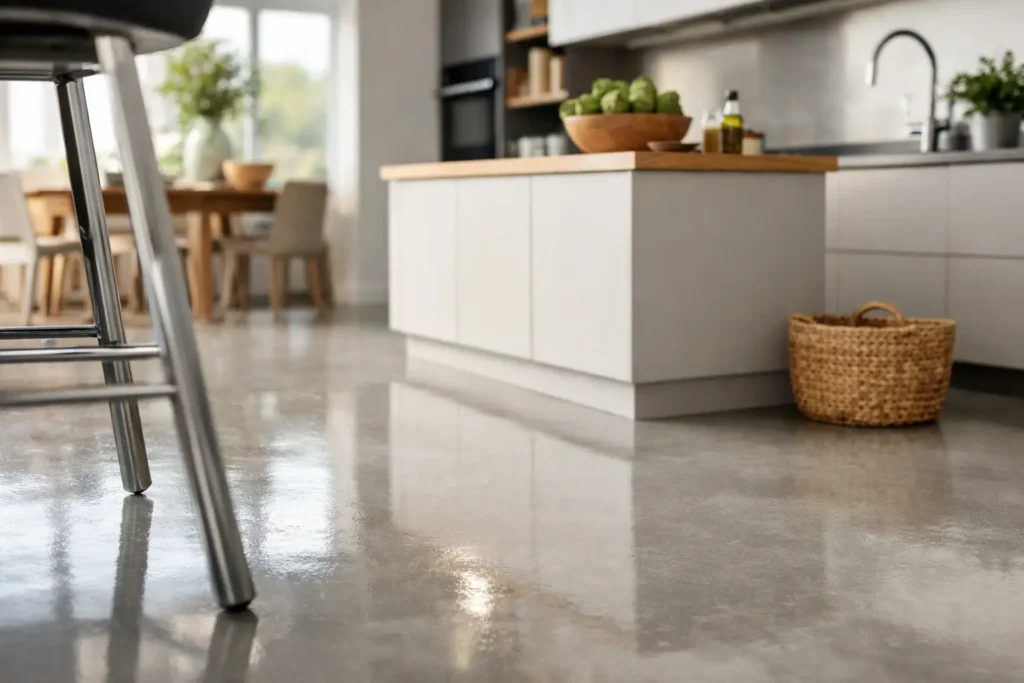
A kitchen floor earns its keep. It deals with dropped pans, chair legs, splashes of oil, muddy shoes, and the slow build-up of everyday life. That is exactly why more homeowners are asking about the best resin floors for kitchens – not simply as a practical upgrade, but as a design decision that shapes the whole room.
Resin has moved well beyond its industrial reputation. In the right setting, it creates a clean, contemporary surface with depth, texture and character. It can feel understated and architectural, or bold enough to anchor the entire scheme. The key is choosing the right type of resin, the right finish, and the right level of slip resistance for how your kitchen is actually used.
What makes resin such a strong kitchen flooring choice?
Kitchens ask for more than good looks. The floor needs to be hard-wearing, easy to maintain and able to cope with moisture without becoming high-maintenance. Resin performs well because it forms a continuous surface with no grout lines, very few places for dirt to gather, and a refined finish that suits modern interiors beautifully.
That seamless quality is one of its biggest strengths. In open-plan homes especially, resin can create visual flow between the kitchen, dining area and living space. Instead of breaking the room into zones, it allows the architecture and furniture to do the talking. The result feels calmer, more deliberate and often more premium than a patchwork of different floor finishes.
There is also the matter of customisation. Resin is not a one-look material. The tone, sheen and surface character can all be tailored. Some kitchens suit a soft concrete-effect finish with a muted, natural palette. Others benefit from a terrazzo-inspired look that introduces pattern and movement. The best result is rarely about following trends. It is about matching the floor to the way the space should feel.
The best resin floors for kitchens depend on how you use the space
There is no single answer to the best resin floors for kitchens, because a family kitchen, a minimalist extension and a light commercial food prep area all have different demands. The right specification depends on traffic levels, design priorities and the condition of the existing subfloor.
Epoxy resin floors
Epoxy is often the first material people think of when resin flooring is mentioned. It is durable, visually crisp and capable of achieving a sleek, polished finish. In kitchens, epoxy works particularly well where you want a smooth, uninterrupted surface and strong resistance to staining and wear.
From a design perspective, epoxy offers plenty of freedom. It can be laid in understated neutrals, stronger architectural greys, or warmer tones that soften contemporary cabinetry. Decorative systems can also introduce texture and visual depth, which helps the floor feel more considered and less purely functional.
The trade-off is that epoxy can be slightly less forgiving underfoot than some alternative systems, and in areas with substantial sunlight or temperature fluctuation, material choice and installation quality matter even more. In a domestic kitchen, that is not usually a problem when the specification is correct, but it is worth discussing at the design stage.
Polyurethane resin floors
Polyurethane resin is often a smart choice for kitchens where comfort, flexibility and long-term appearance are priorities. It tends to be a little more elastic than epoxy, which can make it better suited to spaces with minor movement in the substrate or busier domestic use.
Visually, polyurethane can be exceptionally refined. It lends itself well to soft matt and satin finishes, which many homeowners prefer in kitchens because they feel elegant rather than overly glossy. A matt resin floor can look calm, architectural and expensive without trying too hard.
This option is particularly appealing in design-led homes where the kitchen needs to feel cohesive with the rest of the interior. If the brief is contemporary but warm, rather than clinical, polyurethane is often worth serious consideration.
Decorative and terrazzo-inspired resin systems
For clients who want the floor to be part of the creative statement, decorative resin and terrazzo-inspired systems can be among the best resin floors for kitchens. These finishes introduce more movement, texture and personality than a flat colour application.
A terrazzo-style resin surface can bring depth to a pared-back kitchen, especially when cabinetry is simple and the architecture is doing the heavy lifting. It can also help disguise the dust and crumbs of daily life a little better than very plain, uniform finishes. That does not mean it looks busy. Done well, it feels curated.
This style suits homeowners who see the kitchen as more than a utility zone. It is ideal where the room is used for entertaining, family gatherings and long evenings around an island. The floor becomes part of the atmosphere, not just the background.
Finish matters as much as material
When people compare resin options, they often focus on the system itself and overlook the finish. In practice, sheen level and texture can make a major difference to both appearance and day-to-day use.
A high-gloss finish can look striking, but in a kitchen it tends to show marks more readily and can feel a little too sharp for some interiors. Satin is often the middle ground – polished enough to reflect light, but restrained enough to stay sophisticated. Matt finishes are increasingly popular because they create a softer, more architectural look.
Slip resistance is another important point. The smoothest finish is not always the best finish, especially in households where spills are common. A professionally specified resin floor can include subtle anti-slip properties without losing its design appeal. That balance matters. A kitchen floor should feel elegant, but it also needs to support real life.
Colour and design choices for kitchen resin floors
The most successful kitchen floors usually work with the cabinetry, worktops and light rather than competing with them. Pale grey, warm stone, taupe and off-white resin tones remain popular because they offer versatility and a calm backdrop. They also suit the seamless, modern character many clients want from resin.
Darker shades can look dramatic and luxurious, particularly in larger kitchens with strong natural light. Charcoal and graphite floors pair beautifully with timber, brushed metal and richer joinery colours. The caution is that darker floors may show dust and smudging more clearly, so they work best when the visual scheme really calls for that depth.
If the room needs more personality, decorative flecks, terrazzo influences or concrete-effect movement can add texture without overwhelming the space. This is where a design-led approach becomes valuable. The best resin flooring is not simply chosen from a chart. It is considered in relation to the architecture, the lighting and how the room will be lived in.
Practical considerations before choosing a resin kitchen floor
A beautiful finish starts below the surface. Subfloor preparation is critical with resin, and the condition of the base will influence both performance and final appearance. If there are cracks, moisture issues or uneven areas, they need to be properly assessed before installation begins.
Timing also matters. Resin flooring is best treated as part of the wider renovation plan rather than a late add-on. In kitchen refurbishments and extensions, coordination with cabinetry, appliances and thresholds helps create the uninterrupted look that makes resin so compelling.
It is also worth being realistic about maintenance. Resin is low-maintenance, not no-maintenance. It is easy to clean and well suited to busy households, but like any premium finish, it benefits from sensible care. Using the right cleaning products and avoiding unnecessary abrasion will help preserve the floor’s appearance over time.
So which resin floor is best?
If your priority is a crisp, durable, contemporary surface, epoxy may be the right fit. If you want a slightly softer, more design-sensitive finish with excellent everyday performance, polyurethane often stands out. If the kitchen is intended to feel distinctive and expressive, a decorative or terrazzo-inspired resin system can offer far more visual character.
The best choice usually sits at the intersection of performance and aesthetics. A kitchen floor has to cope with real use, but it also sets the tone for the room. That is why the strongest projects begin with how you want the space to feel, then build the technical specification around that ambition.
For homeowners and commercial clients in Essex and London, that kind of joined-up thinking is often what turns a good floor into a transformative one. Resinize approaches kitchens in exactly that way – as surfaces that need to work beautifully and look exceptional.
Choose resin well, and the kitchen floor stops being an afterthought. It becomes one of the most quietly impressive parts of the room, carrying the weight of daily life while still feeling crafted, considered and completely at home in the design.