
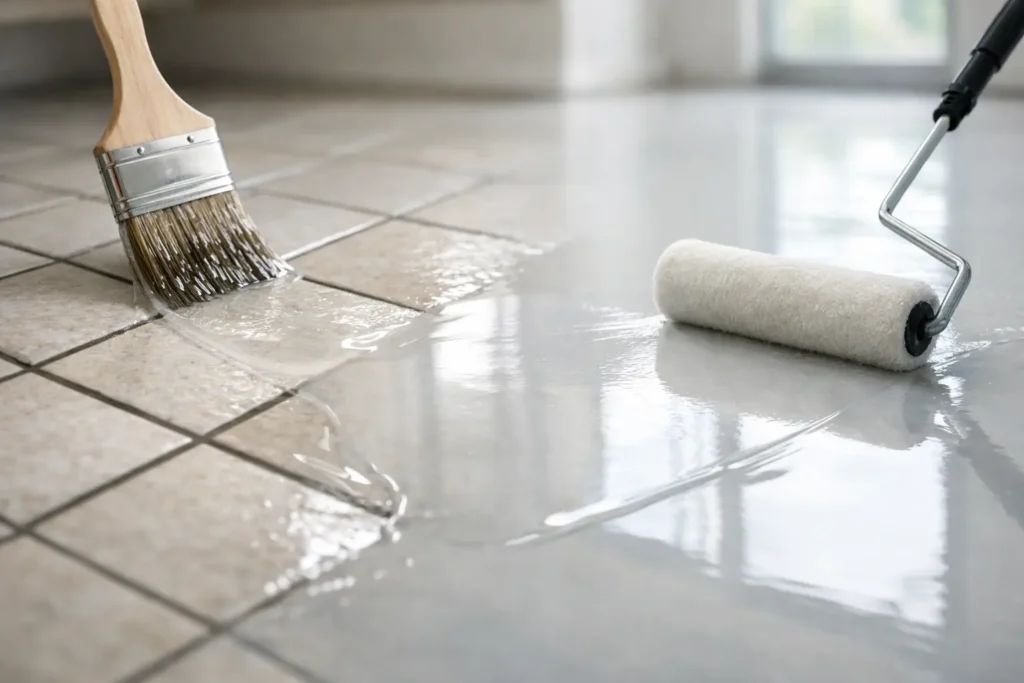
A dated tiled floor can make an otherwise beautifully considered room feel fixed in another era. Removing it is noisy, slow and often disruptive, particularly in kitchens, hallways and commercial spaces. So, can resin go over tiles? In many cases, yes – but the quality of the existing tiled surface and the preparation beneath the resin determine whether the final finish feels flawless or falls short.
A professionally installed resin overlay can transform sound tiles into a seamless, contemporary surface with no visible grout lines. It is an opportunity to replace visual clutter with a calm concrete-effect finish, a terrazzo-inspired composition or a more expressive metallic design, without automatically committing to a full tile removal project.
Can resin go over tiles successfully?
Resin can be laid over tiles when those tiles are firmly bonded, structurally stable and free from moisture issues. The aim is not simply to coat the tiles. It is to create a carefully prepared, level substrate that allows the new surface to perform as one continuous finish.
Tile condition matters more than appearance. Hairline cracks, hollow-sounding areas, loose corners and failed grout can all signal movement beneath the surface. Resin is durable, but it cannot correct an unstable floor. If the tiles move, that movement may eventually transfer through the overlay, creating cracks or visible lines in the finish.
The best candidates are tiled floors that are level, well adhered and relatively undamaged. This is common in homes where the tiles are visually tired but have been installed well. It can also be a practical route for retail units, salons and hospitality spaces that need a striking new look while keeping closure time under control.
Why preparation makes the difference
A refined resin floor begins long before the chosen colour or decorative aggregate is introduced. Tiles have a dense, non-porous surface, which means resin needs the right preparation to achieve a reliable bond.
First, the floor is assessed for movement, damage, damp and contamination. Grease, waxes, cleaning residues and silicone-based products can interfere with adhesion, so the surface must be thoroughly cleaned. The tiles are then mechanically abraded to create a suitable key for the primer. This is not a cosmetic step. It is fundamental to the performance of the system.
Grout lines are also addressed. Depending on the tile profile and resin specification, they may be filled and levelled before the main resin layers are applied. Without this work, the grid of the original tiles can sometimes show through the new finish, known as telegraphing. A seamless result needs a smooth, consistent base.
Any loose or cracked tiles should be removed and repaired before installation. Where widespread movement or poor adhesion is found, removing the tiled surface may be the more responsible choice. A premium finish should never be built on a compromise that will reveal itself later.
Moisture is not a detail to overlook
Moisture rising through a concrete slab can affect any resin installation, whether tiles are present or not. This is particularly relevant on ground floors, in older properties and in areas that have experienced leaks. A professional survey can identify whether a moisture-tolerant primer, damp-proof membrane or further remedial work is required.
Bathrooms require an additional level of care. Resin can create a beautiful, easy-clean surface for a bathroom floor or wall, but it does not replace correct waterproofing within a wet area. Shower zones, floor falls, drainage details and tanking must be resolved before the decorative finish is installed. The result should look effortless because the technical work has been handled properly.
The advantages of a resin overlay on tiles
The immediate appeal is transformation without the upheaval of lifting every tile. Avoiding removal can reduce dust, noise and waste, while helping a project move forward more efficiently. It may also avoid disturbing adjacent units, skirtings or fitted kitchen elements, although each detail still needs to be assessed on site.
Visually, resin offers something tile rarely can: uninterrupted flow. There are no grout lines to interrupt a hallway, kitchen or open-plan living area. A pale concrete-effect floor can make a compact space feel more expansive. A terrazzo-inspired surface can introduce character without the joints and maintenance demands associated with traditional tiled finishes. For a feature room, metallic resin brings depth, movement and an almost liquid quality to the floor.
There are practical benefits too. Properly specified resin floors are hard-wearing, straightforward to clean and designed for daily life. For commercial interiors, the same principle can be applied with heavier-duty systems selected for footfall, equipment, spillages or vehicle use. The desired visual effect and the demands of the environment should always be considered together.
Where resin over tiles works best
Kitchens, utility rooms, hallways and ground-floor living spaces are often strong candidates, provided the tile base is stable. A resin overlay can connect separate zones into one considered surface, making an extension or refurbishment feel more architectural and intentional.
In bathrooms, resin can work particularly well over wall tiles and on properly prepared floors outside the shower area. The absence of grout gives the room a more spa-like, contemporary feel and removes one of the most time-consuming cleaning tasks. Slip resistance can also be incorporated where appropriate, rather than treating it as an afterthought.
Commercial settings have different priorities, but the opportunity remains compelling. A tired tiled entrance, shop floor or studio can be reimagined with a resilient finish that supports the brand environment. Warehouses and garages usually demand a technical coating system chosen for loading, tyre traffic and chemical exposure, rather than a decorative residential specification.
When tile removal is the better option
There are occasions when overlaying is not the right route. Tiles that are extensively cracked, loose, uneven or affected by damp need correction at source. Equally, an existing floor may already sit close to door thresholds, cabinetry or appliances. Adding a resin build-up can alter finished levels, so transitions and clearances must be planned before work begins.
Very textured tiles can require more levelling work, which may make removal a more economical or dependable solution. The honest answer is that a resin overlay is not a shortcut. It is a different construction approach, one that succeeds when the base is suitable and the preparation is exacting.
Choosing the right resin finish
Once the surface has been assessed, the creative decisions can begin. This is where resin moves beyond being a practical flooring material and becomes part of the interior scheme.
Concrete-effect resin suits understated, contemporary spaces, pairing naturally with timber, black metal, soft plaster tones and warm lighting. Terrazzo-inspired resin introduces a more playful, crafted element, with aggregate colours and scale selected to complement the room rather than overwhelm it. Decorative epoxy and metallic finishes create a bolder statement, ideal for feature areas, bars, showrooms or homes with a more expressive design direction.
Finish level matters as much as colour. A matt or satin surface can feel soft and architectural, while a glossier finish reflects light and brings more drama. In active family spaces or commercial environments, the system should also be selected for the expected wear, cleaning regime and slip-resistance requirements. A beautiful floor earns its place by working well every day.
What to expect during installation
A tiled floor overlay is a layered process, not a one-day paint job. Preparation, priming, filling, levelling, application and curing all require time. The programme depends on the area, the condition of the tiles, the selected resin system and site conditions such as temperature and humidity.
During installation, access to the room will usually be restricted, and the floor should not be put back into normal service until it has cured sufficiently. This should be planned around kitchen use, business trading or other practical needs. For properties across Essex and London, where renovation schedules can be tightly coordinated, clear sequencing with other trades helps protect both the finish and the programme.
The final surface should be maintained with suitable pH-neutral cleaning products and soft tools. Avoid abrasive pads and harsh chemicals unless they have been approved for the specific system. Resin is low-maintenance, not no-maintenance, and sensible care preserves its colour, sheen and character.
A tile overlay is most successful when it is approached as a design-led renovation rather than a cover-up. With a stable base, skilled preparation and a finish chosen for the way the room will be used, resin can turn an existing tiled surface into something calm, distinctive and entirely new.