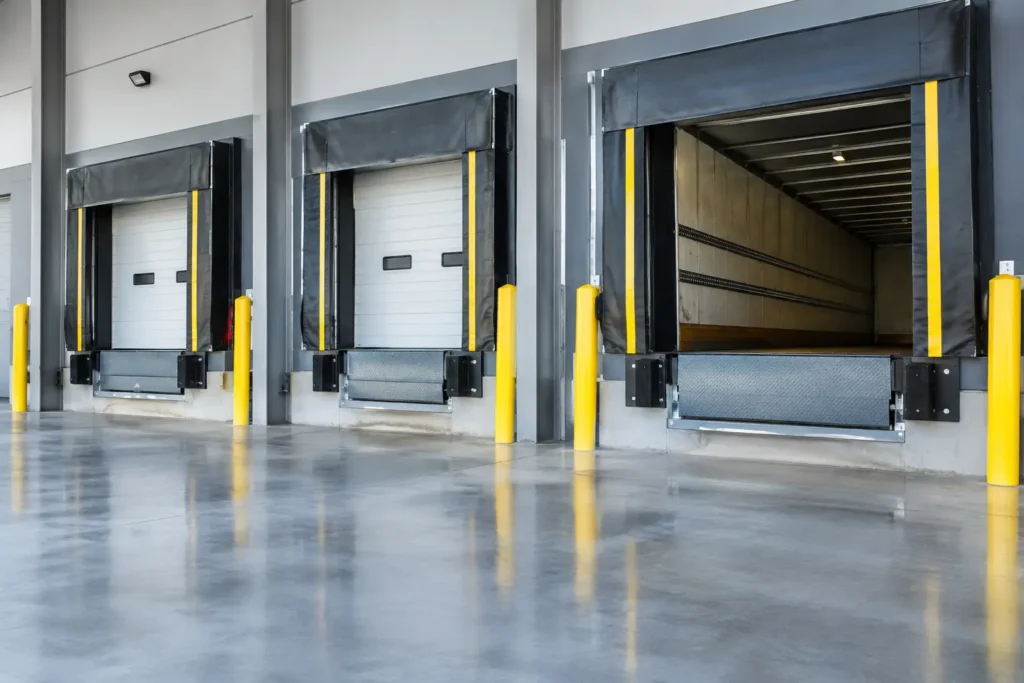
A loading bay is rarely given the luxury of standing still. Forklifts turn tightly at the threshold, pallet lorries cross the same routes, deliveries arrive in poor weather, and staff need secure footing through every shift. Loading bay coatings are therefore not simply a finishing touch. They are a hard-working surface system that can protect the concrete beneath, support safer movement and make a demanding operational space feel properly considered.
For warehouses, trade counters, retail back-of-house areas and industrial units, the right resin finish can bring together performance and presentation. That balance matters. A bay may sit behind the scenes, but it still speaks about the standard of the business operating from it.
Why loading bays put floors under pressure
Concrete is tough, but an untreated slab is not invincible. Repeated wheel traffic can wear its surface, while dropped goods, abrasion, oil, diesel, water and cleaning chemicals can all leave their mark. Dusting concrete is another familiar issue: as the upper layer breaks down, fine particles travel into stock areas, vehicles and equipment.
The loading bay entrance often receives the harshest treatment. It is where outside moisture, grit and road debris meet internal traffic, and where temperature changes can be more pronounced. If a coating is selected only for its appearance, or installed over a poorly prepared substrate, it may soon chip, peel or lose grip in exactly the places that need it most.
A properly specified resin floor creates a sealed, continuous layer over the concrete. It can make cleaning more straightforward, reduce dust and give the space a more resilient working finish. Yet there is no single coating that suits every bay. The daily traffic pattern, condition of the slab, exposure to the elements and required downtime all shape the best answer.
What a high-performing coating needs to do
The first question is not which colour to choose. It is how the loading bay operates. A lightly used stockroom threshold has different needs from a distribution facility moving heavy pallets all day. The finish should be built around the reality of the work, rather than a generic product description.
Resist abrasion, impact and point loads
Forklift tyres, pallet wheels and heavily loaded racking deliveries create concentrated pressure. A resin system needs sufficient build and mechanical strength to cope with this movement without breaking down prematurely. In particularly high-wear zones, a thicker, aggregate-filled system may be more suitable than a thinner decorative coating.
Impact resistance matters too. Dropped tools, pallet corners and metal stillages are part of life in many loading areas. No floor is entirely immune to damage from severe impact, but the correct system will provide a far more durable, repairable surface than exposed concrete.
Keep people on their feet
Slip resistance should be designed into the finish, especially near roller shutters, pedestrian routes and areas exposed to rain. This is commonly achieved by incorporating a fine aggregate into the coating surface. It creates useful grip without making the floor so aggressive that it becomes difficult to sweep or clean.
There is a trade-off here. A highly textured finish offers more traction, but can retain more dirt and make wheeled equipment less comfortable to manoeuvre. The best specification considers footwear, vehicle types, cleaning methods and how often water is likely to enter the bay.
Stand up to spills and routine cleaning
Oil, fuel, hydraulic fluids and cleaning products can stain or weaken an unprotected floor. Resin coatings can provide a more resistant surface, helping staff deal with spills quickly rather than allowing contaminants to soak into porous concrete.
Chemical resistance is never a blanket promise. The substance involved, its concentration and the length of contact all matter. Where a site handles particular oils, detergents or process chemicals, these should be discussed before the system is chosen. That level of detail is what turns a good-looking floor into a dependable one.
Choosing between epoxy and polyurethane systems
Epoxy is often the natural starting point for internal loading bays. It can provide excellent adhesion, a hard-wearing finish and a broad range of colour options. It is particularly effective where the environment is dry, controlled and focused on heavy internal traffic.
Polyurethane systems may be a better fit where there is more movement in the substrate, wider temperature variation or a need for added flexibility. Certain polyurethane finishes can also offer improved resistance to UV exposure, which is useful around open entrances or bays with regular daylight. This can help reduce yellowing or colour change over time.
For more demanding environments, a resin mortar or heavy-duty broadcast system may be specified. These are built with aggregates to create greater thickness, strength and texture. They are not always necessary, and they can be more involved to install, but they offer reassurance where daily operations leave little room for compromise.
The visual direction still has a place in the conversation. A neutral grey may be practical for a busy warehouse, while coloured pedestrian walkways, loading lanes or safety zones can bring clarity to the layout. In customer-facing trade environments, a cleaner, more design-led finish can extend the brand experience from the showroom to the service area.
Preparation is where the lifespan begins
The quality of a resin floor is decided long before the final coat is rolled out. Concrete must be assessed for moisture, contamination, cracks, weak laitance and previous coatings. Mechanical preparation, usually through diamond grinding or shot blasting, opens the surface and gives the resin the profile it needs to bond.
This stage can expose issues that are not obvious at first glance. Oil-contaminated concrete, for example, may need specialist treatment. Cracks may need filling or routing out, while damaged areas may require repairs before coating begins. Movement joints also need careful handling, as resin applied straight across an active joint can crack when the slab moves.
Moisture is another decisive factor. A slab that appears dry may still contain vapour that affects adhesion. Testing and the right primer strategy are essential, particularly in older buildings or bays built directly onto ground-bearing slabs. Skipping these checks may save time at the start, but it can create expensive disruption later.
Planning installation around the working day
Many businesses cannot close a loading area for long. That does not mean the coating should be rushed. It means the programme needs to be planned intelligently, perhaps in phases, over a weekend or around quieter delivery periods.
Cure times depend on the resin system, ambient temperature and site conditions. A floor may feel dry to touch long before it is ready for forklift traffic. Allowing the full curing period is one of the simplest ways to protect the investment. Reopening too soon can leave tyre marks, surface damage or premature wear that no coating should be expected to withstand.
Good communication before installation is equally valuable. Stock should be moved, access routes agreed, and the area kept clear of vehicles and foot traffic while work is underway. For businesses in Essex and London where space is often tight, a phased approach can make a significant difference to how smoothly the project runs.
Designing a bay that works and looks intentional
Industrial does not have to mean neglected. A well-finished loading bay can improve the feel of the whole premises, particularly where staff, suppliers and customers pass through the same entrance. Clean lines, consistent colour and clearly defined routes create an organised impression before anyone reaches the main workspace.
At Resinize, the approach is to pair that visual discipline with the practical demands of the site. The result should not be a decorative floor trying to survive industrial use. It should be a carefully crafted surface that earns its place every day.
Maintenance remains refreshingly simple. Regular sweeping removes abrasive grit, prompt spill management limits staining, and periodic cleaning with suitable products keeps the surface looking its best. Avoid harsh or unsuitable cleaners that leave residue, and address localised damage early before traffic can widen it.
A loading bay coating is most successful when nobody has to think about it during a busy shift. It simply provides grip underfoot, stands firm beneath the wheels, cleans down well and gives the space the composed, professional finish its work deserves.