
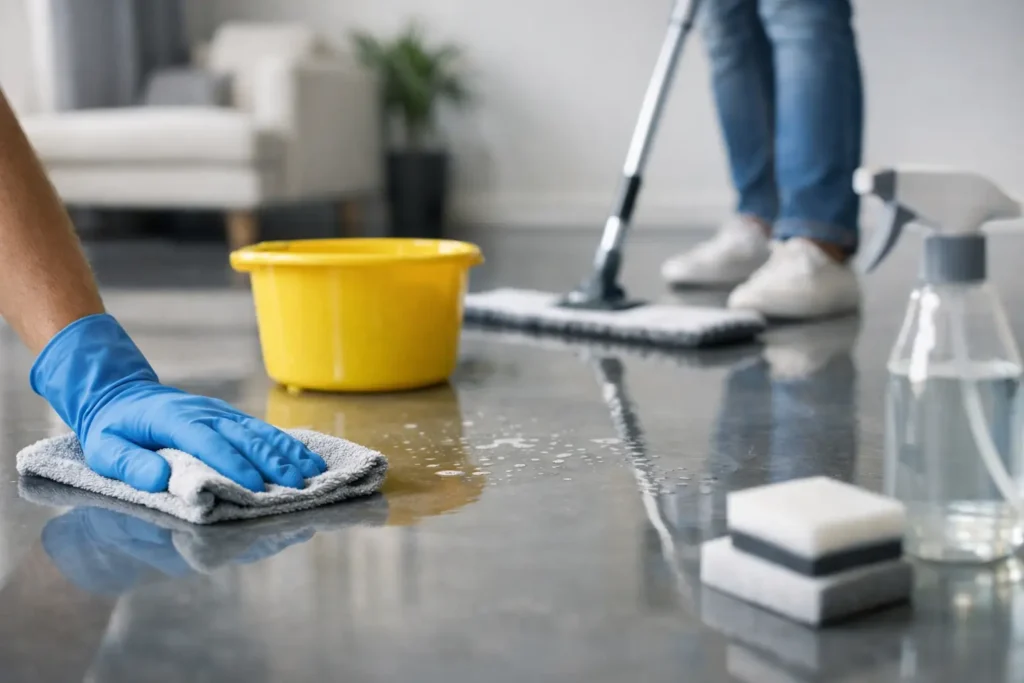
A pale terrazzo-inspired kitchen floor can look beautifully considered, but it also has to survive coffee splashes, muddy trainers and the occasional dropped pan. So, are resin floors easy to clean? In most settings, yes. Their seamless construction removes one of the biggest cleaning frustrations found with tiled, boarded or grouted floors: the joins where dirt, moisture and residue tend to settle.
That simplicity is a major reason resin works so well in design-led homes and hardworking commercial interiors alike. A properly specified and professionally installed resin floor creates a continuous surface that is quick to sweep, easy to mop and visually calm. The detail that matters is choosing the right resin system and finish for the room, because a polished feature floor, a family kitchen and a busy workshop do not face the same demands.
Are resin floors easy to clean in everyday life?
For day-to-day cleaning, resin flooring is unusually straightforward. Dust, crumbs, pet hair and loose grit remain on the surface rather than working into grout lines or gaps. A soft broom, microfibre mop or vacuum with a suitable hard-floor setting will usually take care of regular debris.
For a more thorough clean, warm water and a pH-neutral cleaner are generally enough. The aim is to lift surface film without leaving behind a soapy residue that can dull the finish over time. In a home, this might mean a quick mop once or twice a week, with spillages dealt with as they happen. In a retail unit, salon, warehouse or garage, the schedule may be more frequent, but the process remains uncomplicated.
The seamless quality also makes resin a strong option for kitchens, bathrooms and utility rooms. There are no grout joints to discolour, no tile edges to catch dirt and no awkward transitions across a continuous floor area. This creates a cleaner visual line as well as a surface that is easier to maintain.
Why a seamless floor changes the cleaning routine
Traditional floor finishes often demand extra attention in the places that are least visible. Grout can retain moisture and staining. Timber joints can collect fine dust. Textured vinyl and poorly sealed concrete may hold onto grime more readily than expected. Resin reduces these interruptions by forming one carefully finished surface.
That does not mean every resin floor feels identical. A glossy metallic epoxy can reflect light dramatically and make a room feel expansive, but it may show smears or footprints more clearly in strong sunlight. A satin or matt concrete-effect finish is often more forgiving in hallways and family spaces. Decorative flakes and terrazzo-style blends can also disguise minor dust between cleans while retaining their crafted character.
This is where surface design and practical use should be considered together. The most striking finish is not always the best choice for every room. A good specification balances colour, sheen, texture and expected traffic, rather than treating cleaning as an afterthought.
What resin floors cope with well
Once cured, a quality resin system is non-porous or very low-porosity, depending on its construction and topcoat. This makes it particularly capable of handling everyday splashes and marks before they have time to become a problem. Tea, coffee, food spills, wet footprints and general household mess can normally be wiped away with little effort.
In commercial environments, the benefits can be even more noticeable. A seamless coating allows cleaning teams to cover large areas efficiently, while its clean-lined appearance supports a more considered customer or workplace environment. For garages and industrial spaces, however, the specification needs to account for oils, tyres, impact, chemicals and heavy point loads. A decorative residential epoxy is not automatically the right answer for a heavy-duty setting.
Resinize approaches this through finish selection, preparation and installation detail, not simply by applying one product everywhere. The floor has to be designed around its use, from a statement bathroom to a high-traffic retail space.
The cleaning habits that protect the finish
Resin is low-maintenance, not no-maintenance. A few sensible habits preserve its appearance and help a premium surface remain a feature for years.
Use entrance mats in areas exposed to outdoor grit, especially hallways, shop entrances and side doors. Fine stones can act like sandpaper under shoes, wheels or furniture feet. Sweep them away regularly rather than allowing them to be walked across the floor.
Wipe spillages promptly, particularly cooking oils, strongly coloured liquids and chemical products. Most domestic spills are manageable, but speed is always kinder to any floor finish. In garages and workshops, remove fuel, oil and chemical spills according to the coating system’s care guidance.
Choose soft cleaning tools. Microfibre pads and non-abrasive mops are ideal. Avoid wire brushes, harsh scouring pads and aggressive powders, which can scratch or reduce the clarity of a gloss finish. If furniture is moved regularly, felt protectors beneath legs are a small addition that prevents unnecessary marking.
Finally, use the cleaner at the right dilution. More product does not necessarily mean a cleaner floor. Overuse can create a film that makes resin look hazy or feel less crisp underfoot. Clean water and a neutral solution, changed when it becomes dirty, usually deliver the best result.
Cleaners and methods to avoid
The exact aftercare advice will depend on the resin system, its topcoat and the environment, so it is wise to follow the installer’s recommendations. As a broad rule, avoid highly acidic or highly alkaline cleaners unless they have been approved for the floor. Bleach-heavy products, solvent cleaners and strong degreasers may be unsuitable for some decorative finishes, particularly when used repeatedly.
Steam cleaning is another method worth checking before use. Heat and moisture are not automatically harmful to every resin surface, but a floor is an assembled system with primers, layers and sealers. It is better to use a gentle, proven cleaning routine than to introduce unnecessary stress through extreme heat or chemicals.
Pressure washing is similarly inappropriate indoors and rarely necessary. A resin floor should look refined because of its finish and craftsmanship, not because it requires intensive cleaning equipment.
Does the finish affect how clean a resin floor looks?
Yes, and this distinction is useful. A floor can be hygienically clean yet show every dust particle because it has a dark, high-gloss surface in direct light. Conversely, a lighter, patterned or satin finish may appear fresher between cleans because it is more visually forgiving.
For busy homes, warm stone shades, concrete effects, terrazzo-inspired aggregates and satin sheens often offer an appealing balance of character and practicality. They have depth and movement, so everyday life does not interrupt the design at the first footprint. In a feature space where drama is the priority, a mirror-like metallic finish can be exceptional, provided its owner is happy to maintain that sharper, more reflective look.
Texture needs equal consideration. A lightly textured anti-slip finish can be valuable in wet rooms, commercial kitchens or entrances, but it may need slightly more attention than a smooth surface because its profile catches more residue. This is not a reason to avoid it. It is simply a trade-off between grip, visual effect and cleaning speed.
When resin flooring needs more than a mop
Over time, even well-maintained floors may benefit from professional attention. High-traffic routes can lose some of their original sheen, particularly in commercial premises or homes with children, pets and constant movement. Minor scuffs may be improved through specialist cleaning or a compatible maintenance coat, depending on the system.
The important point is not to treat cosmetic wear with random off-the-shelf products. Wax, polish and unsuitable sealers can alter slip resistance, create patchiness or complicate future repairs. A specialist can assess whether the floor needs a deep clean, local repair, recoat or simply a revised care routine.
For a surface that is both practical and expressive, the best result begins before installation: choose a finish that suits the light, the traffic and the way the room is actually lived in. Then let a simple, regular cleaning routine protect the artistry that made the space feel transformed in the first place.