
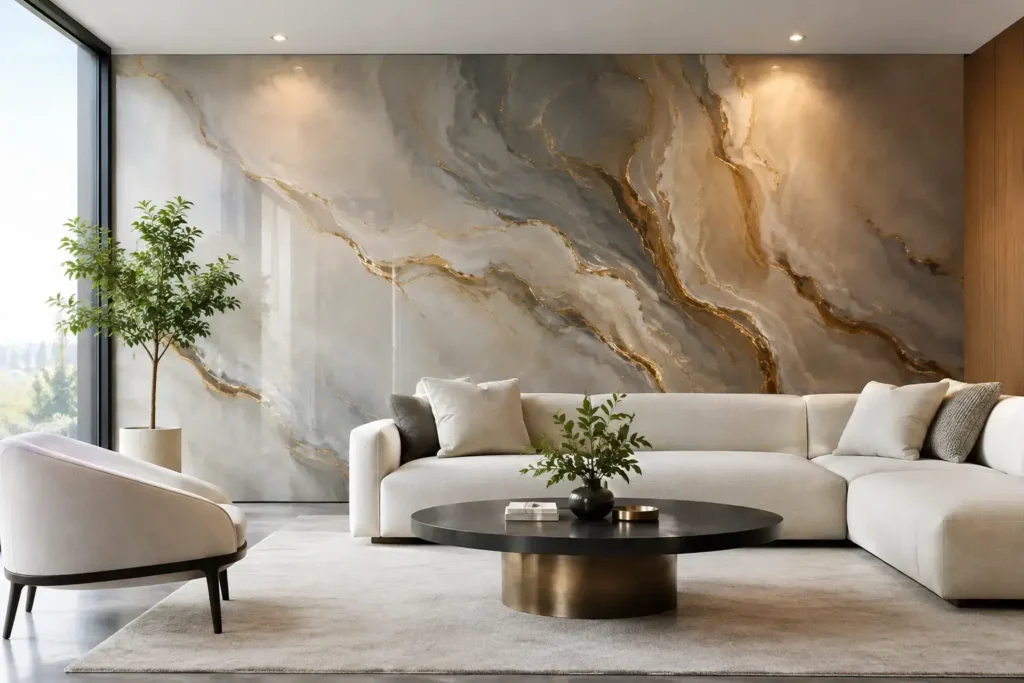
A wall finish should do more than fill a vertical space. It should set the mood of the room, handle real life gracefully and feel considered from every angle. Resin walls bring a depth, fluidity and continuous finish that paint, tiles and wallpaper rarely achieve – turning practical rooms and statement spaces into something far more personal.
Whether used behind a freestanding bath, across a reception wall or as a dramatic kitchen backdrop, resin offers an opportunity to create an interior that feels designed as a whole. The result can be quiet and mineral-like, richly metallic, terrazzo-inspired or full of expressive movement. No two installations need look alike.
What makes resin walls different?
Resin is a liquid-applied surface finish, built up in carefully prepared layers and cured to form a hard, continuous coating. Unlike tiled walls, it does not rely on grids of grout lines. Unlike standard paint, it can create genuine visual depth, variation and tactility.
That continuity changes how a room reads. In a compact cloakroom, fewer visual breaks can make the space feel calmer and more generous. In a larger kitchen or commercial setting, a seamless wall can provide a strong architectural backdrop without competing with furniture, lighting or artwork.
The creative scope is equally compelling. Pigments, aggregates and specialist application techniques allow for finishes that range from softly clouded concrete effects to polished metallic movement. Terrazzo-inspired resin can introduce flecks of colour and texture, while a finely finished decorative epoxy surface can feel almost like a piece of commissioned artwork.
This is not a printed pattern repeated across a roll of wallpaper. The character develops during application, which gives each wall its own individual composition.
Where resin walls work best
Resin is particularly effective where design ambition meets a need for an easy-to-clean, durable surface. Bathrooms are an obvious example. A seamless resin wall around a basin, bath or shower area can create a spa-like atmosphere while avoiding the maintenance associated with stained or ageing grout.
Kitchens benefit too, especially when the wall finish is designed alongside the floor, worktops and cabinetry. A restrained concrete-effect resin can bring balance to warm timber units, while a bolder metallic finish can make an island or dining area feel more theatrical. For splashback areas, the specification must be appropriate for heat, moisture and day-to-day cleaning, rather than chosen for appearance alone.
Feature walls are where resin can be at its most expressive. In a hallway, it creates an immediate sense of arrival. In a living space, it can frame a fireplace, media wall or shelving scheme without the visual interruption of joints. Hospitality venues, salons, retail spaces and offices can also use decorative resin to carry a distinctive brand atmosphere through an interior.
For commercial environments, the right system matters. A wall in a busy restaurant corridor has different demands from one behind a reception desk. High-contact areas may need greater resistance to scuffs and more frequent cleaning, while a purely decorative feature can prioritise detail and finish complexity.
Wet areas need the right preparation
A resin wall can be an excellent choice for bathrooms and shower spaces, but it is not a shortcut around proper waterproofing. The substrate must be sound, dry and correctly prepared, and wet zones may require a compatible waterproofing system beneath the decorative finish.
This is where craftsmanship has a practical role. Corners, junctions, niches, pipe penetrations and transitions to floors all need careful planning. A beautiful finish is only as dependable as the surface below it and the details around it.
Choosing a finish that suits the room
The best resin wall is not always the boldest one. Consider the light in the room first. Natural daylight reveals movement, pigment variation and sheen differently throughout the day, while directional spotlights can make metallic effects feel more dramatic. In a low-light room, a lighter tone with a gentle reflective quality may prevent the space from feeling enclosed.
Colour should also be considered in relation to adjacent materials. Resin works particularly well alongside oak, stone, brushed brass, blackened steel and fluted glass because its continuous surface provides a counterpoint to more textured elements. A pale mineral finish can soften a strongly contemporary scheme; a deep bronze or charcoal metallic can give a neutral interior a focal point.
Sheen is a design decision as much as a practical one. A matt or satin surface generally feels more understated and can disguise minor marks more easily. Glossier finishes reflect light beautifully and can heighten the sense of depth, but they may show fingerprints or surface contact more readily in busy areas.
Samples are invaluable here. Looking at a small sample against cabinetry, flooring and lighting will tell you far more than viewing a colour in isolation. For a bespoke finish, the sample stage is also the moment to decide how much movement, contrast or aggregate feels right for the wider space.
The trade-offs worth understanding
Resin is a premium, hand-finished surface, and that is part of its appeal. It is not usually the lowest-cost route to covering a wall, particularly when extensive preparation or detailed waterproofing is required. Its value lies in the combination of design freedom, seamlessness and long-term visual impact.
It also requires an experienced installation process. Substrates must be assessed for movement, moisture issues and existing defects before work begins. Applying resin over an unstable, contaminated or poorly repaired surface risks affecting the final finish, so preparation is never the stage to rush.
As with any hand-applied decorative material, subtle variation is expected. That variation is not a flaw when it has been agreed as part of the chosen aesthetic. If you want a completely uniform, repeatable colour with no movement, another wall finish may be more suitable. Resin is at its best when its depth and individuality are embraced.
Repairs can be possible, depending on the system and the damage, but an invisible repair is not always guaranteed on a decorative finish with pronounced movement. It is sensible to discuss likely wear patterns at the design stage, particularly around doorways, busy seating areas or commercial service points.
Looking after a resin wall
Once cured, resin walls are straightforward to maintain. Regular wiping with a soft cloth or non-abrasive sponge and a mild, pH-neutral cleaner will usually keep the surface looking its best. Harsh scourers, strongly alkaline products and aggressive solvents should be avoided unless the specific coating system has been confirmed as suitable.
In kitchens and bathrooms, deal with spills, soap residue and limescale promptly rather than allowing them to build up. This protects the finish and preserves the clarity of the surface. Good ventilation also matters in wet rooms, helping the whole space dry efficiently after use.
For commercial interiors, a realistic maintenance plan should be part of the specification. The cleaning products used by the team, frequency of cleaning and level of physical contact all influence which resin system is right for the project.
From idea to finished wall
A successful resin wall begins with an honest conversation about the space. How is it used? What will sit against it? Does it need to cope with steam, splashes, heat or constant contact? And what do you want people to feel when they enter the room?
From there, the process should move through surface assessment, finish selection, samples and a clear installation plan. This is particularly valuable in period homes, where walls may need more preparation, and in London or Essex commercial refurbishments, where programme timing and access can shape the practical approach.
At Resinize, each project is approached as both a technical installation and a design opportunity. The aim is not simply to coat a wall, but to craft a finish that belongs in the room and continues to reward attention long after the work is complete.
If you are considering resin for a wall, start with the atmosphere you want to create, then let the performance requirements guide the specification. That balance is what turns an attractive idea into a surface that feels exceptional every day.