
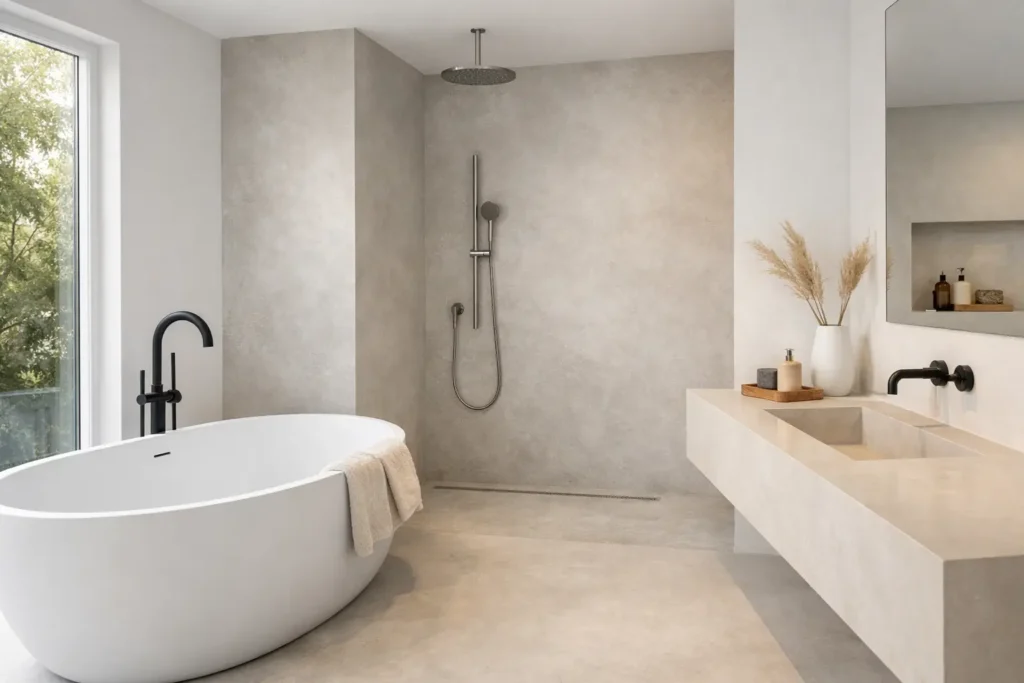
A bathroom can look beautifully designed on installation day, then lose its impact to stained grout, awkward trim lines and tired-looking joins. The best seamless bathroom surfaces take a different approach: they create a calm, continuous backdrop that makes the room feel more generous, more considered and far easier to live with.
For a compact en-suite, a family bathroom or a statement wet room, the right finish needs to do more than photograph well. It must be properly prepared, compatible with moisture, comfortable underfoot and detailed with care around drains, corners and fittings. That is where material choice and installation quality become inseparable.
What makes the best seamless bathroom surfaces?
The strongest options combine visual continuity with practical performance. They minimise grout lines and interruptions, reducing the places where soap residue, limescale and everyday grime can settle. The result is a cleaner visual language and a surface that feels more architectural than a standard tiled scheme.
Yet there is no single best material for every bathroom. A high-traffic family room has different demands from a guest cloakroom, while a fully tanked walk-in shower needs a different specification from a wall behind a freestanding bath. The best decision comes from balancing the intended look with water exposure, substrate condition, budget and how the space will actually be used.
A well-designed continuous finish should also be considered as part of the wider room. Wall colour, brassware, lighting temperature and vanity materials all influence whether the final scheme feels soft and spa-like, crisp and contemporary, or richly dramatic.
Resin: a design-led choice for floors and walls
Resin is one of the most versatile choices for bathrooms because it can be crafted as a continuous finish across floors, walls and selected feature details. It suits homeowners who want an uninterrupted surface without the grid of conventional tiles, while offering far more creative freedom than a plain neutral floor.
Decorative epoxy and polyurethane systems can be specified in calm mineral tones, terrazzo-inspired blends, concrete effects or expressive metallic finishes. A pale stone-inspired resin can bring light into a narrow bathroom. A darker, softly textured finish can give a larger space depth and atmosphere. With the right design, the floor becomes part of the room’s character rather than a background necessity.
For wet areas, the finish must be chosen and installed as part of a complete system. This includes assessing the base, managing falls to drainage, preparing waterproofing where required and selecting an appropriate topcoat. Slip resistance is equally important. A polished-looking floor does not need to be impractical, but the texture and specification should be matched to the room, particularly around showers and baths.
Resin also offers a valuable advantage during cleaning. Without grout joints across the floor, there are fewer places for discolouration to develop. Regular care is straightforward: use a pH-neutral cleaner, avoid harsh abrasives, and deal with standing water or product spills as part of normal bathroom housekeeping.
Where resin works best
A continuous resin floor is especially effective in wet rooms, contemporary renovations and bathrooms where the same finish can travel from floor to wall. It can also bring coherence to an awkward layout with alcoves, boxed-in pipework or several thresholds. Rather than treating these features as interruptions, skilled detailing can make them feel intentional.
The trade-off is that resin is not a quick cosmetic cover-up. The substrate needs careful assessment, and proper curing time must be built into the project programme. Premium results rely on precise preparation, controlled application and experienced finishing.
Microcement and concrete-effect finishes
Microcement has become popular for its soft, tactile movement and pared-back appearance. It can create a calm, plaster-like surface that works beautifully with timber, brushed metal, natural stone and sculptural sanitaryware. In bathrooms, it is typically installed in layered systems and protected with a suitable sealer.
Its appeal lies in variation. Unlike factory-made tiles, microcement has natural tonal shifts and hand-applied character. This gives each room a bespoke feel, although it also means a sample should be viewed as an indication rather than a promise of identical patterning throughout.
For walls with limited direct water exposure, microcement can be an elegant choice. In shower zones and on floors, the waterproofing system, sealant quality and installer expertise are critical. It may require periodic maintenance of protective coatings depending on the system and the level of use. For clients who want a similar visual language with a highly tailored decorative finish, concrete-effect resin can be worth comparing.
Large-format porcelain and wall panels
Large-format porcelain is not entirely joint-free, but it can reduce grout lines dramatically. It is a practical option for those who prefer the reassuring familiarity of tile while wanting a quieter, more expansive look. Porcelain is hard-wearing, stable and available in convincing stone, marble and concrete designs.
The limitation is in the details. Even the largest slabs require joins, and careful installation is needed around corners, niches and outlets. Grout selection matters too. A closely colour-matched grout can minimise contrast, while poor alignment can undermine the effect of an otherwise premium material.
Wall panels are another practical alternative, particularly for shower surrounds. They can be quick to install over suitable existing walls and are available in a broad range of decorative finishes. Their main compromise is aesthetic: panel dimensions, edge trims and visible junctions can make them feel less integrated than a hand-finished resin or microcement surface.
Natural stone and polished plaster
Natural stone brings undeniable presence to a bathroom. Honed limestone, marble and slate each offer a depth that manufactured materials work hard to imitate. Used as slabs rather than small tiles, stone can create an exceptionally refined look with fewer joints and a strong sense of permanence.
It is not, however, maintenance-free. Many stones are porous and need correct sealing, thoughtful cleaning and an understanding of how water, cosmetics and acidic products may affect them. Marble can etch, while some textured stones may need more attention to keep clean. Stone is often best for clients who welcome patina as part of the material’s character.
Polished plaster can bring softness and visual depth to bathroom walls, especially away from direct shower spray. It is ideal for creating a boutique-hotel atmosphere, but it should not be assumed to be suitable everywhere simply because it looks waterproof. The exact product system and the room’s ventilation must guide the decision.
Choosing by bathroom type
A shower room benefits from a surface system designed around water management first, then aesthetics. Resin and properly specified microcement can both work well, provided the base is sound, the area is waterproofed and drainage falls are accurately formed.
For a main family bathroom, easy cleaning and resistance to daily wear may take priority. A matte or lightly textured resin floor with simple wall finishes can offer a polished, low-fuss balance. In a cloakroom, where direct water exposure is lower, there is greater freedom to use decorative plaster, bold metallic resin or richly toned feature walls.
If the room is small or has little natural light, avoid assuming that white is the only answer. Warm off-whites, pale mineral greys and soft sand shades can feel more inviting while still reflecting light. A continuous finish also helps the eye travel across the room, which can make compact spaces feel less broken up.
Details that decide the final result
The finest bathroom finish can be weakened by poor transitions. Before choosing a surface, consider where it meets the shower channel, skirting detail, door threshold, bath panel and vanity unit. These junctions are where craftsmanship is visible.
Samples are equally valuable. View them in the room where possible, under both daylight and evening lighting. Look at texture as well as colour, and ask how the sample will translate across a larger area. A surface with subtle movement can look sophisticated across a floor, while a heavily patterned finish may be better reserved for a feature wall.
For homeowners across Essex and London seeking a more individual bathroom, Resinize approaches resin as an architectural finish rather than a standard flooring product. The aim is not merely to remove grout lines, but to create a surface that belongs to the room’s full design story.
Choose the material that supports how you want the bathroom to feel every morning, not just how it looks in a showroom. When the specification, samples and installation details are handled with care, a continuous surface can turn the most functional room in the home into one of its most memorable spaces.