
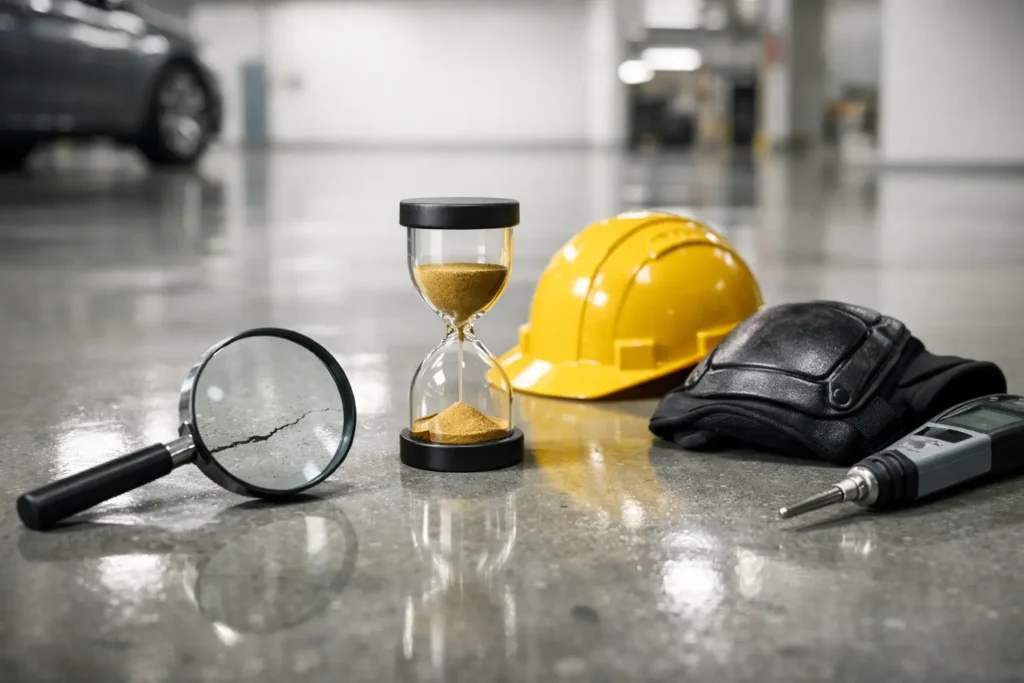
A well-crafted resin floor should feel like a considered part of the architecture, not a short-term surface solution. The expected epoxy floor lifespan depends less on a single number and more on how the floor is designed, prepared, installed and used. In the right setting, a decorative epoxy floor can retain its visual impact and practical performance for many years. In a hard-working commercial space, it may need a more purposeful specification from day one.
For homeowners choosing a seamless kitchen, hallway or bathroom finish, longevity is about preserving that uninterrupted sense of colour, depth and calm. For a garage, warehouse or retail setting, it is about achieving the same polished result while standing up to traffic, loads and daily cleaning. The artistry is in choosing a system that is equal to the space.
How long does an epoxy floor last?
A professionally installed epoxy floor in a residential setting commonly lasts 10 to 20 years or more when it is correctly specified and cared for. A floor in a low-traffic room, such as a feature space or carefully used living area, can remain attractive beyond that range.
Commercial and industrial environments place greater demands on the coating. Forklift movement, wheeled equipment, dropped tools, oils, frequent washdowns and constant footfall can shorten the interval before refurbishment is needed. Depending on the system and the conditions, a commercial epoxy floor may perform well for 5 to 10 years, with local repairs or a renewed topcoat extending its serviceable life.
These figures are useful starting points, not guarantees. An epoxy finish installed over a sound, dry substrate and matched to its environment will behave very differently from one laid over a damp, cracked or poorly prepared concrete slab. The material matters, but the groundwork matters just as much.
What affects epoxy floor lifespan most?
The condition beneath the finish
Epoxy is only as dependable as the surface it bonds to. Concrete often looks solid while holding dust, residues, laitance, old adhesives or moisture that can interfere with adhesion. A professional installation begins with assessing the substrate, mechanically preparing it and resolving imperfections before the decorative layers are introduced.
Moisture deserves particular attention. Ground-floor slabs can be affected by moisture vapour rising through the concrete, even where no obvious damp is visible. If this is not tested and managed, pressure beneath the coating may lead to blistering, delamination or patches that lose their bond over time. A suitable moisture-tolerant primer or vapour-control system can be the difference between an impressive finish for a season and one that endures.
The specification for the room
Not every epoxy floor is intended for every type of use. A refined metallic finish for a private reception area has different requirements from a garage floor exposed to hot tyres, road grit and occasional chemical spills. Likewise, a food-preparation area may need a finish selected for hygiene, cleanability and slip resistance rather than visual drama alone.
The most successful projects balance appearance with the realities of the room. Decorative flakes can disguise minor marks in a busy utility area. A hard-wearing clear topcoat can help protect a terrazzo-inspired resin overlay. A textured finish can provide useful grip where water is expected, though more texture can make deep cleaning slightly more involved. These are not compromises in design. They are the details that allow a surface to stay beautiful in real life.
Traffic, impact and point loads
Foot traffic is rarely the sole concern. The way a floor is loaded often has a greater effect on its condition. Dining chairs dragged repeatedly across the same area, narrow castors, heavy shelving, pallet trucks and sharp-edged equipment all concentrate force into small points.
In homes, felt pads beneath furniture and sensible care when moving heavier pieces will prevent unnecessary scuffs. In commercial settings, the coating build-up and topcoat should be chosen with expected traffic in mind. Where heavy machinery or regular vehicle use is involved, an industrial-grade resin system may be more appropriate than a purely decorative epoxy finish.
Sunlight and temperature changes
Epoxy can be sensitive to ultraviolet light. In rooms with expansive glazing, conservatories, shopfronts or doors that open onto bright external areas, prolonged sunlight may cause some epoxy systems to amber or gradually lose colour intensity. This is especially noticeable with pale, white or very clear finishes.
A UV-stable polyurethane or polyaspartic topcoat can offer greater protection in sunlit spaces. It is a small specification choice with a significant influence on how the floor looks several years after installation. Temperature also matters during application: resin needs controlled conditions to cure as intended, which is why professional planning is essential in unheated garages and seasonal spaces.
Cleaning and day-to-day care
Seamless resin floors are valued because they are straightforward to maintain. With no grout lines to trap dirt, routine cleaning is usually a matter of soft sweeping or vacuuming followed by a damp mop and a pH-neutral cleaner. The aim is to remove abrasive grit before it is ground underfoot.
Harsh solvents, strongly alkaline cleaners, steel wool and abrasive pads should be avoided unless the coating manufacturer has confirmed they are suitable. They can dull the top layer and gradually reduce the clarity that gives decorative epoxy its depth. Promptly wiping spills is also wise, particularly oils, dyes and chemicals in garages, workshops or commercial premises.
Signs an epoxy floor needs attention
Wear does not always mean a complete replacement is required. Small scratches, reduced sheen in a traffic lane or a local chip may be resolved with a carefully matched repair or refreshed protective coat. Acting early keeps the repair discreet and protects the layers below.
More serious signs include widespread peeling, bubbling, cracks that reflect through the resin, or areas that sound hollow when tapped. These issues often point to a substrate or moisture problem rather than ordinary surface wear. Simply applying another coat over an unstable base may conceal the issue briefly, but it will not create a lasting solution.
A professional assessment can establish whether the floor needs local preparation, a recoat or a fuller refurbishment. That distinction matters both visually and financially.
How to extend the lifespan of an epoxy floor
The best protection begins before installation. Be clear about how the room will be used, including the less obvious details: pets, prams, wheeled chairs, direct sunlight, wet footwear, vehicle traffic and cleaning routines. This allows the finish, thickness and protective topcoat to be specified with purpose.
Once installed, use entrance mats in areas that collect grit, fit protective pads to regularly moved furniture and use appropriate mats beneath equipment that may vibrate or leak. Avoid rubber-backed mats where they may trap moisture against the finish for long periods. In garages, clean road salt, oil and tyre residue away rather than leaving them to sit on the surface.
For larger commercial floors, planned inspections are worthwhile. A small damaged area can be repaired before moisture, impact or heavy traffic turns it into a wider failure. This approach protects the visual consistency of the space as well as its operational performance.
A longer-lasting floor starts with considered craftsmanship
Epoxy is not a one-size-fits-all coating. Its lifespan is shaped by the decisions made beneath the surface: substrate preparation, resin build-up, colour and finish selection, topcoat protection and the skill used to bring them together. When those elements are handled with precision, a resin floor becomes more than a practical backdrop. It becomes a defining architectural feature that continues to earn its place in the room.
For projects across Essex and London, Resinize approaches each floor as both a technical surface and a design opportunity. The most enduring result is not necessarily the hardest-looking finish. It is the one tailored honestly to the life that will happen on it.