
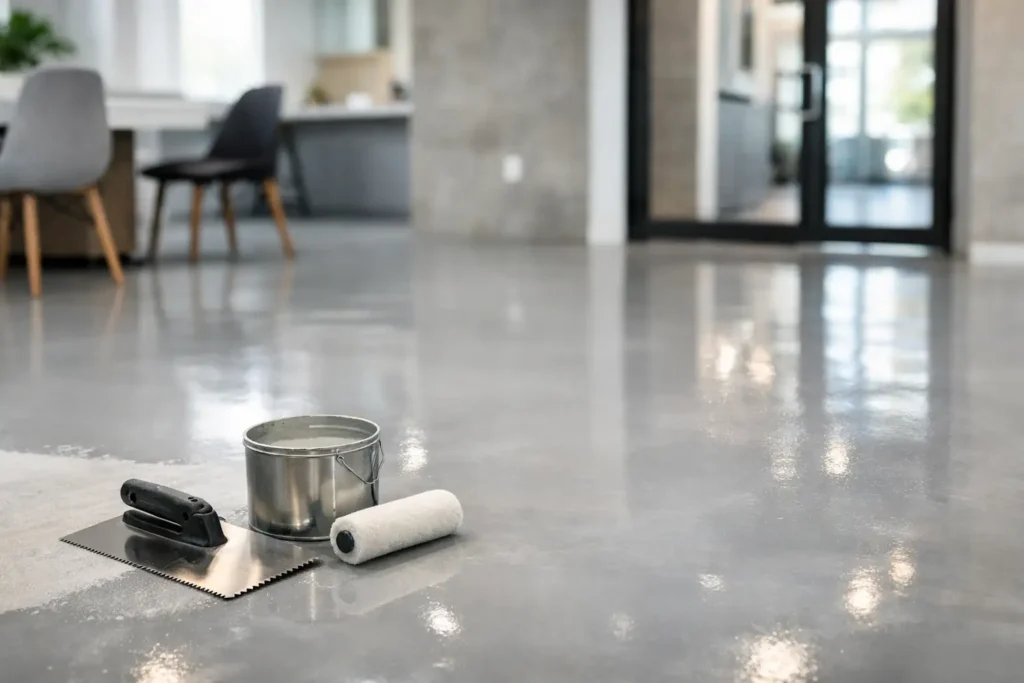
A floor can make a room feel considered or compromised in a matter of seconds. If you’re weighing up polished concrete, large-format tiles, timber, or a more design-led surface, the question often becomes simple: is resin flooring worth it when you look beyond the showroom finish?
For many spaces, the answer is yes – but not for the same reason every time. In a family kitchen, it may be the appeal of a seamless, easy-clean surface. In a retail setting, it may be the chance to create a polished branded environment that still handles heavy footfall. In a garage or warehouse, performance tends to lead the conversation. Resin earns its place when aesthetics and practicality need to work together, rather than compete.
Is resin flooring worth it in real terms?
Resin flooring is rarely the cheapest option upfront, so it should not be judged like a budget floor covering. It sits in a more considered category – one where finish quality, longevity, customisation, and installation standards matter as much as the initial figure on the quote.
If you’re comparing resin to off-the-shelf laminate or standard vinyl, resin will usually cost more. If you’re comparing it to high-end tiles, polished concrete, premium stone, or a bespoke interior finish, the value equation starts to shift. What you are paying for is not just a floor, but a crafted surface with a specific visual character, minimal joins, and strong day-to-day resilience.
That distinction matters. Resin is often chosen by people who want a space to feel cleaner, calmer, and more architectural. It has a different visual language to traditional flooring, with a fluid, contemporary finish that can be understated or dramatic depending on the design.
Where resin tends to justify the investment
The strongest argument for resin is that it performs well while looking intentional. Many hard-wearing floors are practical but visually flat. Many attractive floors need more maintenance than owners expect. Resin sits in a useful middle ground.
In kitchens, utility rooms, hallways and open-plan living areas, seamless resin can create a sense of flow that makes the entire interior feel more cohesive. There are no grout lines collecting dirt and no busy breaks between zones. In bathrooms, the clean finish and modern appearance are a major draw, especially where clients want a calm, minimal look.
Commercial spaces benefit in a different way. A shop floor, studio, salon, showroom or hospitality setting often needs to look polished every day, not just on opening week. Resin offers durability, but also a finish that supports the wider brand aesthetic. That combination is exactly why it appeals to businesses that care about presentation as much as performance.
Then there are spaces where toughness is non-negotiable – garages, workshops, stock rooms and industrial environments. Here, resin’s value is more direct. It resists wear well, stands up to demanding use, and can be specified for slip resistance and load-bearing performance where needed.
The design advantage most alternatives cannot match
One reason people ask whether resin flooring is worth it is that they are really asking whether the visual difference is significant enough to justify the spend. In the right space, it absolutely is.
Resin does not have to mean a plain grey floor, although it can look beautifully restrained when that is the brief. It can be terrazzo-inspired, concrete-effect, high-gloss, soft matte, metallic, clouded, neutral, bold, or tailored to work with cabinetry, wall finishes, lighting, and architecture. That freedom gives homeowners and commercial clients something most standard flooring options do not – a finish shaped around the space, rather than a space shaped around the finish.
This is especially valuable in interiors where design continuity matters. A seamless floor can visually enlarge a room, reduce clutter, and give fitted elements more presence. In open-plan homes, it helps spaces feel connected. In customer-facing businesses, it can make the environment feel more premium without relying on louder materials.
Cost matters – but so does lifespan
A cheaper floor that needs replacing earlier is not always the better buy. Resin flooring tends to make sense when you are planning for the medium to long term and want a surface that keeps its appeal under regular use.
The actual lifespan depends on the resin system, the substrate beneath it, the quality of preparation, and how the space is used. A decorative residential finish has different demands from a heavy-duty warehouse coating. That is why broad promises are less useful than an honest assessment of the setting.
When installed properly, resin can offer years of reliable service with relatively straightforward upkeep. It does not have grout to refresh, boards to lift, or edges to peel. That lower-maintenance profile has genuine value, especially in busy homes and hard-working commercial sites.
The caveat is simple. Resin rewards good installation. Surface preparation, moisture testing, repairs, levelling, and correct product selection are not optional extras. They are what determine whether the floor performs beautifully or becomes an expensive frustration.
The trade-offs worth knowing before you commit
Resin is not the right answer for every project, and that is part of an honest conversation about value.
The first trade-off is upfront cost. If budget is the main driver and you simply need a functional floor at the lowest possible price, resin may not be the best fit.
The second is installation sensitivity. Resin systems require proper site conditions and skilled application. This is not a material that forgives rushed prep or poor workmanship. If the existing substrate is damaged, damp, or uneven, extra remedial work may be needed before the final finish goes down.
The third is feel. Resin has a distinct character – sleek, modern, and architectural. That is exactly why many clients choose it, but it may not suit every interior style. In a period property where warmth and texture are the priority, timber or natural stone may still feel more aligned.
There is also a timing consideration. Depending on the system used and the condition of the floor below, installation can involve staged preparation and curing times. For homes mid-renovation or businesses working to a strict programme, that needs to be planned properly.
Is resin flooring worth it for homes?
For homeowners investing in a renovation rather than a quick refresh, resin often makes strong sense. It works particularly well in kitchens, hallways, bathrooms, garden rooms and open-plan spaces where visual continuity has a big effect on the finished atmosphere.
The appeal is not only practical. Resin changes the way a room reads. It can make compact spaces feel cleaner and larger, and larger spaces feel calmer and more curated. If you care about finish quality and want a floor that feels like part of the architecture rather than an afterthought, resin tends to justify itself more easily.
That said, it is best suited to clients who value the finish itself. If your flooring choice is purely about covering a subfloor for the lowest price, you may not feel the full benefit of what resin offers.
Is resin flooring worth it for commercial settings?
In commercial interiors, the answer is often tied to how the space needs to perform in front of customers, staff, or heavy use. Resin can support a cleaner appearance, faster maintenance routines, and a more premium visual standard than many traditional commercial floors.
For customer-facing environments, the design flexibility is a major advantage. A bespoke finish can reinforce a brand’s identity without becoming impractical. For operational spaces, durability and ease of cleaning can reduce disruption and help maintain a more professional environment.
Businesses in Essex and London often need surfaces that work hard while still looking refined, particularly in mixed-use, retail, and hospitality settings where appearance is part of the customer experience. In those cases, resin is not just a flooring decision. It is part of the wider presentation of the space.
How to decide if it is worth it for you
The clearest test is to ask what you need the floor to do over the next five to ten years. If you want something purely serviceable and low-cost, resin may feel like a stretch. If you want durability, low-maintenance upkeep, and a finish with real design presence, the value becomes easier to see.
It also helps to think beyond samples in isolation. Resin is at its best when considered as part of the whole room – light, walls, joinery, traffic, cleaning habits, and the mood you want the space to carry. That is where its artistry and technical performance meet.
Worth is rarely about price alone. It is about whether a material keeps delivering after the renovation dust has settled. Resin flooring tends to be worth it when you want a surface that works hard, looks distinctive, and makes the room feel intentionally designed every single day.