
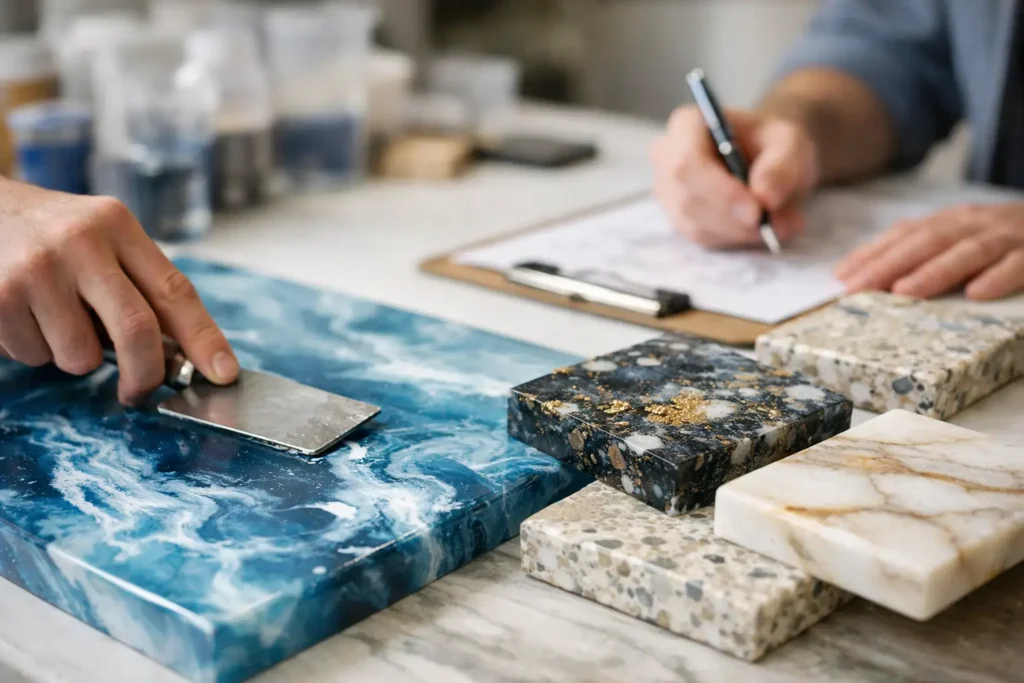
A resin floor should never feel like an afterthought. It occupies a huge visual field, carries the movement of a room and must stand up to daily life. Learning how to design bespoke resin surfaces begins by treating the floor or wall as part of the architecture: a carefully composed finish with its own colour, depth, texture and purpose.
The best results are not chosen from a single sample card. They emerge from a conversation between the space, the light, the materials already present and the way the surface will be used. A soft terrazzo-inspired hallway, a metallic feature wall and a heavy-duty garage coating can all be resin, but each calls for a very different design decision.
Start with the feeling you want the room to create
Before selecting pigments or patterns, decide what the space should communicate. A pale, lightly textured resin can make a kitchen feel calm and expansive. Darker tones with a subtle mineral movement may give a retail interior more theatre and definition. In a bathroom, a continuous wall and floor finish can create a quiet, spa-like sense of enclosure.
This first decision keeps the design focused. Rather than asking, “What colour should the resin be?”, ask, “How should this room feel when someone enters?” The answer might be warm and grounded, crisp and contemporary, expressive and artistic, or disciplined and industrial.
Think about the finishes around the resin too. Timber cabinetry often benefits from a warm neutral or stone-inspired base. Black metal frames can support a sharper concrete-effect look. Brass, brushed steel, natural stone and painted joinery all change how a resin surface reads. A bespoke finish should complement these elements without disappearing behind them.
Choose the resin finish to suit the setting
Resin is not one look. Its versatility is where the creative opportunity lies, but it also means the finish must be selected with care.
Terrazzo-inspired resin overlays bring visual texture without the grout lines and joints associated with tiles. They work particularly well in hallways, kitchens, retail spaces and contemporary living areas where a surface needs personality but should remain practical. The size, density and colour of the decorative aggregate can be adjusted to create anything from restrained speckling to a bolder, more graphic composition.
Metallic epoxy finishes are more expressive. Pigments can be manipulated to create movement, depth and a flowing, almost liquid appearance. This makes them powerful in feature spaces, reception areas, bars, salons or statement bathrooms. Because the movement is created by hand during installation, no two surfaces are identical. That is the appeal, but it also means samples are essential for setting expectations.
Concrete-effect resin offers a pared-back, architectural character. It can suit open-plan homes, studios, cafés and retail interiors where the aim is a continuous, contemporary backdrop. It is worth remembering that a concrete-effect finish is not simply grey. Undertones can lean warm, cool, sandy, smoky or charcoal, and those differences become obvious across a large floor.
For warehouses, garages, commercial kitchens and busy work areas, performance usually leads the brief. Decorative choices still matter, but the coating system must be designed around traffic, impact, chemicals, cleaning regimes and slip resistance. A well-designed commercial resin floor can support the brand image of a business while doing the hard work expected of an industrial surface.
How to design bespoke resin surfaces around light and scale
Light changes resin more than many people expect. Natural daylight reveals subtle pigment variation and aggregate detail, while artificial lighting can deepen colour, highlight metallic movement or add sheen to a smoother finish. Visit the room at different times of day before finalising a colour direction, especially in south-facing spaces or rooms with limited natural light.
A small sample is useful, but it cannot fully show the effect of a surface spanning several metres. Ask to see larger sample boards where possible. This is particularly valuable with metallic, terrazzo-inspired and concrete-effect finishes, where pattern scale and tonal variation need room to breathe.
Scale should guide the design. Fine aggregate and quieter movement generally feel refined in smaller bathrooms, porches and utility rooms. Larger chips, stronger contrast or bolder metallic veining can hold their own in expansive kitchens, showrooms and commercial receptions. A dramatic finish in a compact room may be exactly right, but it should be intentional rather than an impulse.
Sheen is another crucial choice. A high-gloss surface can feel polished and luxurious, reflecting light through a room. However, it may show footprints, dust and everyday marks more readily than a satin or matt alternative. Satin finishes often provide a balanced, contemporary look, while matt surfaces can create a softer, more natural interpretation of stone or concrete. The right choice depends on both the desired aesthetic and the maintenance expectations of the household or business.
Build performance into the design brief
The most successful resin surfaces make technical requirements part of the creative process. A beautiful floor in the wrong system will not stay beautiful for long.
In a family kitchen, consider dropped utensils, chair movement, pets and frequent cleaning. In a shower room, moisture management and slip resistance are central. In a garage, the resin may need to tolerate hot tyres, oil, abrasion and heavier loads. A retail floor needs to maintain its finish under steady footfall, while a commercial kitchen may require a system designed for strict hygiene and cleaning demands.
Subfloor condition matters just as much. Resin follows the quality of what lies beneath it. Cracks, unevenness, moisture and weak substrates must be assessed and prepared properly before installation. This stage is not glamorous, but it is fundamental to achieving a smooth, durable finish with clean edges and reliable adhesion.
Slip resistance also deserves a nuanced discussion. More texture can improve grip, especially in wet or hard-working areas, but it can alter the feel of the surface and make cleaning more involved. A good specification balances safety, comfort, appearance and the practical reality of the space.
Use samples to turn ideas into a confident decision
Bespoke resin is a crafted finish, not a mass-produced tile. Samples are therefore a key part of the design process. They allow you to compare pigments against cabinetry, paint, fabrics and tiles, and to see whether a colour that looked appealing online actually works in your own light.
Bring references, but do not feel confined by them. A photograph may point towards a mood rather than provide an exact formula. It could be the warmth of a limestone floor, the flecks in a favourite stone worktop or the soft movement of a clouded wall finish that catches your eye. A skilled resin specialist can translate that reference into a viable surface rather than simply attempting to copy it.
At Resinize, this sample-led approach helps clients make design choices with clarity. It is where artistic ambition is tested against the realities of the room, the substrate and everyday use.
Give the surface a clear role in the wider scheme
A resin floor can either be the statement or the foundation for other statements. Trying to make every element compete often creates visual noise. If the floor carries strong metallic movement or a high-contrast terrazzo pattern, keep surrounding finishes more restrained. If the room already has dramatic cabinetry, artwork or lighting, a calm concrete-effect or softly toned resin may bring the scheme together.
Continuity can be especially effective. Carrying one resin finish through a hallway and kitchen can make a home feel larger and more considered. Extending a compatible finish from floor to wall in a bathroom can reduce visual breaks and create a more immersive space. Yet continuity is not always necessary. A feature area can benefit from contrast, provided the palette and level of sheen are carefully related.
The final design should feel considered from every angle: at the doorway, in daylight, under evening lighting and after months of ordinary use. Choose a resin surface that reflects the character of the space, then give it the technical foundation and skilled craftsmanship that allow that character to endure.