
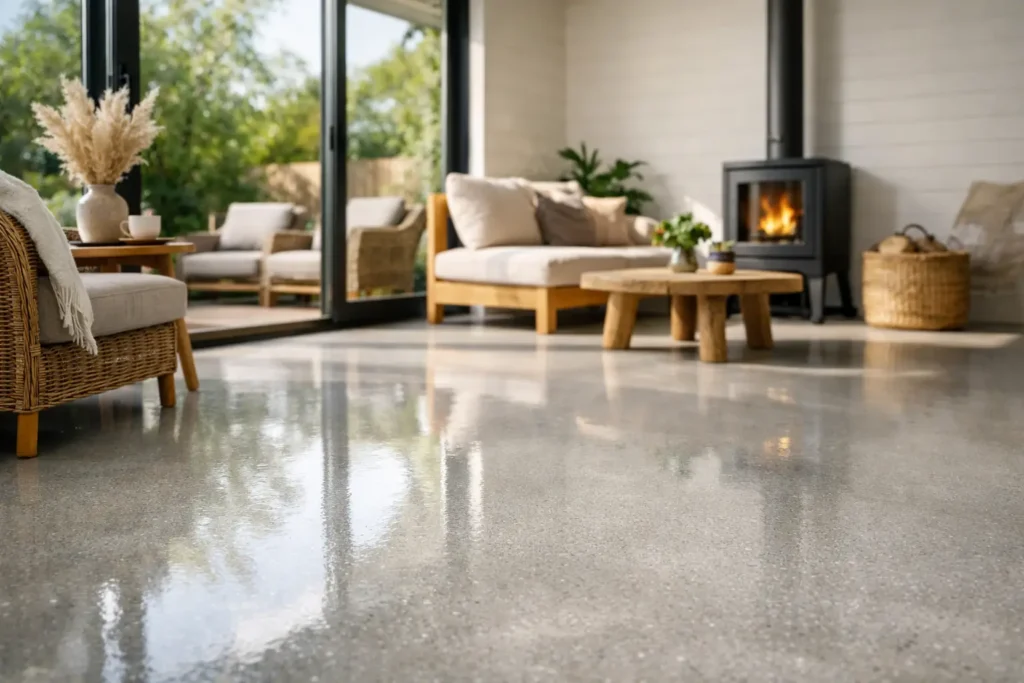
A summer house rarely stays just a summer house. It becomes a garden office, a reading room, a home bar, a studio, a yoga space, or the one place you can shut the door and think clearly for an hour. Once the use changes, the floor matters far more than most people expect. A summer house resin floor appeals for exactly that reason – it can look refined enough for a designed interior while coping with muddy shoes, shifting temperatures and everyday wear.
For design-led homeowners, that balance is the real attraction. You do not want a finish that feels temporary or purely practical. You want the space to feel considered, and that means choosing a floor that supports the atmosphere as much as the furniture, lighting and joinery do.
Why a summer house resin floor suits modern garden rooms
Resin has a clean, architectural quality that works especially well in compact spaces. In a summer house, where every surface is more visible and every design decision has greater impact, a seamless floor helps the room feel calmer and more intentional. There are no busy grout lines, no boards expanding and shrinking with obvious gaps, and no visual clutter competing with the rest of the scheme.
That design simplicity is only part of the story. A well-installed resin floor is also practical for the way most summer houses are actually used. Garden rooms often deal with damp air, tracked-in debris, pets, bikes, occasional plant watering and the stop-start pattern of British weather. A resin finish is easy to keep clean and offers a hard-wearing surface that does not ask for much day-to-day maintenance.
It also gives you more aesthetic freedom than many people realise. Resin is not one look. It can be soft and understated, bold and high-gloss, concrete-inspired, terrazzo-influenced or subtly textured. For a summer house that needs to feel like a natural extension of the home rather than a separate outbuilding, that flexibility matters.
What matters most before choosing a resin floor
The right floor depends less on the label and more on how the room is built and used. A summer house used as an occasional retreat has different demands from one that functions as a daily office or entertaining space. If you spend hours in there each day, comfort underfoot, thermal performance and the final finish become more important than they might in a storage-led garden building.
The construction of the building matters too. Not every summer house starts with an ideal subfloor. Some have timber bases, some sit on concrete, and some have existing finishes that may or may not be suitable for an overlay. Resin performs best when the substrate is stable, dry and properly prepared. That preparation stage is what separates a premium installation from a finish that looks good for a few months and then starts to fail.
This is also where expectations need to be realistic. Resin is durable, but it is not magic. If the structure beneath the floor moves excessively, suffers from persistent moisture issues or has been built without enough rigidity, those underlying problems need addressing first. A beautiful surface cannot compensate for a poor foundation.
Timber base or concrete base?
On a concrete base, resin can be an excellent choice, provided moisture levels are checked and the surface is sound. On a timber base, it is still possible, but the specification needs more care. Timber movement is a real factor in outdoor buildings, particularly where temperatures rise and fall quickly through the seasons. In those cases, the build-up and preparation become crucial to long-term performance.
For homeowners, the key point is simple: the best result comes from treating the floor as part of the whole room design, not as a decorative add-on at the end.
The design advantage of a summer house resin floor
Summer houses tend to work best when they feel edited rather than overfilled. A seamless resin floor supports that idea beautifully. It creates visual continuity, helps natural light travel across the room and gives small footprints a more expansive feel. If your garden room has bifold doors, black-framed glazing or a minimalist palette, resin often looks more at home than traditional sheet materials or standard laminate.
This is where a design-led approach really pays off. The finish can be tailored to suit the mood of the space. A soft stone-toned resin floor can make a writing room or garden office feel composed and airy. A deeper charcoal or concrete-effect finish can give a bar or entertainment room more drama. Subtle tonal variation can add character without introducing visual noise.
Because the floor reads as one continuous surface, it often makes furniture and feature pieces stand out better too. That is useful in a summer house, where you may only have room for a few carefully chosen items and want each one to count.
Practical benefits you will notice day to day
The appeal of resin is not just in photographs. It tends to be the everyday details that make owners happiest once the space is in use.
Cleaning is straightforward. Dust, leaves and garden debris are easy to sweep away, and most marks can be dealt with quickly. There are no joints collecting dirt, which is particularly helpful in buildings that open directly onto the garden.
Durability is another strong point. A properly specified resin floor can stand up well to chairs, foot traffic, occasional dropped items and the repeated movement that comes with a room used properly rather than occasionally admired. If the summer house doubles as a hobby space, home gym corner or workspace, that resilience becomes even more valuable.
There is also a premium feel to resin that standard off-the-shelf floor coverings struggle to match. It feels deliberate. Not improvised, not secondary, and not like the part of the project where compromises started.
What about comfort?
This is one of the few areas where context matters more than material alone. Resin itself is not a cushioned floor, so if you want a very warm, soft underfoot feel, you need to think about insulation beneath the build-up and how the room is heated. In a well-built summer house with good insulation, resin can feel comfortable and refined. In a poorly insulated building, any hard floor may feel colder in winter.
That does not make resin the wrong choice. It simply means the floor should be considered alongside the construction, not in isolation.
Potential drawbacks and where resin may not be right
A good article on resin should say this plainly: it is not the perfect answer for every garden building.
If your summer house is a very basic structure with a flexible timber floor, visible damp issues or a tight budget that only allows for cosmetic shortcuts, resin may not be the smartest first move. It rewards proper preparation and careful installation. If that stage is rushed, the final result can disappoint.
It is also a premium finish, and that should be understood from the outset. You are paying for surface preparation, specification, craftsmanship and the quality of the completed look. For homeowners who want a quick, low-cost floor for an occasional-use shed, there may be simpler options. For those treating the summer house as part of the home, the value equation looks very different.
Finish choice matters too. A high-gloss look can be striking, but it may show dust and footprints more readily in a garden setting. A softer satin or textured finish is often a more balanced choice for a room with regular traffic from outdoors.
Getting the finish right for your space
The most successful summer house floors are the ones that respond to how the room is genuinely lived in. If the space is bright and pared back, a light neutral resin can enhance that calm, gallery-like quality. If the room is intended to feel moody and luxurious, darker tones can create depth and contrast.
This is also why samples matter. Resin is tactile and light-sensitive in a way many people do not expect. A tone that feels perfect indoors may shift in character once it sits beneath strong garden light. Looking at finish options in context helps avoid expensive guesswork.
For homeowners in Essex and London investing in higher-spec garden rooms, that tailored approach often makes the difference between a floor that merely functions and one that transforms the whole building. At Resinize, the most compelling projects tend to start with that wider design conversation – how the space should feel, not just what it needs to withstand.
A summer house can be modest in size and still deserve real design ambition. If you want the room to feel polished, usable and fully integrated with the way you live, resin is a serious contender. The best version of it does not shout for attention. It simply makes the whole space feel finished, and that is often what turns a garden building into a room you genuinely want to use all year.