A scuffed, stained or tired-looking shop floor changes how customers read the whole space. Before they notice product displays, lighting or signage, they notice the surface underfoot. That is why choosing the best floor finish for retail shop interiors is not simply a maintenance decision. It is a branding decision, a practical one, and often a long-term cost decision too.
Retail flooring has to do more than survive footfall. It needs to hold its appearance under daily traffic, support the atmosphere of the brand, and stay easy to clean without looking overly industrial. The right finish can quietly elevate the entire shop fit-out. The wrong one can make even a beautifully merchandised store feel temporary.
What makes the best floor finish for retail shop use?
The answer depends on what the space is trying to achieve. A fashion boutique has very different demands from a convenience store, salon or showroom. Even so, the strongest retail floor finishes tend to succeed in the same areas: appearance, durability, maintenance, safety and consistency.
Appearance matters because retail is visual by nature. Flooring covers a large proportion of the interior, so its tone, reflectivity and texture affect how products are presented. A floor that looks flat, patchy or dated can drag down the perceived value of everything placed on it.
Durability matters just as much. Shop floors deal with constant abrasion from shoes, trolleys, stock movement, furniture and cleaning equipment. Add spillages, seasonal grit brought in from outside and the pressure of daily opening hours, and many standard finishes begin to show wear quickly.
Maintenance is where many choices rise or fall. Some floors look attractive on installation day but become labour-heavy to keep presentable. In a busy retail setting, easy cleaning is not a bonus. It is part of operational efficiency.
Why resin is often the best floor finish for retail shop environments
For many modern retail spaces, resin stands out because it combines design freedom with commercial performance. It is not just a hard-wearing coating. When specified well, it becomes part of the interior architecture.
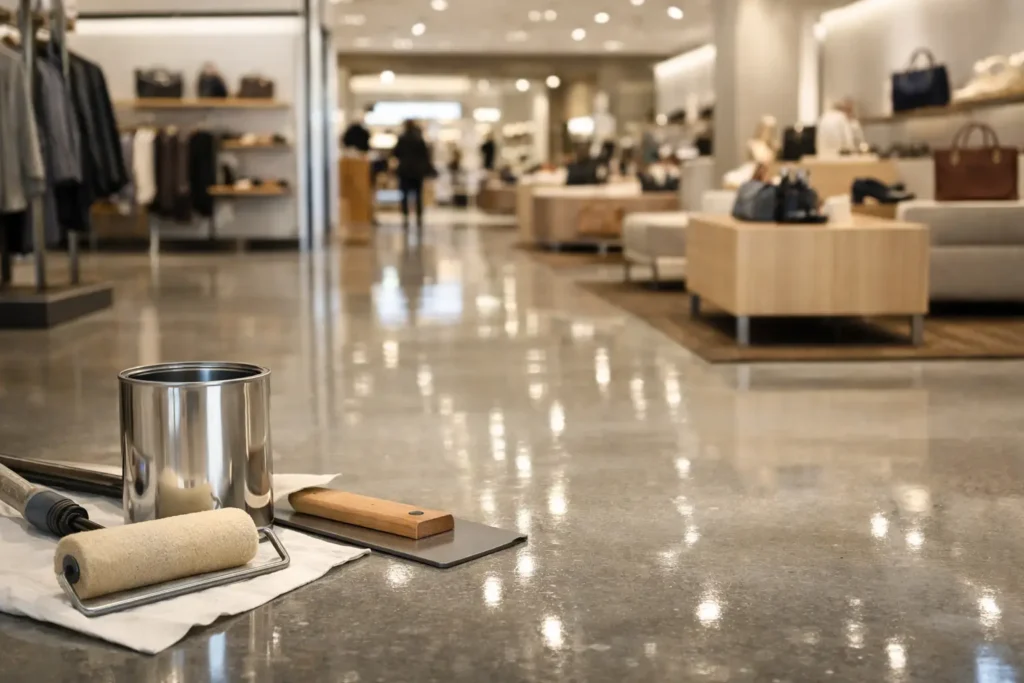
Seamless resin floors create a clean visual plane across the shop, which helps displays, shelving and merchandise feel more curated. There are no grout lines interrupting the look, and fewer places for dirt to settle. In retail, where presentation is everything, that simplicity has real value.
The finish can also be tailored. A softer satin surface creates a calm, premium feel. A glossier finish can add brightness and energy, particularly in smaller units where light reflection helps open the space. Colour is equally flexible, from understated neutrals to bold statement tones that reinforce brand identity.
From a practical perspective, resin performs well under foot traffic and is easier to maintain than many traditional alternatives. It resists staining better than porous materials, and because it is continuous rather than pieced together, it tends to retain a more considered appearance over time.
That said, not every resin system is the same. A decorative finish suited to a boutique may differ from a heavy-duty specification designed for higher traffic, stock movement or more demanding back-of-house use. Good design always starts with how the space actually functions.
How resin compares with other retail flooring options
Polished concrete has a strong architectural look and works well in contemporary retail settings. It can feel refined, minimal and durable. The trade-off is that it can be less forgiving in older properties where the existing slab is inconsistent or visually flawed. It also offers less design flexibility than a resin finish and may require more groundwork to achieve a polished result.
Tiles remain common in retail because they are familiar and widely available. They can be practical, but grout lines often become the weak point. Over time, they can trap dirt, discolour and interrupt the clean flow of the interior. Individual tiles can also crack or loosen in high-traffic areas.
Luxury vinyl tile offers visual variety and lower upfront cost, but it rarely creates the same premium, integrated finish as a bespoke resin surface. In shops where brand image matters, that difference is noticeable. Seams, lifting edges and wear patterns can all affect the overall impression sooner than expected.
Timber or timber-look flooring can suit certain lifestyle or boutique concepts, especially where warmth is central to the customer experience. Still, timber is generally more vulnerable to scratching, moisture and heavy wear than a properly specified resin system. For many retail operators, that means more maintenance and earlier replacement.
Choosing a finish that matches the customer experience
The best retail floor is rarely chosen on toughness alone. It should support the kind of shopping experience you want to create.
In a premium fashion store or design-led showroom, the floor should feel quiet and elegant. Neutral resin tones, terrazzo-inspired effects or concrete-style finishes can provide visual depth without competing with the products. In this type of setting, the floor acts as a backdrop, but a very intentional one.
In a beauty clinic, salon or wellness-led retail space, cleanliness and calm usually matter more than visual drama. A seamless finish helps the environment feel hygienic and composed. Softer tones and smooth transitions between areas often work better than busy patterns.
For convenience retail, off-licences or busier mixed-use units, resilience becomes more important. A finish that hides everyday marks, cleans quickly and holds up under constant traffic may be a better fit than something more delicate in appearance. This is where a commercial-grade resin system can offer a smart balance between performance and presentation.
Finish matters as much as material
When people ask about the best floor finish for retail shop use, they often focus on the material and overlook the surface finish itself. That detail changes how the floor looks, feels and performs.
Gloss levels affect both atmosphere and practicality. A high-gloss finish can appear striking, especially in brand-forward environments, but it may show dust, smudges and scratches more readily. A satin or matt finish tends to feel more understated and often proves easier to live with in busy settings.
Slip resistance is another key consideration. Retail flooring needs to feel safe for customers and staff, particularly near entrances, changing areas or points where spillages are more likely. The best specification balances visual refinement with a surface texture that suits the space.
This is where bespoke guidance matters. The most beautiful finish on a sample board may not be the best one for a high-traffic unit open seven days a week. Good flooring decisions are always a blend of aesthetics and use.
Upfront cost versus long-term value
It is tempting to choose flooring based on initial budget alone, especially during a fit-out when costs are coming from every direction. But retail floors are not short-term surfaces. They are part of the daily running of the business.
A cheaper finish that marks quickly, needs frequent repairs or starts to look tired within a short period often costs more over time. Not only in maintenance, but in disruption, replacement and the way the shop presents itself to customers.
A professionally installed resin floor usually sits in the higher-value category rather than the cheapest one. What it offers in return is longevity, design flexibility and a more polished result. For businesses that care how their interiors are perceived, that investment often makes sense very quickly.
When bespoke flooring makes the biggest difference
Retail is crowded. Whether on the high street, in a shopping parade or inside a commercial development, many shops are competing for attention in similar footprints. Bespoke flooring helps create distinction without shouting.
A custom resin finish can be subtle or expressive. It might echo the brand palette, bring warmth into a minimalist scheme, or introduce texture that makes the whole space feel more considered. Because the finish is crafted for the setting rather than chosen from a standard shelf product, the result tends to feel more architectural and more aligned with the brand.
For retailers in design-conscious areas of Essex and London, where customer expectations around interiors are often high, that visual advantage can be especially valuable. People notice when a space feels intentional.
So, what is the best choice?
If the priority is a floor that looks refined, performs under pressure and supports a more elevated retail environment, resin is often the strongest all-round option. It offers the durability commercial spaces need, with far more creative scope than many standard flooring materials.
That does not mean it is the right answer in every case. Some shops suit polished concrete. Others may lean towards tile or timber for a very specific character. But where retailers want a seamless balance of design, practicality and longevity, resin is hard to overlook.
The best retail flooring should never feel like an afterthought. It should support the products, strengthen the space and continue doing its job long after the opening day excitement has passed. Choose a finish that works as beautifully on a busy Tuesday afternoon as it does in the first set of launch photographs.