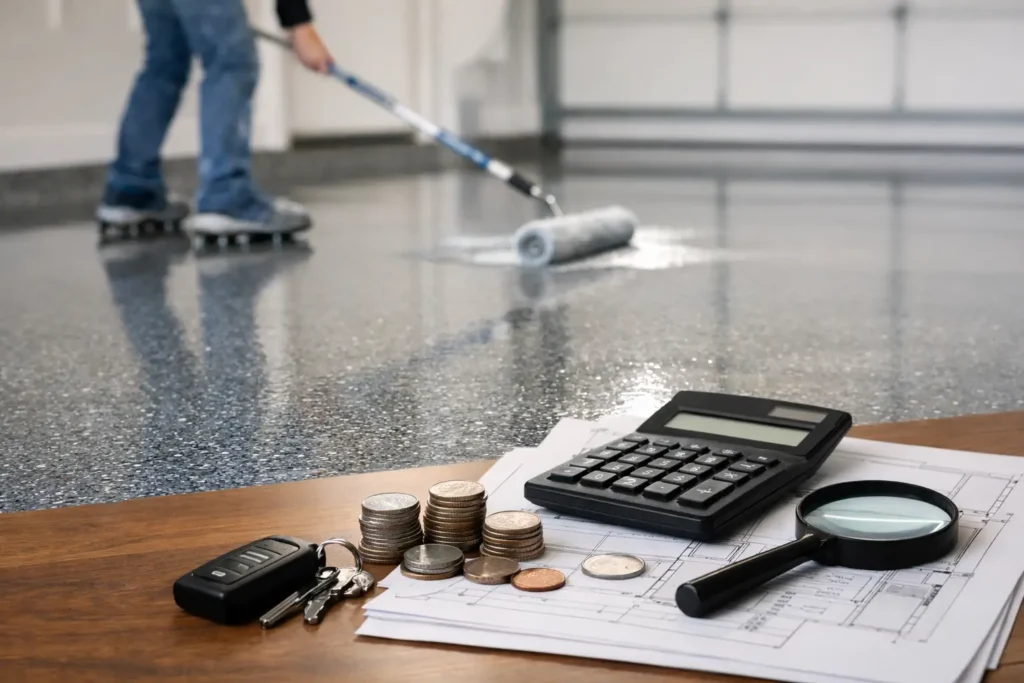
A plain concrete floor can look like a compromise for years, right up until the moment you price a finish that changes the whole space. That is usually when epoxy floor coating cost becomes the real question – not just what it costs per square metre, but what you are actually paying for in appearance, durability and long-term performance.
For some projects, epoxy is a practical upgrade for a garage or workspace. For others, it is part of a wider design decision, shaping how a kitchen extension, retail unit or commercial floor feels day to day. The cost varies because the result varies. A straightforward single-colour coating is a very different proposition from a decorative metallic system or a heavy-duty build designed for constant traffic.
What affects epoxy floor coating cost?
The biggest influence is usually the condition of the existing floor. If the concrete is clean, level and structurally sound, installation is more direct. If it has oil contamination, old paint, cracks, laitance or moisture issues, the preparation stage becomes more involved, and that affects cost quickly.
Preparation is not the glamorous part of the project, but it is where good work starts. Mechanical grinding, crack repairs, levelling and moisture control are often what separate a floor that looks sharp for years from one that fails early. Lower quotes can sometimes look attractive because they minimise prep, but that saving rarely feels worthwhile if the coating lifts, marks or wears unevenly.
The second major factor is the system specification. Not all epoxy floors are built in the same way. A light-duty coating for occasional footfall will naturally cost less than a multi-layer resin system designed for vehicles, equipment or busy commercial use. Thickness, number of coats, slip resistance, decorative elements and chemical resistance all shape the final figure.
Then there is design. A solid neutral tone is generally more economical than a bespoke finish with flakes, quartz, metallic movement or terrazzo-inspired detailing. That does not make decorative options excessive. In the right setting, they can shift a floor from basic surface treatment to a defining architectural feature.
Typical price ranges for epoxy floor coating cost
If you are comparing quotes, it helps to think in ranges rather than expecting one fixed rate. In broad terms, a simple epoxy floor coating may start from around £50 per square metre for smaller, uncomplicated areas, then rise to £80 or more depending on prep, specification and finish. More decorative or heavy-duty systems can move beyond that.
Smaller rooms often cost more per square metre than larger open areas. That is not because the materials are dramatically different, but because every project still includes site setup, edge work, detailing and labour. A compact utility room can be relatively fiddly. A large warehouse with clear access may be more efficient to install, even if the total project value is higher.
For domestic spaces, the budget is often shaped by aesthetics as much as function. Homeowners may want a warmer tone, a satin or gloss level that suits the light in the room, or a seamless finish that works with contemporary joinery and interiors. In commercial environments, the brief tends to be more performance-led, though appearance still matters. A retail floor, showroom or customer-facing unit needs resilience, but it also needs presence.
Why the cheapest quote is rarely the best value
Flooring is one of those trades where cost and value are not the same thing. A low price can mean thinner application, limited surface preparation, cheaper materials or unrealistic timescales. On day one, many resin floors can look similar. The differences tend to appear later, once the floor has dealt with temperature changes, movement, cleaning routines, tyre traffic or dropped items.
A well-installed epoxy surface should feel considered from the ground up. The finish needs to bond properly, wear evenly and retain its visual quality under real use. That level of performance comes from skill, planning and specification – not just from pouring product onto concrete.
For design-conscious clients, there is another layer to value. A premium resin floor can remove visual clutter, create continuity between spaces and give a room a more resolved, architectural feel. In that context, the coating is not only protective. It becomes part of the design language of the property.
Epoxy floor coating cost for homes
In residential settings, epoxy is often considered for garages, kitchens, utility areas, hallways and garden rooms. The appeal is obvious: a seamless surface, easy maintenance and a refined contemporary look. But domestic projects are rarely just about practicality. People want a floor that feels intentional, not industrial unless that is the style they are aiming for.
This is where costs can shift. A garage floor with a straightforward protective coating may sit at the lower end of the range. A kitchen or open-plan area with decorative effects, colour matching and a more design-led brief is likely to require a more bespoke approach. Edges, thresholds, cabinetry details and the surrounding finishes all influence the work involved.
It is also worth remembering that lived-in properties can be less straightforward than empty shells. Access, furniture, scheduling and the condition of the substrate all matter. A technically smaller project can still require careful staging to achieve a polished result.
Epoxy floor coating cost for commercial spaces
Commercial clients usually ask a different set of questions. They want to know how the floor will perform under traffic, how quickly it can be installed, whether it is easy to clean and how long it will last. Cost still matters, but downtime and lifecycle value often matter more.
In warehouses, workshops and garages, epoxy may need to handle forklifts, pallet movement, oil exposure or repeated abrasion. In retail or hospitality settings, the specification might balance durability with a more elevated finish that supports the brand environment. Anti-slip textures, line marking, hygiene requirements and repair of damaged concrete can all add to the budget.
Where timing is tight, installation logistics can also affect pricing. Night work, phased application or programmes designed around trading hours can increase labour costs, but they may be the right commercial decision if they reduce disruption.
What is included in the price?
When reviewing a quote, ask what is actually covered. A proper proposal should usually account for preparation, repairs where specified, priming, resin application, topcoats and finish details. It should also set expectations around curing time, access and any limitations related to the existing substrate.
If one quote appears notably lower than another, the difference is often hidden in the scope. Preparation may be excluded. Crack repairs may be provisional. Moisture issues may not have been addressed. These details matter because they directly affect how the floor performs.
A good supplier will talk you through the build-up clearly. That conversation is often as valuable as the number on the page, because it shows whether the recommendation suits your space rather than simply fitting a target budget.
How to budget wisely for epoxy floor coating cost
The best starting point is to be clear about the role of the floor. Is it mainly protective? Is it part of a design scheme? Does it need to cope with vehicles, chemicals or high public footfall? Once that is clear, the specification becomes much easier to shape realistically.
It also helps to think beyond installation day. A slightly higher upfront spend can make sense if it gives you a longer-lasting, easier-to-maintain floor with a stronger visual finish. That is especially true in spaces where the floor is constantly seen and used. Saving on the initial cost only to revisit repairs or replacement early is rarely efficient.
For clients in Essex and London, project costs can also reflect access, scheduling and site conditions, particularly in busy commercial or high-end residential settings. Not every floor is difficult to reach, but practical constraints do influence labour and timing.
If you are comparing options, ask to see examples of completed work with a similar finish and use case. Epoxy is not a one-look material. The quality of execution, level of detail and design sensitivity make a significant difference to the final result.
Is epoxy worth the cost?
If you only need the cheapest way to cover concrete, epoxy may not always be the answer. There are budget finishes that cost less upfront. But if you want a floor that combines durability, easy maintenance and a cleaner, more elevated appearance, epoxy often justifies its price well.
Its value becomes even clearer when the finish is tailored properly to the space. A garage can feel sharper and better organised. A retail environment can look more polished. A home interior can gain a seamless foundation that supports the rest of the design rather than fighting against it.
That is the real lens for judging epoxy floor coating cost. You are not simply buying litres of resin and labour. You are investing in how the space performs, how it wears and how it feels every time you walk into it.
The smartest projects start with a realistic brief, a clear understanding of the substrate and a finish chosen for both beauty and purpose. When those elements align, the floor stops being an afterthought and starts becoming one of the strongest features in the room.