
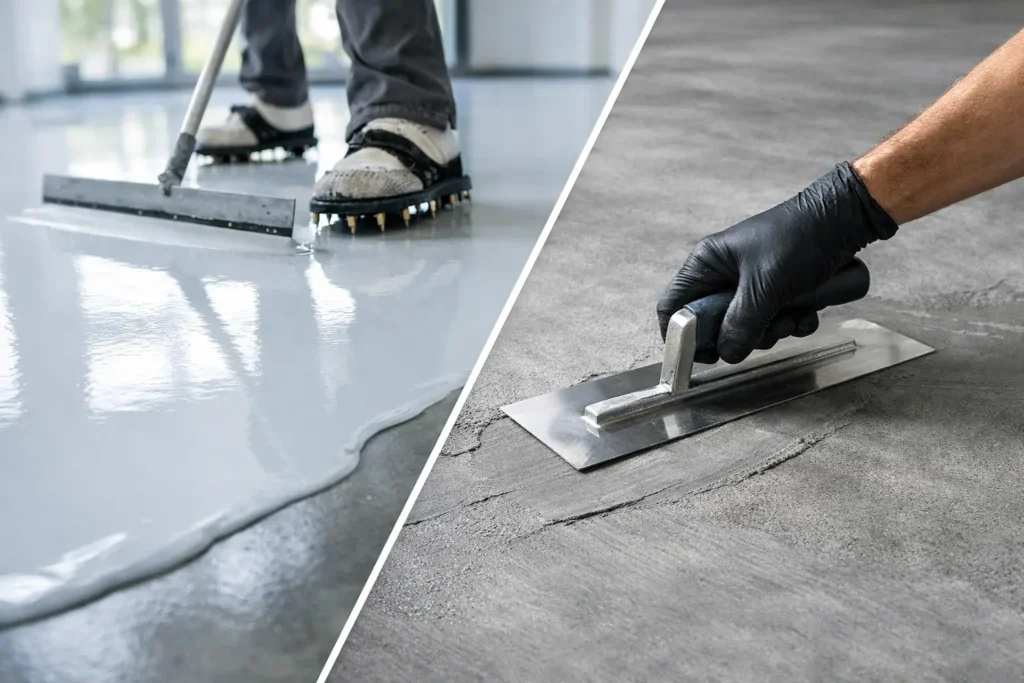
A beautiful surface can make a room feel resolved in seconds. The trouble is that two of the most sought-after finishes – resin and microcement – can look deceptively similar at first glance. When clients ask about resin flooring vs microcement, they are usually not choosing between two trends. They are deciding how they want a space to live, wear and age.
Both finishes appeal for the same reason: they create a cleaner visual line than tile, timber or sheet flooring, and they suit contemporary interiors brilliantly. Yet the way they perform underfoot, respond to moisture, and deliver their final appearance is very different. If you are balancing design ambition with day-to-day practicality, that difference matters.
Resin flooring vs microcement: the visual difference
If your starting point is aesthetics, microcement tends to attract those who love a soft, architectural, mineral look. It has movement, tonal variation and a hand-finished quality that feels restrained and understated. In the right interior, it can bring a calm, gallery-like atmosphere to kitchens, bathrooms and open-plan living spaces.
Resin flooring is broader in design potential. It can be sleek and minimal, but it can also be layered, expressive and highly individual. Depending on the system and finish, resin can deliver anything from a clean matt concrete effect to a high-gloss statement floor, metallic detailing, terrazzo-inspired visuals or richer decorative depth. For homeowners and commercial brands that want the floor to contribute to the identity of the space, resin gives far more creative freedom.
That does not mean one is more stylish than the other. It means the mood is different. Microcement is often chosen for subtle texture and a muted, monolithic appearance. Resin is often chosen when clients want a seamless surface that can be tailored more precisely to the room, the lighting and the wider design scheme.
How they are built and why that affects performance
Microcement is a cement-based decorative coating applied in thin layers and sealed to protect the surface. Its appeal lies partly in that handcrafted finish, but the final result depends heavily on substrate preparation, application quality and the integrity of the sealers.
Resin flooring is formed through specialist resin systems that cure into a hard-wearing continuous surface. Different formulations suit different uses, which is one reason resin works across both design-led homes and heavy-duty commercial settings. The system can be specified around the demands of the space rather than forced into a one-size-fits-all solution.
This distinction is important because performance is not just about what the floor looks like on completion day. It is about what happens after months of foot traffic, spilled coffee, bathroom steam, chair legs, dropped utensils and regular cleaning.
Durability under real life use
For busy homes and demanding business environments, resin generally has the edge on resilience. A correctly specified and professionally installed resin floor is highly durable, resistant to wear and well suited to regular use. In garages, retail units, workshops and high-traffic kitchens, that strength becomes a major advantage.
Microcement can perform well, but it is usually selected more for its visual character than for heavy-duty toughness. Because it is a decorative coating protected by sealers, long-term durability depends on ongoing care and the suitability of the area. In lower-impact residential spaces it can be a strong design choice. In harder-working environments, it needs more caution.
This is where context matters. A peaceful en suite and a family hallway do not place the same demands on a floor. Neither does a boutique showroom compared with a warehouse. If your surface needs to absorb punishment as well as look refined, resin tends to be the more dependable option.
Moisture, bathrooms and kitchens
Both resin and microcement are often considered for bathrooms and kitchens because they avoid grout lines and create a more streamlined finish. But being seamless does not automatically mean equal water resistance.
Resin performs particularly well in areas exposed to moisture when the correct system is used. It creates a practical, hygienic surface that is easier to keep clean and less vulnerable to the issues associated with joints and porous materials. That makes it attractive for bathrooms, utility rooms and commercial food-adjacent spaces.
Microcement is commonly used in wet areas too, but its performance relies on the quality of the sealer and continued maintenance of that protective layer. If the seal begins to degrade, the surface can become more susceptible to staining or moisture-related problems. That does not make it unsuitable. It simply means specification and aftercare matter more.
For clients who want the visual simplicity of a continuous surface without introducing extra maintenance concerns, resin often feels like the more reassuring choice.
Maintenance and day-to-day care
One of the strongest arguments for resin is ease of upkeep. A seamless resin floor is straightforward to clean, with no grout joints to trap dirt and no fussy surface texture demanding specialist attention. In residential settings that means less effort. In commercial settings it can support cleaner, more efficient maintenance routines.
Microcement is still relatively easy to live with compared with many traditional finishes, but it does ask for more respect. Abrasive products, poor cleaning habits and neglected resealing can all affect how the surface ages. Some clients are happy with that, particularly if they value the natural variation and softer character of the finish. Others want a surface that asks for less compromise.
That is often the real dividing line. If you like materials that evolve gently and do not mind a little stewardship, microcement can feel rewarding. If you want sharper practicality with design flexibility still intact, resin is usually better aligned.
Comfort, texture and finish options
Microcement often has a more tactile, mineral quality. Visually, it reads as softer and more organic. Underfoot, the feel depends on the substrate and the sealer, but many people are drawn to its dry, natural appearance.
Resin can be tuned more deliberately. Finish options range from matt to gloss, with varying levels of slip resistance and texture available depending on the intended use. That makes it easier to balance aesthetics with practical requirements. A polished showroom, a contemporary kitchen and a hard-working garage do not need the same finish, and resin allows for that level of adjustment.
For design-conscious clients, this is where resin becomes especially compelling. It is not confined to one look. It can be understated or dramatic, refined or expressive, quietly architectural or unmistakably bold.
What about cracking and imperfections?
No honest comparison of resin flooring vs microcement should ignore the substrate beneath. Neither finish is magic. If the base has movement, moisture issues or structural weaknesses, those problems need addressing first.
That said, microcement is often discussed alongside concerns about hairline cracking. Because it is a thin cement-based finish, movement in the substrate can telegraph through. Skilled installation reduces risk, but it cannot erase the laws of physics.
Resin systems are also only as good as the preparation beneath them, yet they are generally specified with performance in mind and can be better suited where a tougher, more controlled finish is required. The lesson is simple: the success of either material depends heavily on preparation, detailing and installation quality.
Cost and value
Price is rarely identical from one project to the next because layout, condition of the substrate, design complexity and finish specification all influence cost. Microcement can appear attractive if the brief is purely aesthetic and the area is straightforward. Resin can vary widely too, especially when decorative detailing or specialist systems are involved.
The more useful question is value. What are you paying for over time? If a surface delivers stronger durability, lower maintenance and a more tailored finish, the upfront figure stops being the whole story. For many clients, especially those upgrading a key living area or customer-facing commercial space, long-term value outweighs lowest initial price.
That is particularly true when the floor is expected to do more than cover the ground. A well-designed resin surface can shape the identity of the room, support daily use and retain its impact far better than a cheaper compromise.
Which should you choose?
If your priority is a soft, pared-back, mineral aesthetic and the space is relatively low impact, microcement may be the right fit. It suits interiors where restraint is part of the appeal and where a little maintenance is an acceptable trade-off for that handcrafted look.
If you want greater durability, easier maintenance and far more scope to personalise the finish, resin is usually the stronger choice. It works beautifully in contemporary homes, but it also stands up to commercial realities in a way microcement often cannot match. For clients who want artistry without giving up performance, that balance is hard to ignore.
The best projects begin with how you want the space to feel, then move quickly into how it needs to function. Get that order right, and the surface stops being an afterthought. It becomes part of the architecture, part of the atmosphere, and part of what makes the room memorable long after the installation is complete.