
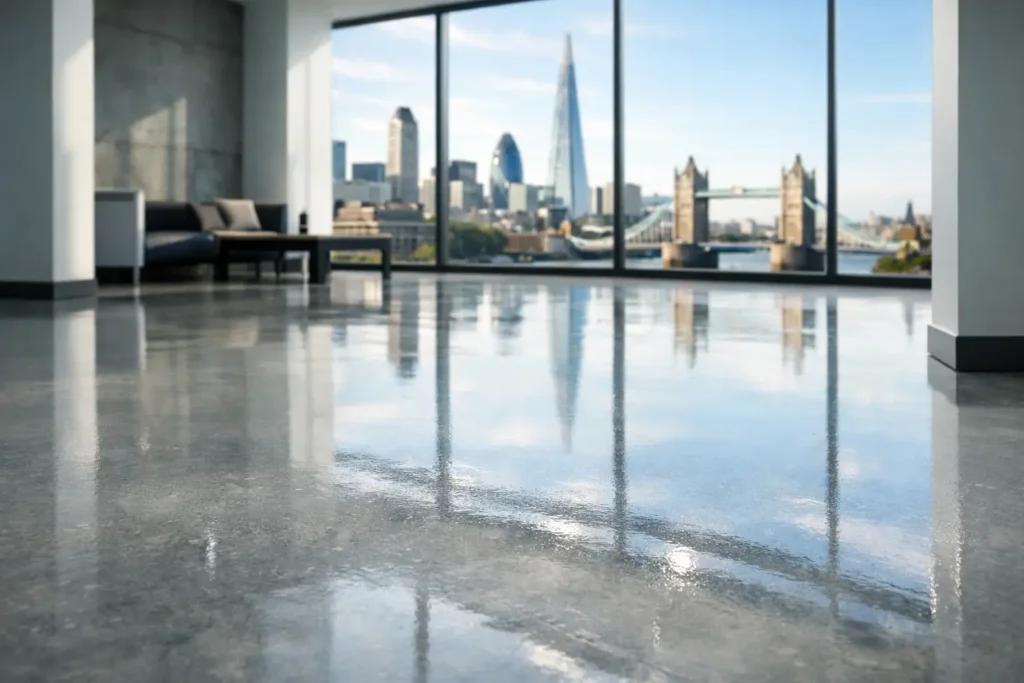
A floor changes the way a room feels long before anyone comments on furniture, lighting or layout. That is why epoxy flooring London projects are no longer limited to back-of-house spaces and purely practical settings. In the right hands, epoxy becomes part of the architecture – a surface that sharpens the look of an interior while standing up to daily wear.
For homeowners and commercial clients alike, the appeal is clear. Epoxy offers a sleek, continuous finish, excellent durability and a level of visual control that standard floor coverings rarely match. But the best result does not come from treating it as a commodity. It comes from seeing it as a crafted surface, chosen for both performance and aesthetic impact.
Why epoxy flooring London clients choose has changed
There was a time when epoxy was specified almost entirely for workshops, garages and industrial units. It earned its reputation through resilience, not beauty. That reputation still matters, but expectations have moved on.
Today, many London clients want a floor that works hard without looking purely functional. In a kitchen extension, that might mean a clean, reflective surface that opens up the space and feels easy to live with. In a retail setting, it might mean a polished finish that supports the brand rather than fading into the background. In a garage or warehouse, it may still be about strength first, but even then, appearance has become part of the brief.
This is where epoxy stands apart. It can be understated or expressive, minimal or decorative, depending on the scheme. The material is versatile enough to support a practical specification and a design vision at the same time.
What makes epoxy flooring work so well
At its best, epoxy creates a seamless surface with real visual clarity. No grout lines, no awkward joins, no patchwork effect. That alone gives a room a more refined feel. It also makes cleaning simpler, which matters in busy homes, commercial kitchens, retail units and workspaces where maintenance needs to be straightforward.
Durability is another major advantage. Epoxy is well suited to environments that see foot traffic, rolling loads, spills and repeated use. It resists many of the issues that quickly age softer floor finishes, and when properly installed on a suitable substrate, it offers long-term reliability.
There is also the matter of finish. Some clients want a high-gloss result that catches light and adds drama. Others prefer a softer, more muted look with a contemporary edge. Colour choices, texture levels and decorative effects can all shape the final aesthetic. That flexibility is part of what makes resin-based flooring feel more architectural than off-the-shelf.
Where epoxy flooring London schemes make the most sense
Not every room needs the same flooring solution, and epoxy is strongest when specified with purpose.
In residential settings, it works especially well in kitchens, hallways, utility rooms and garages. These are spaces where people want a finish that feels modern but can cope with mess, moisture and regular use. In open-plan layouts, epoxy can also help create visual continuity between zones, giving the whole ground floor a more cohesive feel.
Bathrooms can benefit too, although the specification needs careful thought. Slip resistance, texture and the relationship between the floor and the wider waterproofing strategy all matter. This is not a space for generic advice or rushed installation.
Commercially, epoxy is often an excellent fit for warehouses, showrooms, retail units, studios and back-of-house areas. It brings together resilience and presentation in a way many other systems do not. A business can have a floor that is hard-wearing without looking harsh or dated.
Design matters as much as durability
One of the biggest misconceptions about epoxy is that it is visually limited. In reality, the finish can be tailored in ways that make a major difference to the final space.
A plain block colour can look crisp and architectural, especially in contemporary interiors. Decorative systems can introduce movement, depth or a more bespoke character. In some schemes, clients prefer a finish that echoes polished concrete but offers a different maintenance profile and a smoother visual result. In others, the goal is something more striking, with metallic or design-led effects that turn the floor into a feature.
The right choice depends on the room, the light and how the space will be used. A busy commercial environment may call for a finish that hides day-to-day marks more effectively. A design-led residential project may lean towards a cleaner, more gallery-like surface. There is no single best option, only the right fit for the brief.
The trade-offs worth knowing before you choose epoxy flooring London wide
Epoxy is an excellent flooring solution, but it is not a magic answer for every project. Honest specification matters.
Subfloor condition is a big factor. If the existing base is unstable, damp or poorly prepared, the final finish will only ever be as good as what sits beneath it. Proper preparation is not the glamorous part of the process, but it is where a lasting floor begins.
Finish selection also needs realism. A high-gloss surface can look exceptional, but it will show more in terms of dust, light scuffs and general movement across the floor. That does not make it a poor choice, just a choice that suits some spaces better than others. A more forgiving satin or textured finish may be preferable where practicality leads.
There is also curing time to consider. Clients often want fast transformation, especially in commercial settings where downtime costs money. Some resin systems can support that better than others, but rushing any installation is rarely wise. Good craftsmanship needs proper timing.
How a premium installation process shapes the result
A beautifully finished epoxy floor is not just about the product. It is about the sequence, the judgement and the care behind it.
The process usually begins with assessing the substrate and understanding the space. Is this a decorative interior, a heavy-duty work area or a hybrid of both? What level of traffic will the floor take? How important are gloss level, slip resistance and visual texture? These questions guide the system rather than forcing every project into the same template.
Preparation follows, and this is where quality reveals itself. Grinding, repairing, levelling and priming are all part of creating the right foundation. Once the resin is applied, consistency becomes everything. A premium finish relies on control – in the mix, the application and the final detailing.
This is why design-led resin specialists tend to achieve a different result from volume-led contractors. The floor is not treated as a box-ticking exercise. It is considered as a surface that people will notice, live with and judge every day.
Choosing the right finish for your space
If you are selecting epoxy for a home, begin with the atmosphere you want to create. Do you want the room to feel bright and expansive, calm and minimal, or bold and distinctive? Flooring sets the tone more than many people expect.
If you are specifying for a business, think about how the floor supports both operations and image. A showroom, salon, retail unit or hospitality space often needs more than toughness. It needs a finish that aligns with the customer experience and reflects the quality of the environment.
This is where sample-led decisions are especially useful. Looking at colours and textures in context, under the actual light of the room, gives a much clearer sense of the outcome than a generic description ever could. Bespoke consultation adds value because it narrows the gap between what a client imagines and what the installed surface becomes.
For clients seeking a more design-conscious approach to epoxy flooring London projects, the conversation should always go beyond square metre rates. The better question is what kind of surface will make the space feel complete.
Epoxy flooring London and the value of getting it right
A well-executed epoxy floor has a way of making the whole interior feel more resolved. It brings order, finish and purpose to a space, whether that is a family kitchen, a garage conversion, a retail floor or a commercial workspace.
The real value is not only in durability, though that matters. It is in the combination of easy upkeep, strong visual presence and a finish tailored to the way the space is actually used. That balance is where epoxy becomes more than a coating.
For the right project, it is a design decision as much as a practical one. And when craftsmanship leads the process, the result is not just a better floor, but a more considered space from the ground up.