
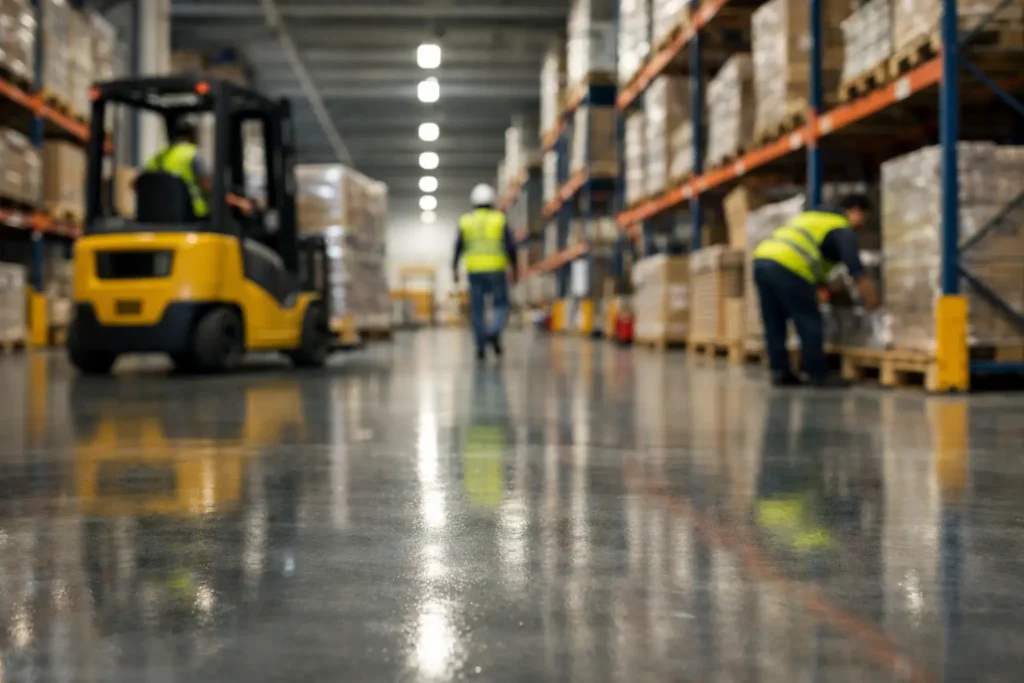
Forklifts leave more than tyre marks. In a busy warehouse, the floor absorbs constant pressure, abrasion, pallet movement, spills and cleaning cycles, all while setting the tone for how the space feels to staff, visitors and auditors. Choosing the best warehouse floor coatings is not simply a maintenance decision. It is a design, safety and operational choice that affects how the whole environment performs.
A warehouse floor has to work hard, but that does not mean it should look purely industrial or feel like an afterthought. The right coating can sharpen light reflectivity, improve line marking clarity, reduce dust, support hygiene standards and create a more considered finish across loading zones, storage aisles and packing areas. The trick is knowing which system suits your site rather than chasing a one-size-fits-all answer.
What makes the best warehouse floor coatings?
The best warehouse floor coatings balance durability with the practical realities of the site. That starts with traffic. A warehouse with regular forklift use needs a very different specification from a light storage unit or trade counter stockroom. Add in chemical exposure, wash-down routines, temperature swings and slip resistance requirements, and the right solution becomes more nuanced.
Preparation matters just as much as the coating itself. Even a premium resin system can underperform if the substrate is weak, contaminated or uneven. Cracks, laitance, moisture issues and old failing finishes all need to be addressed before installation begins. In other words, the best result is always a combination of good product choice and disciplined groundwork.
Appearance also deserves a place in the conversation. For some operators, flooring is purely functional. For others, especially customer-facing spaces with warehouse elements, the finish contributes to brand perception. Clean lines, defined zones and a well-crafted surface make the whole site feel more organised and better managed.
Epoxy coatings for warehouse floors
Epoxy remains one of the most widely specified options, and for good reason. It creates a hard-wearing, seamless finish that stands up well to general warehouse traffic, resists many chemicals and gives concrete a cleaner, more refined appearance. It also offers good value where the substrate is sound and the operational demands are clear.
In practical terms, epoxy works especially well in storage areas, picking zones, dispatch areas and spaces where dust suppression and easier cleaning are priorities. It can be installed in a range of colours, with matt or gloss variations, and can incorporate anti-slip textures where needed. That means it is not only about protection but also about creating a more polished and legible workspace.
The trade-off is that epoxy is not ideal for every environment. It can be less forgiving under thermal shock or significant temperature variation, and some formulations may become brittle over time in harsher settings. If your warehouse includes cold storage, frequent hot wash-downs or more aggressive mechanical abuse, another system may prove a better long-term fit.
Polyurethane systems where conditions are tougher
If epoxy is the dependable all-rounder, polyurethane often comes into its own where warehouses face more punishing conditions. It offers stronger resistance to temperature fluctuation, impact and certain chemical exposures, making it a smart choice for demanding industrial settings.
This matters in warehouses connected to food production, manufacturing or process-heavy operations, where floors may be exposed to steam cleaning, hot spillages or constant abrasion. Polyurethane systems can also offer a little more flexibility than epoxy, which helps in environments where slight substrate movement is a factor.
That added performance usually comes with a higher upfront cost, so it is not always the right answer for every site. If the warehouse is a relatively dry, stable environment with moderate traffic, a properly specified epoxy system may deliver excellent performance without overengineering the floor. The best warehouse floor coatings are the ones that fit the job, not the ones with the longest technical data sheet.
Heavy-duty resin screeds and build-up systems
Some warehouse floors need more than a thin coating. Where the concrete is worn, uneven or subject to heavy mechanical stress, a heavier build resin system or screed can provide a far more durable platform. These systems create greater thickness, stronger impact resistance and a more substantial wearing layer.
They are particularly useful in loading bays, manufacturing-linked storage areas and older commercial units where the substrate has already had a hard life. A thicker system can help correct surface imperfections while delivering a more reliable finish for the future. It also opens up more control over texture and slip resistance, which is valuable in transitional areas where dry and wet conditions overlap.
The main consideration is downtime. Heavier systems can require more involved preparation and installation, so project planning becomes crucial. For busy sites, phased application can reduce disruption, but that only works if the layout and workflow allow for it.
Acrylic and quick-cure options
Where downtime is the dominant concern, rapid-curing resin systems can be attractive. Acrylic and MMA-based coatings are often chosen when a warehouse cannot afford long closures, as they can return to service much faster than many traditional systems.
That speed is the benefit, but it comes with caveats. These systems need skilled installation, careful environmental control and a clear understanding of where they make sense commercially. For some warehouses, especially those with narrow shutdown windows, they are a practical answer. For others, a standard resin system with planned installation phases may be the more balanced choice.
How to choose the best warehouse floor coatings for your site
The right question is not Which coating is best overall? It is Which coating is best for this warehouse, with this level of traffic, this substrate condition and these operational pressures?
Start with traffic load. Pedestrian use, pallet trucks and heavy forklifts place very different demands on the floor. Then look at exposure. Oil, chemicals, water, cleaning agents and temperature change all influence specification. After that, assess the concrete itself. A beautiful finish cannot compensate for a failing base.
You should also think about the visual role of the floor. In some spaces, especially hybrid commercial environments, a warehouse floor still needs to look considered. A well-chosen resin coating can align practicality with a sharper, more architectural finish. That is where design-led expertise becomes valuable. At Resinize, that balance between performance and appearance is central to how surfaces are approached.
Safety, maintenance and long-term value
A warehouse floor coating should make the space easier to manage over time. Seamless resin systems reduce dust, simplify cleaning and allow line markings, walkways and zone colours to read more clearly. That helps with both maintenance and day-to-day safety.
Slip resistance needs careful judgement. A heavily textured floor may improve grip, but if it is too aggressive for the operational context, it can become harder to clean and less comfortable for certain uses. The right finish depends on what moves through the space, how often the floor is washed and whether spillages are occasional or routine.
Long-term value is rarely about choosing the cheapest quote. It is about lifecycle performance. A coating that lasts well, supports safe movement, protects the substrate and keeps the warehouse looking presentable often proves the better investment. Recoating too soon, patch repairing preventable failures or dealing with operational disruption is where cheaper decisions tend to show their true cost.
When aesthetics matter in a warehouse
Not every warehouse needs to make a visual statement, but plenty of commercial spaces benefit from looking sharper. Trade counters, fulfilment centres, mixed-use units and branded back-of-house environments all gain from a floor that feels deliberate rather than purely utilitarian.
Colour zoning can improve navigation. Cleaner finishes can lift the whole atmosphere of the building. Better light reflectivity can even make large spaces feel brighter and more efficient. These details are practical, but they also shape perception. A refined floor suggests standards, care and professionalism before a word is spoken.
That is why the best warehouse floor coatings are not always the ones that simply survive abuse. They are the ones that support the full character of the space while standing up to the work happening on top of them.
If you are weighing up options, resist the temptation to choose by product name alone. Look at the condition of the slab, the rhythm of the site and the finish you want to live with for years. The right warehouse floor should not only cope with pressure – it should quietly elevate the space every single day.