
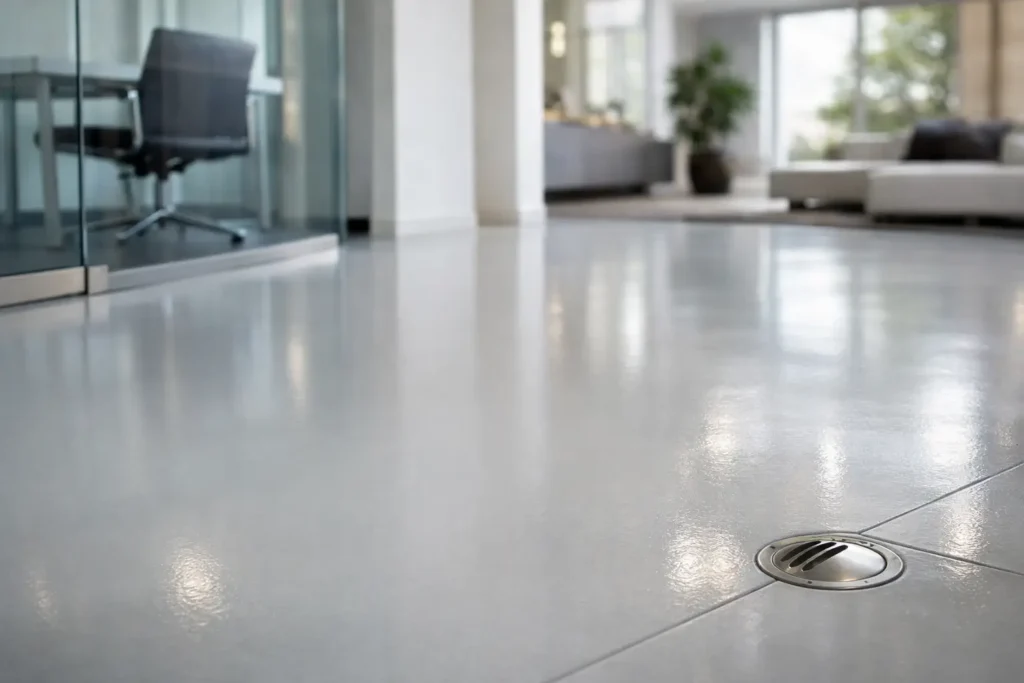
A floor with no grout lines, no plank joins and no visual interruptions changes a room immediately. If you have been asking what is a seamless floor, the simple answer is this: it is a continuous surface laid across the subfloor as one finish, rather than built from separate pieces such as tiles, boards or sheets.
That simple idea has a big effect on how a space looks, feels and performs. In the right setting, a seamless floor can make a kitchen feel cleaner, a bathroom feel more refined, or a commercial unit feel sharper and easier to maintain. It is both a design decision and a practical one.
What is a seamless floor in practice?
When people hear the term, they often imagine a glossy resin surface, but the category is slightly broader than that. A seamless floor is any floor finish installed as a continuous layer, with little to no visible joins across the main area. Instead of fitting individual pieces together, the installer pours, trowels or coats the material in place.
Resin flooring is one of the best-known examples because it delivers that uninterrupted look particularly well. Depending on the system, it can be smooth, satin, high-gloss, textured, terrazzo-inspired, concrete-effect or metallic. Other poured finishes also exist, but resin tends to attract attention because it balances visual impact with durability.
The phrase matters because the lack of joins is not only aesthetic. It also changes day-to-day use. There are fewer places for dirt to gather, fewer edges to catch the eye, and a much stronger sense of flow from one part of a room to another.
Why homeowners and designers choose seamless flooring
The appeal usually starts with the look. A continuous floor reads as calm, modern and deliberate. It gives the room a more architectural finish, which is why it works so well in open-plan kitchens, hallways, bathrooms and contemporary living spaces.
It can also make smaller rooms feel more expansive. Without visual breaks from grout lines or board patterns, the eye travels more freely across the surface. That uninterrupted effect is subtle, but it is one of the reasons seamless finishes are often chosen for design-led interiors.
Then there is maintenance. In spaces where spills, muddy shoes or regular cleaning are part of life, fewer joints can mean less scrubbing and a tidier finish over time. This is useful in family homes, but it is equally valuable in retail, hospitality and back-of-house commercial areas.
That said, style should not be separated from performance. A well-specified seamless floor can be hard-wearing, resistant to daily wear and easier to clean than many traditional alternatives. The exact result depends on the system chosen, the subfloor condition and how the space is used.
What materials are used for seamless floors?
For most residential and commercial projects, resin is the standout option. Epoxy and polyurethane systems are common, and each has different strengths. Epoxy is often chosen for its toughness, clarity and decorative possibilities. Polyurethane can offer a little more flexibility and can be a strong choice where comfort underfoot or slight movement in the substrate needs consideration.
Decorative resin opens up a wider design conversation than many people expect. Pigments, aggregates and specialist application techniques can create finishes that feel minimal and understated or bold and expressive. Concrete-effect resin can suit pared-back interiors, while metallic finishes create a more dramatic statement. Terrazzo-style overlays bring pattern and character without the segmented look of traditional tile-based schemes.
Commercial environments may require a more functional specification. Warehouses, garages, prep areas and shop floors often need coatings built for impact resistance, slip performance or chemical exposure. In those spaces, the floor still benefits from a clean visual line, but the technical build-up becomes just as important as the appearance.
Where a seamless floor works best
A seamless floor is not limited to one room type. In residential settings, it is especially effective where continuity helps the design. Kitchens, dining areas and hallways benefit from the way resin can visually connect zones without changing material underfoot. Bathrooms and wet rooms also suit the format because there are fewer joints to interrupt the finish.
In commercial spaces, the advantages become even more practical. Retail interiors often want a polished surface that supports the brand rather than competing with it. Beauty studios, showrooms and reception areas benefit from a finish that feels curated and premium. Industrial settings may prioritise resilience first, but a continuous floor can still improve cleanliness and presentation.
The best projects tend to match the finish to the space rather than forcing one look everywhere. A high-gloss decorative resin might be perfect for a statement room, while a softer satin or textured system may be better for a busy entrance or utility area.
The real benefits – and the trade-offs
A seamless floor offers several clear strengths. It looks refined, it can be easier to clean, and it allows a high degree of customisation in colour, texture and finish. It can also reduce the visual clutter that comes with grout lines, thresholds and pattern changes.
But it is not a magic answer for every project. The quality of the substrate underneath matters enormously. If the base is uneven, cracked or damp, preparation becomes critical. A beautiful top finish relies on solid groundwork, and this is where experienced installation makes a real difference.
There is also the question of feel. Some people love the sleek, contemporary character of resin immediately. Others are more comfortable with the warmth and familiarity of timber or the texture of natural stone. It depends on the interior scheme and on what you want the room to say.
Cost varies too. A bespoke resin floor is not usually the cheapest route, especially where specialist preparation, detailed edging or decorative effects are involved. However, it offers something that standard off-the-shelf flooring often cannot: a made-for-the-space surface with a distinctly architectural finish.
What is a seamless floor installation like?
The process is more precise than many clients expect. Before any finish goes down, the existing floor must be assessed properly. Installers will look at moisture levels, stability, contamination, cracks and overall condition. Preparation may include grinding, repairs, levelling and priming.
Once the base is ready, the chosen system is applied in layers. Depending on the finish, this might involve a primer, body coat, decorative elements and a final seal coat. Timing matters because each layer needs the right conditions to cure correctly. Temperature, humidity and site use all affect the programme.
This is one reason seamless floors reward patience. They can look effortless when complete, but achieving that clarity and consistency takes skill. Edges, transitions and detailing around drains, doorways and skirtings need careful handling if the final result is to feel truly refined.
Design possibilities beyond the minimalist look
Some people assume seamless flooring only works in stark, ultra-modern interiors. In reality, it is far more versatile. The absence of joins creates a clean canvas, but the finish itself can be warm, expressive and tailored.
Soft stone tones can bring calm to open-plan family spaces. Rich charcoals and deep neutrals can give retail or hospitality settings a more dramatic mood. A terrazzo-inspired resin overlay can introduce movement and colour while still keeping the floor visually continuous. Even a concrete-effect finish can be adjusted to feel softer and more layered than a plain grey slab.
This is where a design-led approach matters. The floor should not be treated as a purely functional backdrop. It has a major influence on light, scale and atmosphere, and when chosen well, it becomes part of the architecture of the room rather than just its base layer.
Is a seamless floor right for your project?
If you want a floor that feels crisp, contemporary and highly considered, it is often a strong choice. It suits clients who care about finish quality, visual simplicity and a surface that can stand up to real use. In homes, that might mean a kitchen renovation with more flow and less visual noise. In commercial settings, it might mean a harder-working floor that still looks premium.
The key is not asking whether seamless flooring is good in general, but whether it is right for your space, your style and the way the room functions. A family bathroom, a design-led hallway and a busy garage all have different demands. The best result comes from balancing appearance with performance from the outset.
For projects across Essex and London, that often means working with a specialist who can talk through both the visual direction and the technical requirements in equal measure. A floor should look exceptional on day one, but it also needs to make sense six months and six years later.
If you have been wondering what is a seamless floor, think of it as more than a construction method. It is a way of shaping a room with clarity, craftsmanship and intent – and when it is specified well, it can change the entire character of a space from the ground up.