
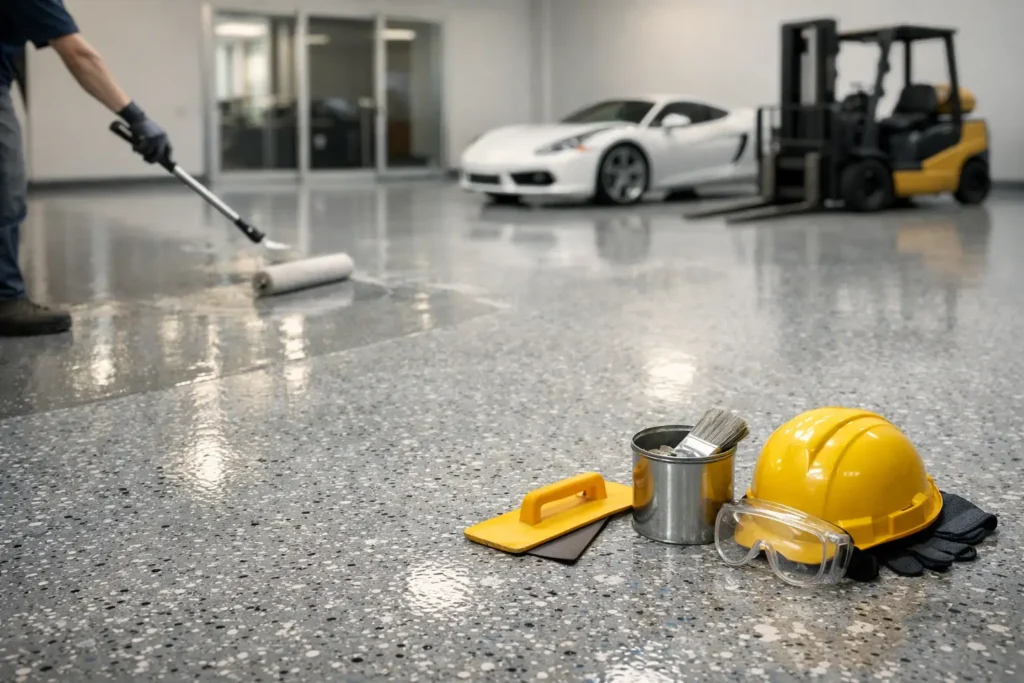
A floor sets the mood of a room long before the furniture goes in. In a kitchen, garage, showroom or retail unit, it is one of the largest visual surfaces in the space, and one of the hardest working. That is why epoxy flooring benefits are not only about strength underfoot. They are also about how a space looks, feels and performs every day.
For homeowners and commercial decision-makers alike, epoxy has moved well beyond the purely practical. Done well, it offers a refined, seamless finish with the resilience to cope with busy life, heavy use and regular cleaning. The appeal is simple – you get a surface that can make a strong design statement without becoming delicate or demanding.
Why epoxy flooring benefits go beyond durability
Durability is usually the first thing people ask about, and rightly so. Epoxy flooring creates a tough, bonded surface that stands up well to wear, impact and routine foot traffic. In garages, workshops and commercial settings, that matters because the floor is under constant pressure from movement, equipment and day-to-day use.
But focusing on toughness alone misses the bigger picture. A well-finished epoxy floor also changes how a room is experienced. It can brighten darker areas by reflecting light, create a cleaner visual line through open-plan spaces and remove the busy interruptions that come with grout lines, joins or mixed materials. In design-led interiors, that simplicity is often part of the attraction.
There is a practical side to that visual clarity too. A seamless floor tends to feel calmer and more considered. In contemporary homes, that can help kitchens, hallways and utility areas feel more spacious. In commercial environments, it can support a polished brand image without sacrificing performance.
A seamless finish that looks considered
One of the strongest epoxy flooring benefits is the seamless appearance. Traditional floors often break up the space with joints, edges and visible transitions. Epoxy gives a continuous finish that feels more architectural and intentional.
This matters most in interiors where the floor is meant to support the overall aesthetic rather than compete with it. A smooth resin surface can sit quietly behind bold furniture and lighting, or become a feature in its own right through metallic effects, terrazzo-inspired detailing or concrete-look finishes. It offers design flexibility that many hard-wearing floors simply do not.
For clients who want their surfaces to feel bespoke rather than off-the-shelf, this is where epoxy really earns its place. It can be tailored in tone, sheen and texture, which means the result feels integrated with the wider scheme instead of dropped in as an afterthought.
Customisation without losing practicality
Some decorative surfaces look impressive at first glance but become difficult to live with. Epoxy is different because the design potential sits alongside everyday usability. You can choose soft neutrals for a calm domestic setting, deeper tones for contrast, or a statement finish for a feature room or branded commercial space.
That balance between artistry and function is a large part of its appeal. It allows a floor to contribute to the identity of a room while still being built for real use.
Easy cleaning is a genuine everyday advantage
The value of an easy-to-clean floor becomes obvious very quickly once a space is in use. Dust, spills, muddy footprints and everyday mess have a way of finding every crack and grout line. Because epoxy is non-porous and seamless, there are fewer places for dirt to settle.
In a home, that can mean less effort keeping kitchens, bathrooms and utility spaces looking fresh. In a commercial setting, especially where presentation matters, it supports a cleaner, more professional appearance with less ongoing fuss. Sweeping and mopping are usually straightforward, and many common spills can be dealt with before they have the chance to stain.
Of course, easy maintenance does not mean no maintenance at all. The right cleaning products and a sensible care routine still matter. But compared with many alternative surfaces, epoxy tends to ask less of the people living or working on it.
Strong resistance to stains, moisture and chemicals
Another of the most useful epoxy flooring benefits is resistance. In practical terms, that means better protection against oil, water, cleaning products and other substances that would mark or degrade more porous materials.
This is especially valuable in garages, commercial kitchens, salons, workshops and busy family homes where spills are part of ordinary life. A floor that can shrug off the usual messes without permanently showing them has obvious appeal.
That said, performance always depends on specification and installation. Not every resin system is suited to every environment, and heavy-duty commercial areas may need a different build-up from a decorative domestic floor. The best results come from matching the system to the demands of the space rather than assuming one finish does everything equally well.
Light-enhancing and space-defining
Floors influence how light moves through a room more than most people expect. A well-chosen epoxy finish can lift a darker area, especially where natural light is limited. In garages, basements, hallways and retail units, that can make the space feel cleaner, brighter and more welcoming.
Gloss levels play a part here. A higher-sheen finish can create more reflection and visual energy, while a softer satin effect feels more understated. Neither is automatically better. It depends on the look you want, how much natural light the room gets and how much surface texture is needed for practical reasons.
For design-conscious clients, this is where the material becomes more than a coating. It becomes a tool for shaping atmosphere.
A good fit for busy homes and hardworking businesses
Epoxy suits spaces that need to perform without looking purely industrial. In domestic settings, it works particularly well in kitchens, open-plan living areas, hallways, bathrooms and garden rooms where there is a desire for clean lines and durable finishes. Underfloor heating compatibility can also make it an attractive option in modern renovations, though the existing substrate and specification need checking first.
In commercial environments, its appeal is equally clear. Showrooms, retail spaces, warehouses and garages often need floors that can tolerate constant use while still looking presentable. Epoxy answers that need with a surface that can be both resilient and visually resolved.
This dual personality is one of its greatest strengths. It is capable of feeling refined enough for a design-led home and robust enough for operational spaces where reliability comes first.
Safety can be built into the finish
A beautiful floor still has to work safely in the real world. One of the less obvious epoxy flooring benefits is that slip resistance can be adjusted to suit the environment. Texture and additives can be introduced where extra grip is needed, which is useful in commercial settings, entrance points, wet rooms and work areas.
There is always a balance to strike here. A smoother, glossier finish may deliver the visual crispness some clients want, but areas exposed to moisture or heavy use may need a more textured surface. That is why product choice should never be based on appearance alone.
The right approach is to design for both beauty and use. A floor should feel impressive, but it should also suit the way people move through the space every day.
Long-term value depends on the quality of the job
Epoxy is often seen as a value choice because of its lifespan and low maintenance, but value is not only about initial cost. It is about how well the floor performs over time, how often it needs attention and whether it still looks right years later.
A professionally installed system on a properly prepared substrate usually offers far better long-term results than a quick cosmetic application. Surface preparation, moisture assessment and correct product selection are what separate a premium finish from one that disappoints early.
This is worth bearing in mind if you are comparing options. A cheaper installation can become expensive if it peels, discolours or fails under everyday use. A carefully specified floor, by contrast, tends to justify itself through appearance, durability and reduced upkeep.
Is epoxy right for every space?
Not always. That honesty matters. If a subfloor is in poor condition, if moisture issues have not been addressed, or if the room calls for a softer, more natural material, another finish may be a better choice. Epoxy also needs skilled installation and proper curing time, so it is not usually the answer for anyone hoping for a rushed, no-disruption project.
But where the brief calls for durability, design flexibility and a clean, contemporary feel, it is difficult to ignore. For clients across Essex and London who want a floor to do more than simply cover the ground, epoxy offers an unusually strong combination of performance and visual impact.
The best floors do not shout for attention every second of the day. They simply make the whole space work better, look sharper and feel more resolved. That is where epoxy earns its reputation – not as a compromise between style and practicality, but as a finish that can deliver both with real confidence.