
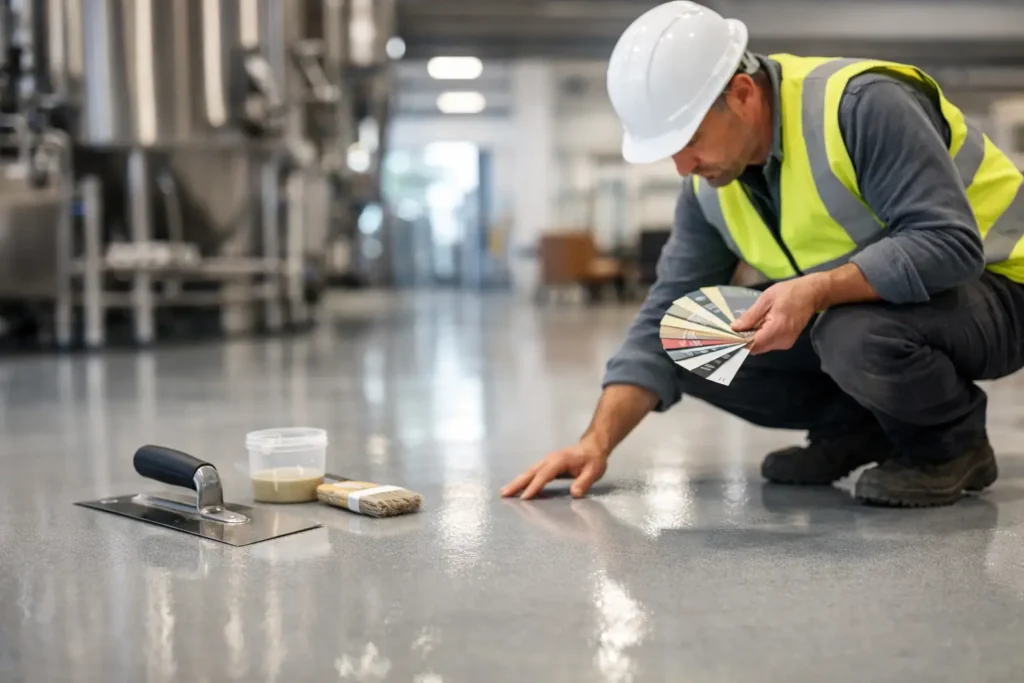
A resin floor can look immaculate on handover day and still be the wrong choice six months later. That usually happens when the specification starts with a product name instead of the space itself. If you want to understand how to specify commercial resin flooring properly, begin with performance, movement, cleaning, appearance and the realities of day-to-day use.
Commercial resin is not one single finish. It can be sleek and design-led for a retail interior, hard-wearing and practical for a warehouse, or hygienic and slip-resistant for food preparation areas. The right result comes from matching the system to the environment, not forcing one finish into every brief.
How to specify commercial resin flooring without guesswork
The strongest specifications are built around what the floor needs to do. That sounds obvious, but many projects still focus too heavily on thickness, brand preference or a visual sample without asking enough operational questions.
Start with traffic. A staff-only back-of-house corridor has very different demands from a showroom entrance, a workshop with wheeled loads, or a commercial kitchen exposed to heat, grease and aggressive cleaning. Footfall volume matters, but so does the type of use. Trolley traffic, pallet movement, dropped tools and rolling point loads all affect what kind of resin system is suitable.
Then look at contamination and cleaning. If the floor will regularly see oils, chemicals, food waste or frequent washdowns, the specification must account for that. A beautiful decorative finish can still fail the brief if it becomes difficult to maintain or loses slip performance when wet.
Finally, define the visual ambition. In some commercial settings, the floor is quiet background architecture. In others, it is part of the brand experience. Seamless resin is one of the few surface finishes that can deliver both strong technical performance and a highly considered aesthetic, but the balance needs to be deliberate from the start.
Start with the environment, not the material
A useful way to specify is to write a short description of the space before naming any system. What happens there from morning to night? Is the floor mainly dry or frequently wet? Is the priority impact resistance, hygiene, comfort underfoot, chemical resistance, or design presence?
For example, a retail unit may need a refined, consistent surface with strong abrasion resistance and a finish that supports the wider interior scheme. A warehouse may call for heavier-duty performance, tolerance of mechanical wear and practical maintenance. A hospitality setting may need decorative appeal, comfort, and slip resistance without looking overtly industrial.
This is where trade-offs come in. The most textured anti-slip finish may be appropriate in a wet production zone, but it may not suit a high-end showroom where a smoother, more architectural feel is part of the experience. Equally, a polished decorative surface may look exceptional, but if the cleaning regime or contamination risk is wrong for that finish, the floor will not perform as intended.
Consider the substrate early
No resin floor performs better than the substrate beneath it. Concrete condition, moisture content, laitance, cracks, contamination and level tolerance all influence the specification. If the slab is weak, damp or poorly prepared, even a premium resin system can be compromised.
This is why site assessment matters so much. In refurbishment projects especially, hidden issues such as oil contamination, previous coatings or uneven repairs can alter the specification significantly. It is often wiser to allow for remedial preparation at the outset than to chase visual perfection with the wrong build-up.
Thickness is not the whole story
People often ask for a thicker floor as though thickness alone equals quality. It does not. Thickness should respond to use, substrate condition and the performance required. A thin coating may be perfectly suitable in one commercial environment, while another may need a more substantial system to withstand impact, heavy traffic or cleaning demands.
The chemistry matters too. Epoxy, polyurethane and MMA systems all have different strengths. Some offer excellent decorative depth, some cope better with thermal movement, and some are selected for fast return to service. Good specification is less about choosing the most impressive technical sheet and more about choosing the system that fits the project honestly.
The key decisions within a commercial resin flooring specification
Once the environment is clear, the specification starts to take shape through a series of practical choices.
Slip resistance should be one of the first. It needs to reflect actual conditions, not vague caution. A floor that is occasionally damp has different requirements from one that regularly sees standing water, grease or residues. Over-specifying slip resistance can make cleaning harder and affect the visual finish, while under-specifying creates obvious safety concerns.
Chemical resistance is another point that should be precise rather than assumed. Cleaning products, oils, solvents, acids and food by-products all affect resin differently. If the floor will be exposed to specific substances, those should be named in the brief. General phrases such as “chemical resistant” are too broad to be useful on their own.
Hygiene and detailing also deserve attention. In healthcare, hospitality, food settings and washdown areas, the floor specification often needs to consider coved skirtings, sealed perimeters and junction details. A resin floor is not only about the main field area. The edges, upstands and transitions are often where performance is won or lost.
Appearance is part of performance
In design-led commercial interiors, appearance should not be treated as an afterthought. Colour, sheen level, aggregate exposure, movement in the finish and light reflectance all shape how the space feels. A floor can make a retail environment feel elevated, give a reception area a more confident identity, or help a studio, salon or showroom feel sharper and more cohesive.
That visual layer also has practical implications. Darker tones may show dust differently from lighter ones. High-gloss finishes can create drama, but they also reveal substrate imperfections more readily and may not suit every lighting scheme. A matte or satin finish can feel calmer and more architectural, particularly where a refined, contemporary look is the goal.
For brands that care how their space is experienced, resin offers unusual freedom. It can be minimal and understated or highly expressive. The specification should reflect that intent rather than defaulting to whatever is cheapest or most familiar.
How to specify commercial resin flooring for long-term value
A floor is only successful if it still works after handover. That means the specification should account for maintenance, repairability and life-cycle thinking, not only installation day.
Ask how the floor will be cleaned in real life. Not the ideal version written into a manual, but the actual routine on site. If the cleaning team uses certain machines, detergents or schedules, the finish should suit them. A resin floor that is easy to maintain will hold its appearance far better than one that demands constant special care.
Downtime is another practical factor. Some commercial spaces can close for installation and cure time. Others need phased works, overnight programmes or quick return to service. That can influence system choice and sequencing. Fast-curing options exist, but they should only be used where they genuinely suit the project, not just because the programme is tight.
Future repairs should also be considered. A highly bespoke decorative finish may be stunning, but if the space is likely to see ongoing adaptations, access works or service changes, think carefully about how visible repairs might be later. Sometimes a slightly quieter finish is the smarter long-term choice.
Write the brief clearly
A strong resin flooring specification is clear enough for all parties to understand what success looks like. It should define the area of use, substrate assumptions, preparation requirements, resin system type, thickness where relevant, finish, slip resistance, detailing, curing constraints and aesthetic expectations.
It should also leave room for professional judgement where site conditions require adjustment. The best outcomes usually come from collaboration between designer, client and specialist installer, because resin is both a technical system and a crafted finish. Samples, mock-ups and honest conversations about tolerances can prevent expensive misunderstandings later.
For commercial projects in Essex and London, this matters even more where design standards are high and programme pressures are real. A floor may need to work hard, photograph beautifully and support the wider feel of the space all at once.
The real skill in specifying resin is recognising that performance and aesthetics are not competing ideas. When handled well, they strengthen each other. A floor that is durable, well detailed and visually considered does more than cope with traffic – it shapes how the entire interior is experienced. If you start with the life of the space, the right specification tends to become much clearer.