A warehouse floor can carry forklifts all day and still set the tone for a client visit. A retail unit can withstand wet shoes, moving displays and daily cleaning without looking purely industrial. That is the opportunity behind a commercial epoxy flooring guide: choosing a surface that works hard beneath the business while contributing to the space people see, remember and trust.
Epoxy is often specified for practical reasons, but performance alone is not the whole brief. The best commercial floors respond to traffic, hygiene, safety, cleaning routines, lighting and brand character at the same time. A pale, seamless finish can make a compact showroom feel more considered; a flake system can give a garage or workshop a crisp, professional identity; a more heavily built coating can protect a warehouse slab without turning it into an afterthought.
What commercial epoxy flooring is designed to do
Commercial epoxy flooring is a resin-based coating system applied over a suitably prepared concrete substrate. Once cured, it creates a continuous finish with no grout lines, lifted edges or joints to trap dirt. Depending on the system and specification, it can be built to resist abrasion, impact, oils, chemicals, moisture and frequent cleaning.
That does not mean every epoxy floor is the same. A decorative epoxy coating for a boutique retail space has very different priorities from a heavy-duty system in a loading area. Thickness, build-up, texture, topcoat and substrate preparation all affect how the floor looks and lasts.
The appeal is in that balance. Commercial resin flooring can be practical enough for demanding daily use while still offering a deliberate design language. Colour can be chosen to complement an interior scheme, aggregate can introduce texture, and gloss levels can be adjusted to create anything from polished drama to a more understated architectural finish.
Start with the real demands of the space
A floor should be specified around what happens on it, not simply the name of the room. A commercial kitchen, for example, needs a hygienic, easily cleaned surface with appropriate slip resistance and tolerance for spills. A showroom may prioritise a refined finish that suits lighting and displays. A warehouse may require greater resistance to wheel traffic, point loads and impact.
Before selecting colours or finishes, consider the traffic pattern. Are pallet trucks or forklifts in regular use? Will equipment be moved across the floor? Is there constant footfall at an entrance? Are there areas exposed to oils, detergents, foodstuffs, water or cleaning chemicals? These questions determine the right resin build and surface texture.
It is also worth being honest about operational downtime. Epoxy installation is a staged process: preparation, priming, application and curing all take time. A fast turnaround may be possible with the right system, but rushing a floor before it is ready for service risks marking the finish or compromising performance. Planning the works around quieter trading periods, phased areas or a fit-out programme usually leads to a cleaner result.
The concrete slab is part of the specification
Even the most impressive coating relies on the condition beneath it. Concrete must be sound, clean and properly assessed before resin is applied. Old paint, adhesive residues, contaminants, laitance and weak concrete can interfere with adhesion. Cracks, uneven areas and damaged joints may need repair before the decorative finish begins.
Moisture is particularly significant. Concrete can look dry while still holding vapour that affects a coating system. A professional survey identifies whether moisture management, a suitable primer or another preparation approach is needed. This is not background detail. It is the work that protects the appearance and lifespan of the finished floor.
Choosing the right finish for commercial use
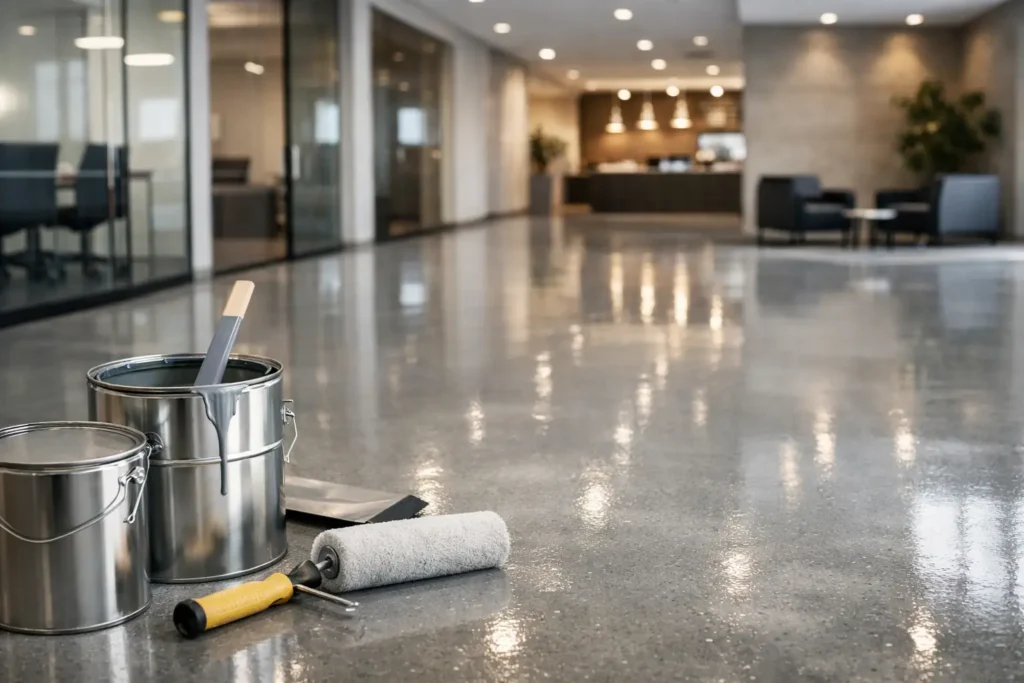
The visual direction should support the environment rather than compete with it. In customer-facing spaces, seamless resin can become part of the interior architecture – grounding joinery, shelving, feature walls and lighting in one composed palette. In more functional settings, a carefully selected finish can make a workplace feel organised, clean and confidently maintained.
A solid-colour epoxy floor is a strong choice where clarity and uniformity matter. Neutral greys, warm stone tones and deeper charcoals work well in studios, back-of-house areas and contemporary retail settings. Lighter colours can open up a space, although they may show tyre marks or dirt more readily. Darker finishes can feel dramatic and forgiving, but may reveal dust under bright lighting.
Decorative flake systems add visual depth while helping disguise minor scuffs and day-to-day debris. They are especially useful in garages, workshops, staff areas and busy retail settings where a plain surface may show every mark. The flake blend can be subtle and tonal or more expressive, depending on the identity of the space.
For design-led commercial interiors, metallic, terrazzo-inspired or concrete-effect resin finishes can create a more distinctive statement. These are not automatically the right answer for high-abuse industrial use, but they can be specified with protective topcoats and appropriate detailing where appearance is central to the brief. The question is not whether a finish is beautiful or durable. It is whether it is designed for the particular kind of durability the space requires.
Slip resistance needs a considered approach
A glossy floor can look striking in a showroom, but gloss should never be confused with suitability in wet or spill-prone areas. Slip resistance is influenced by the texture of the final surface, the presence of water or contaminants, footwear and cleaning practices.
Adding aggregate or a textured finish can improve grip, particularly in entrances, kitchens, workshops and production areas. The trade-off is that a more textured floor can be less straightforward to mop than a smooth decorative surface. The best choice is usually a level of texture that meets the practical risk without making routine maintenance unnecessarily difficult.
Zoning can be useful here. A refined, smoother resin finish may suit the main customer area, while a more textured system is installed in service corridors, wash-down areas or thresholds. Thoughtful transitions allow the floor to work harder where it needs to without losing the overall design intent.
Installation quality is visible long after handover
Epoxy floors are sometimes treated as a quick coating job. In reality, the finish is only as good as the preparation and application behind it. Mechanical grinding or shot blasting creates the correct profile for adhesion. Repairs need to be carefully blended and levelled. Edges, drains, doorways, coves and joints demand the same attention as the open floor area.
Environmental conditions matter too. Temperature and humidity influence how resin behaves and cures. Dust control, mixing accuracy and the timing between coats all affect the final result. A premium resin floor should look calm and intentional, not uneven, patchy or hurried.
For occupied premises in Essex or London, the installer should also consider access, neighbouring trades, ventilation, noise and how the work can be sequenced with minimal disruption. A bespoke consultation is valuable because it turns those practical constraints into a workable installation plan rather than an unpleasant surprise halfway through the project.
Maintenance protects the finish and the investment
One of epoxy flooring’s strongest advantages is that it is straightforward to maintain. The seamless surface prevents dirt collecting in grout lines, and regular cleaning can preserve its appearance for years. However, low maintenance does not mean no maintenance.
Dry debris should be removed regularly, especially in areas with grit or wheel traffic. Use a cleaning regime suited to the installed system and avoid harsh products that may dull or damage the topcoat. Spills should be dealt with promptly, even where chemical resistance is part of the specification. Entrance matting can also reduce the abrasive dirt carried in from outside.
As the business changes, maintenance should change with it. A floor that was designed for footfall may need review if the space later introduces heavier equipment, more frequent deliveries or different cleaning chemicals. Early advice can prevent a small operational change becoming a surface problem.
When epoxy may not be the only answer
Epoxy is an excellent commercial solution, but it is not the default answer to every flooring brief. Areas exposed to strong sunlight may benefit from a UV-stable topcoat or an alternative resin approach, as some epoxies can amber over time. Floors with significant movement, persistent moisture issues or extreme thermal shock need especially careful system selection.
Likewise, a heavily textured floor may be right for safety but wrong for a luxury hospitality setting where bare feet, fine detailing and easy cleaning are priorities. There is no value in specifying the toughest-looking finish if it makes the space harder to use or undermines the desired atmosphere.
The strongest commercial resin projects begin with a clear picture of the site and the ambition for it. At Resinize, that means treating the floor as both a working surface and a meaningful part of the finished environment – crafted with the technical care and visual confidence the space deserves.