
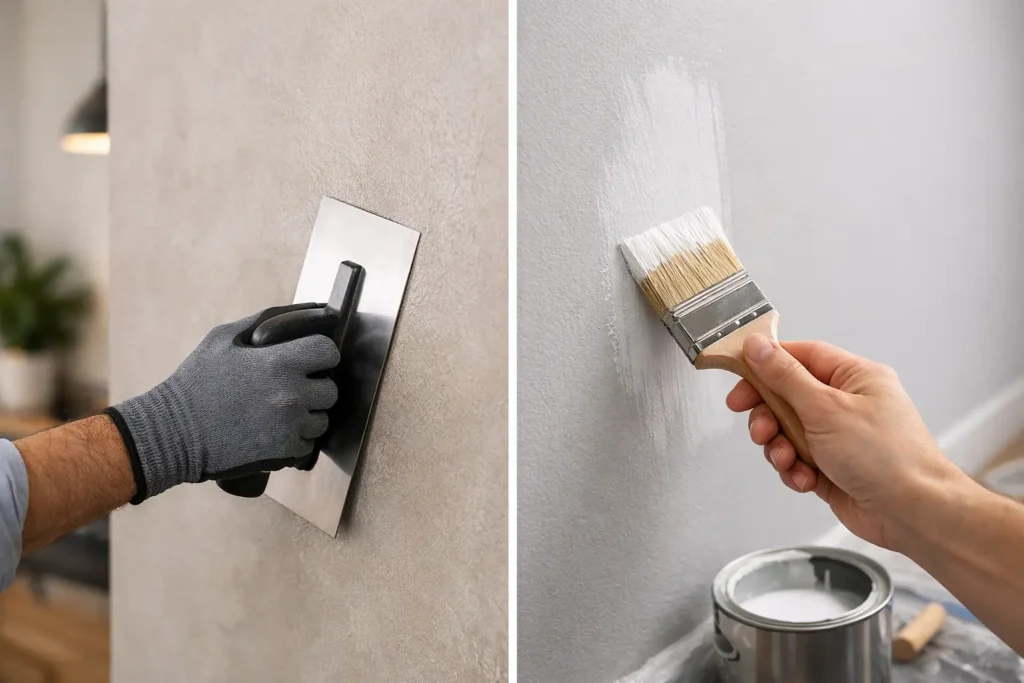
A freshly painted wall can transform a room in an afternoon. But where a wall is meant to carry the design – behind a freestanding bath, through a statement hallway or across a refined retail interior – the choice becomes more considered. In the seamless wall finish vs paint debate, the real question is not simply which looks better on day one. It is which surface will continue to suit the way the space is used, lit and lived in.
Paint remains a familiar, flexible choice for good reason. A resin-based decorative wall finish offers something different: depth, continuity and a crafted surface with its own visual character. Neither is automatically right for every project. The best result comes from matching the finish to the room, the substrate and the level of impact you want to create.
Seamless wall finish vs paint: the visual difference
Paint gives walls colour. A specialist resin finish gives them presence. Depending on the chosen system and application technique, it can create a polished concrete effect, a soft mineral movement, metallic depth or a terrazzo-inspired composition. Rather than looking like a flat coating applied over a wall, it becomes part of the architectural language of the room.
This is particularly valuable in spaces where material continuity matters. A resin wall finish can flow from wall to floor, wrap around a vanity area or form an uninterrupted backdrop for joinery, lighting and artwork. With no wallpaper joins, tile grout lines or obvious changes in texture, the room can feel calmer and more resolved.
Paint, by contrast, is usually the quieter option. It can provide a clean canvas for furniture and accessories, and modern paint ranges offer an exceptional choice of colours and sheens. For bedrooms, reception rooms or areas where you expect to refresh the scheme regularly, that flexibility can be exactly what is needed.
The distinction comes down to character. Paint is generally uniform unless a decorative technique is introduced. Hand-applied resin finishes are intentionally more expressive. Gentle tonal variations, trowel marks and movement are part of their appeal, which is why samples and finish expectations should be discussed before installation.
Durability is about the room, not the marketing claim
A good-quality painted wall can perform well for years in low-contact areas. In a formal lounge or a bedroom away from energetic family life, it may be perfectly practical. Yet paint is more vulnerable to scuffs, knocks, moisture marks and repeated cleaning, especially in corridors, stairwells, kitchens and commercial settings.
A professionally specified resin finish is designed to form a more resilient, continuous surface. It can be a strong choice for high-traffic interiors, splash-prone zones and feature areas that need to retain a polished appearance. Its lack of joints also removes the grime-catching edges associated with tiled finishes.
That does not mean every resin wall is indestructible. A sharp impact can still damage a surface, and the correct system matters. A wall behind a basin, for example, needs a specification that suits regular splashing and cleaning, while a shower enclosure demands careful detailing, waterproofing and installation by experienced professionals. The quality of preparation beneath the finish is as important as the coating itself.
For commercial interiors, durability has an additional dimension. A wall finish in a boutique, studio, hospitality venue or customer-facing reception needs to support the brand experience while standing up to daily contact. A bespoke resin surface can deliver that balance more convincingly than standard paint in the right setting.
Maintenance and repair: the practical trade-off
Paint is easy to understand and easy to touch up in principle. Keep a little leftover paint, address a mark, and the wall can often be restored quickly. In practice, sunlight, cleaning and age can alter the original shade or sheen, so a patch repair may still show.
Resin surfaces are typically straightforward to maintain. Regular dusting and gentle cleaning with suitable products will keep them looking refined, and there are no grout lines to scrub. Abrasive pads, harsh chemicals and improvised cleaning solutions should be avoided, as they can dull or mark the protective layer.
When a resin finish is damaged, repair requires more care than repainting a small patch. Because the surface has a hand-applied pattern and depth, a local repair needs to be blended thoughtfully. This is not necessarily a drawback, but it is a consideration for households with young children, rental properties or spaces where future alterations are likely.
For many clients, the trade-off is worthwhile. They are choosing a considered finish that feels permanent and distinctive, rather than a surface intended to be changed with every decorating cycle.
Installation creates the difference you see later
The temptation with paint is to focus only on the final colour. With decorative resin walls, the preparation process deserves equal attention. Cracks, movement, uneven plaster, moisture issues and poorly prepared substrates can all affect the finished appearance and long-term performance.
A specialist installer assesses the wall before selecting the build-up. The surface may need repairs, levelling, priming or reinforcement before decorative layers are applied. Corners, sockets, reveals and junctions with other materials also need precise detailing. It is meticulous work, but it is what allows the finished surface to look intentional rather than improvised.
Paint usually has a shorter programme and a lower barrier to entry. That makes it useful where time or budget is tight. A resin wall finish takes more planning, curing time and skilled application, particularly where it connects with resin flooring or other bespoke surfaces. It is better viewed as an interior finish investment than a direct substitute for a quick repaint.
Cost: compare lifetime value, not just the first quote
Paint will almost always cost less upfront, especially across large uncomplicated walls. It is accessible, widely available and relatively quick to apply. If the brief is a clean colour refresh before selling a property or completing a modest renovation, paint is often the sensible answer.
Resin wall finishes involve specialist materials, substrate preparation, samples and skilled labour. Their initial cost reflects that process. However, for a focal area, they can replace the need for several separate design elements: feature tiles, decorative panels, elaborate wallpaper or additional wall art. The finish itself becomes the statement.
It is also worth considering frequency of renewal. High-quality paint may need attention when marks accumulate or tastes change. A well-installed resin surface is designed for longevity, provided the room is suitable and it is maintained correctly. There is no universal cost winner, because the value lies in the purpose of the space.
Where each finish works best
Paint is often the right choice for broad, low-impact areas, especially where colour changes are anticipated. It suits ceilings, secondary bedrooms, rental refreshes and walls where the architectural details should take centre stage.
A decorative resin finish earns its place where texture, continuity and durability can be appreciated every day. Bathrooms, kitchens, hallways, feature walls, home bars, garden rooms and statement commercial interiors are natural candidates. It can be especially effective in contemporary schemes that pair warm timber, brushed metal, stone and considered lighting with a quieter palette.
In period homes, the decision needs a little more sensitivity. A mineral or concrete-effect resin may complement a carefully renovated space, but it should not overpower original cornices, panelling or detailing. The aim is to create contrast with respect, not to force a modern finish into every room.
Choosing with confidence
Before choosing either finish, look at the wall at different times of day. Natural light can reveal the softness of a resin surface or change the perceived shade of paint dramatically. Think about contact points too: bags brushing past a hallway wall, steam around a bathroom basin, chairs moving in a restaurant or hands touching a reception feature.
Most importantly, ask what role the wall should play. If it should quietly support the room and remain easy to repaint, paint offers excellent freedom. If it should shape the atmosphere of the interior and carry a sense of artistry, a bespoke resin finish can make the space feel designed rather than merely decorated.
For projects across Essex and London, Resinize approaches that decision through samples, substrate assessment and a close reading of the wider scheme. The right wall finish should not compete for attention. It should make every material around it feel more deliberate.