
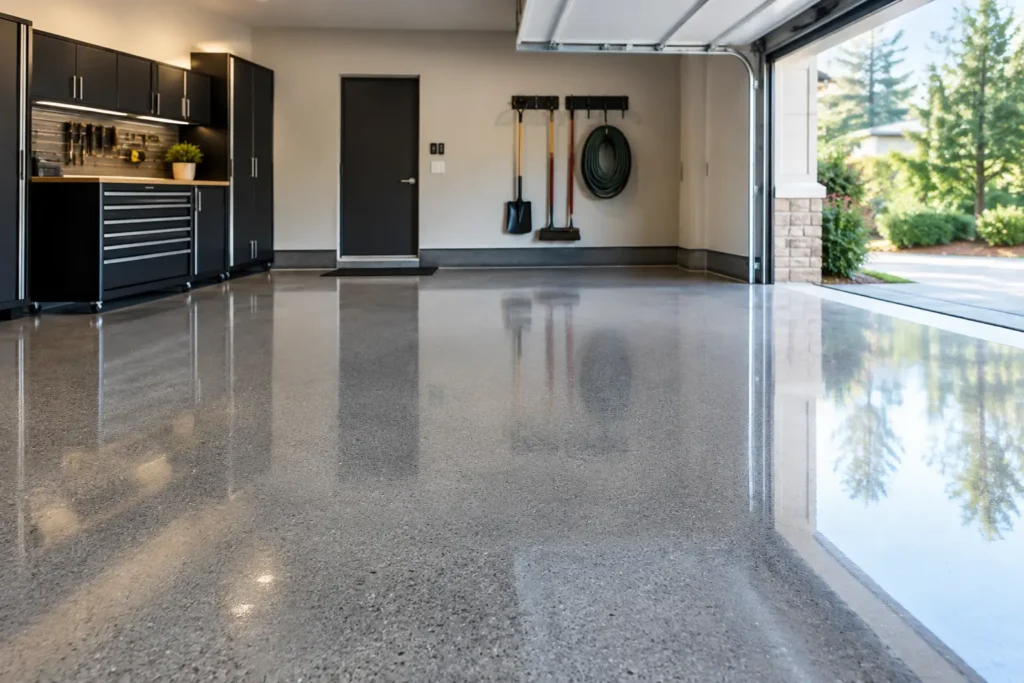
A garage floor has a demanding job. It takes the weight of vehicles, muddy shoes, toolboxes, bicycle tyres, oil drips and the occasional ambitious DIY project, yet it is often left as bare concrete. Garage floor restoration changes that equation. With the right preparation and resin system, a stained, dusty surface can become a refined, hard-wearing part of the property rather than an afterthought behind a roller shutter door.
For many homeowners, the attraction is not simply covering tired concrete. It is about creating a space that feels considered: somewhere to park a cherished car, work on weekend projects, store equipment neatly or use as an extension of the home. For commercial garages and workshops, the priority may lean more heavily towards durability, safety and easy cleaning. A well-specified resin floor can deliver both performance and visual impact, provided the existing slab is assessed honestly first.
When garage floor restoration is the right answer
Not every marked concrete floor needs replacing. Surface dusting, tyre marks, paint failure, light staining and a generally uneven appearance can often be addressed with a professionally installed coating or resin overlay. The finished surface protects the concrete beneath, reduces porosity and makes routine cleaning far simpler.
The key distinction is between a cosmetic problem and a structural one. Hairline cracks may be repaired and incorporated into a restoration plan, but active cracks, significant movement, widespread crumbling or a slab affected by persistent moisture need closer investigation. Applying a beautiful finish over an unstable base only hides the problem temporarily. Premium results begin with a clear view of what the floor is doing beneath the surface.
A garage conversion also changes the brief. If the room will become a gym, studio, utility space or entertaining area, the floor can be designed with a softer architectural character than a conventional workshop coating. Concrete-effect resin, terrazzo-inspired decorative finishes and carefully chosen neutral tones can make the transition feel intentional rather than improvised.
Signs your concrete is ready for attention
Concrete that creates a fine dust underfoot, absorbs spills quickly or looks patchy after cleaning is a strong candidate for restoration. Flaking old paint is another common signal. DIY paints often fail because the concrete was not mechanically prepared, moisture was overlooked or the product was not designed for hot tyres and regular vehicle traffic.
Oil contamination deserves particular care. A surface can look clean while residues remain within the pores of the slab. Specialist cleaning, grinding and local repairs may be needed before a resin system is installed. This preparatory work is less visible than the final finish, but it is where the longevity of the project is decided.
What professional garage floor restoration involves
A lasting floor is built in layers, not simply rolled on. The first stage is a site assessment, considering the condition of the concrete, previous coatings, cracking, moisture risk, intended use and the look the client wants to achieve. This is also the moment to discuss practical details such as thresholds, drainage channels, skirting, steps and where the garage door meets the floor.
Mechanical preparation follows. Diamond grinding or other suitable methods remove weak surface material and create the correct profile for adhesion. Repairs are made to cracks, small holes and damaged areas, then the floor is thoroughly cleaned. Depending on the substrate, a moisture-tolerant primer or vapour-control layer may be required before the chosen resin build-up begins.
The coating itself should match the job. A domestic garage with occasional vehicle use has different needs from a busy commercial workshop with frequent turning tyres, dropped tools and chemical exposure. Thickness, aggregate broadcast, topcoat specification and slip resistance all influence how the finished surface performs.
A finish should suit the way the garage is used
A smooth gloss floor has an undeniably crisp, gallery-like quality, especially in a clean, design-led garage. It reflects light well and can make a compact space feel larger. The trade-off is that gloss can show dust, water marks and tyre tracks more readily than a satin or lightly textured finish.
A decorative flake system introduces depth and visual movement while helping disguise everyday marks. It suits garages that see regular use and homeowners who want a polished result without a relentlessly uniform appearance. Quartz and heavier-duty broadcast systems can add greater texture and resilience, making them a sensible choice for workshop or commercial environments.
Slip resistance must be balanced with cleanability. More texture can provide better grip where water is likely, but an overly rough finish can hold dirt and make sweeping less satisfying. A considered specification creates enough grip for the setting without making the floor feel coarse or industrial underfoot.
Designing a garage floor with more character
The most successful garage floors belong to the wider property. Rather than defaulting to plain grey, consider the colours and materials already present in the home, garden room or entrance hall. Charcoal, warm stone and soft concrete tones create a calm, architectural foundation. Deep blue, black or metallic details can give a vehicle-focused space more drama. Decorative chips may be selected to echo cabinetry, brickwork or exterior finishes.
Seamless resin is especially effective where the garage is visible from the house or used for more than parking. Without tile joints or wide grout lines, the floor reads as one composed surface. That visual continuity can make storage units, workbenches and cars feel more deliberately placed.
There is still value in restraint. A highly metallic floor can be striking in a feature garage, but it may not suit every property or every future use. For a more timeless investment, a subtle concrete-effect finish or finely blended flake system often gives the space personality while remaining flexible enough for changing tastes.
At Resinize, the design conversation sits alongside the technical one. Samples are valuable because resin can look different under natural daylight, cool task lighting and the warm lighting often used in a home. Seeing a proposed colour and texture in the actual garage helps turn an attractive idea into a confident decision.
What affects cost and programme
The size of the garage matters, but it is not the only factor. Preparation requirements can have a major effect on cost. A clean, sound concrete slab is quicker to restore than one covered in failed paint, oil contamination or multiple repairs. The selected resin system, level of decorative detail, edge work and access also shape the final quotation.
Programme times depend on the materials and conditions. Resin floors cure in stages, and low temperatures or high humidity can influence timing. Rushing vehicles back onto a new floor before it has reached the required cure can compromise the surface, so the installation plan should include realistic waiting time for foot traffic and vehicle use.
A professional installer will also consider moisture and temperature before work begins. Garages are often colder and less controlled than interior rooms, particularly during winter. This does not prevent a quality installation, but it does mean product selection and site conditions need to be managed with care.
Keeping a restored garage floor looking its best
Once complete, maintenance is refreshingly straightforward. Sweep away grit regularly, as abrasive dirt is more likely to dull any finished surface over time. Clean spills promptly, especially oils, brake fluids and harsh chemicals. For ordinary washing, use a pH-neutral cleaner and a soft mop or suitable mechanical scrubber rather than aggressive solvents or highly alkaline products.
Place protective mats beneath motorcycle stands, heavy equipment or particularly sharp-edged storage where appropriate. Felt or rubber feet on movable benches can reduce scuffing. Resin is tough, not indestructible, and treating it as a finished architectural surface rather than bare concrete protects its appearance for longer.
If damage does occur, local repairs are often possible. Their visibility depends on the system, colour and extent of the repair, which is another reason to choose a finish with the right balance of beauty and practicality from the start.
The best garage floor restoration does more than conceal worn concrete. It gives a hardworking room a clearer purpose, a stronger surface and a finish that makes opening the garage door feel like part of the home has been properly designed.