
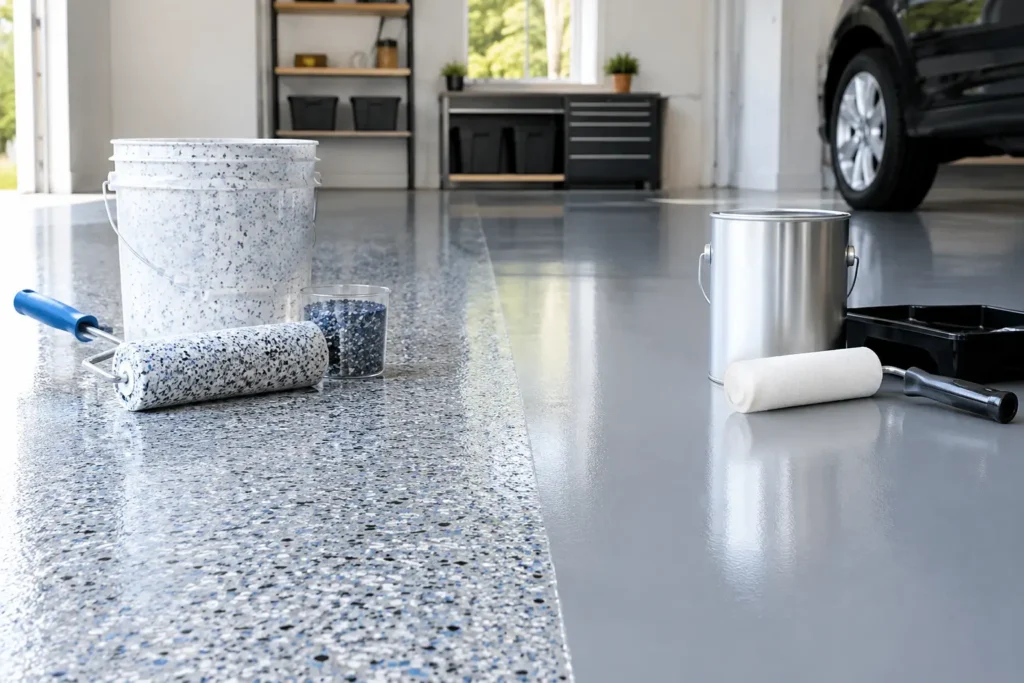
A garage floor has a harder life than almost any other surface in the home. It meets wet tyres, road grit, dropped tools, oil drips, hot tyres and the daily shuffle of bikes, storage and vehicles. That is why the choice between garage coating versus floor paint is about far more than colour. It determines how the room looks, cleans and performs years after the first coat has dried.
For a quick cosmetic refresh, paint can be a sensible answer. For a garage intended to feel finished, endure regular use and complement a considered property, a professionally specified resin coating is usually the more convincing investment. The right option depends on the condition of the concrete, how the garage is used and the level of finish you expect.
Garage Coating Versus Floor Paint: The Core Difference
Floor paint is typically a thin, coloured film applied to the surface of concrete. It may be water-based, solvent-based or epoxy-modified, and it can make a tired slab look cleaner at modest initial cost. Some products are designed for light domestic traffic, while others offer better resistance to abrasion and spills.
A garage coating is a broader, more performance-led system. Most premium garage finishes use resin technology, often epoxy or polyurethane-based materials, installed over carefully prepared concrete. Rather than simply colouring the slab, the coating is built in layers to create a more substantial, bonded and protective surface.
That distinction matters. Paint largely sits on top of the floor. A correctly prepared resin system is designed to adhere securely to it, creating a seamless finish with greater depth, durability and visual presence. In design terms, it is the difference between covering a surface and transforming it.
Where Floor Paint Makes Sense
Paint has its place, particularly where the garage is used mainly for storage or occasional parking and the budget is tightly controlled. A well-applied specialist floor paint can brighten a dusty concrete floor, make sweeping easier and offer a fresh, uniform appearance.
It is also a practical choice for an interim project. Perhaps a garage conversion is planned in a few years, or the space needs to look presentable before a property is let or sold. In those cases, a straightforward painted finish can be proportionate to the brief.
The limitation is that paint relies heavily on surface preparation and gentle use. If the slab is smooth, dusty, damp or contaminated with old oil, adhesion can be compromised. Even when applied carefully, a thin paint film is more vulnerable to scuffs, tyre marking, chips and lifting at points of impact. Frequent wheel traffic, vehicle turning and repeated cleaning tend to reveal those weaknesses.
Paint can therefore look excellent at the outset, yet become a maintenance task rather than a long-term finish. Touch-ups are possible, but they rarely disappear completely, especially where sun exposure or wear has subtly changed the original shade.
Why Resin Coatings Perform Differently
A professionally installed coating begins long before the resin is mixed. The concrete must be assessed for soundness, moisture and contamination. Mechanical preparation, commonly diamond grinding, opens the surface and removes weak material so the system has a reliable foundation. Cracks and local damage can then be addressed before the coating layers are installed.
This preparation is not glamorous, but it is where longevity is made. Many garage floor failures blamed on epoxy are actually failures of unsuitable preparation, incorrect product selection or moisture within the slab.
Once installed, a resin coating provides a closed, seamless surface that is far easier to keep looking composed. Oil, dirt and everyday spills remain on the surface for longer rather than soaking into porous concrete. There are no grout lines to darken, crumble or harbour dust. With an appropriate finish, the floor can also offer useful resistance to abrasion, chemicals and tyre traffic.
For homeowners who use the garage as a workshop, gym, utility zone or entrance from the drive, that improvement is immediately felt. The room becomes part of the home rather than an overlooked service space. For commercial garages, showrooms and workspaces, it supports a cleaner operation and a more professional first impression.
Durability is not one-size-fits-all
Not every resin coating is suited to every garage. A lightly used domestic garage requires a different specification from a busy vehicle workshop or warehouse bay. The weight of vehicles, turning points, exposure to sunlight, cleaning regime and risk of chemical spills all affect the system required.
Epoxy is valued for its strength, build and decorative potential. Other resin technologies may be chosen where UV stability, flexibility or faster return to service is a priority. This is why a bespoke recommendation matters more than selecting a generic product from a shelf. The finish should be designed around the environment, not merely the colour chart.
Appearance: Utility Room or Designed Space?
This is where the gap between paint and coating becomes especially visible. Paint is usually limited to a flat block of colour, typically grey, black, white or a muted shade intended to disguise dirt. That may be perfectly adequate, but it does little to elevate the architecture of the room.
Resin flooring allows a more intentional visual language. A refined solid colour can create a gallery-clean backdrop for cars, cabinetry or wall storage. Decorative flake finishes bring texture and help disguise the minor marks of everyday use. For a more expressive setting, metallic effects or terrazzo-inspired resin details can turn a garage, studio or display space into a genuine feature.
The best choice is not always the most dramatic one. A deep charcoal coating may suit a contemporary home with dark aluminium details, while a pale, finely textured finish can make a compact garage feel brighter and more generous. A sample-led process is valuable here: colour, sheen and texture look different beneath daylight, LED lighting and the shadows cast by parked vehicles.
Gloss level deserves thought too. High gloss can look striking and reflect light beautifully, but a satin or matt-leaning finish may better suit a working garage by softening dust and tyre marks. Where slip resistance is needed, fine aggregates can be incorporated without sacrificing the overall design intent.
Preparation, Downtime and Cost
Floor paint appears cheaper because the material cost is lower and the application is relatively simple. For a small, dry and lightly used garage, that can make it good value. The calculation changes if it needs to be stripped, repaired and reapplied after a few years of hard use.
A resin coating carries a higher upfront cost because it includes assessment, substrate preparation, specialist materials and skilled installation. It should be viewed as a surface system rather than a tin of paint. The investment is often rewarded through longer service life, reduced maintenance and a noticeably more polished result.
Downtime should also be planned realistically. Paint may feel dry quickly but can take longer to achieve its proper hardness. Resin systems have their own curing schedules, with return-to-use dependent on the chosen materials, temperature and the level of traffic expected. Rushing a vehicle back onto a newly finished floor is an avoidable way to spoil good work.
Moisture is another factor that should never be ignored. Garages can be cold, poorly ventilated and prone to damp rising through older concrete. A professional survey can identify whether moisture management or a suitable primer is needed. Applying either paint or resin over a damp slab without resolving the issue risks blistering and delamination.
Choosing the Right Finish for Your Garage
Choose floor paint when the goal is a low-cost visual refresh, the slab is in reasonable condition and the garage receives light use. It is also a fair option when you accept that periodic maintenance may be part of the plan.
Choose a resin garage coating when you want the floor to withstand regular vehicle use, workshop activity or commercial demands while looking deliberately designed. It is particularly worthwhile where the garage connects visually with the home, houses valuable vehicles, doubles as a practical lifestyle space or contributes to the image of a customer-facing business.
The concrete itself should guide the decision. A cracked, uneven or contaminated floor is not automatically unsuitable for resin, but it does require careful diagnosis. Addressing those details before installation gives the new surface the best chance of delivering the finish promised.
A garage need not remain the least considered room on the property. Whether you favour a quiet, durable neutral or a distinctive decorative resin surface, choose a finish that respects how the space is actually lived in – and gives it the same level of craftsmanship as the rooms beyond its door.