
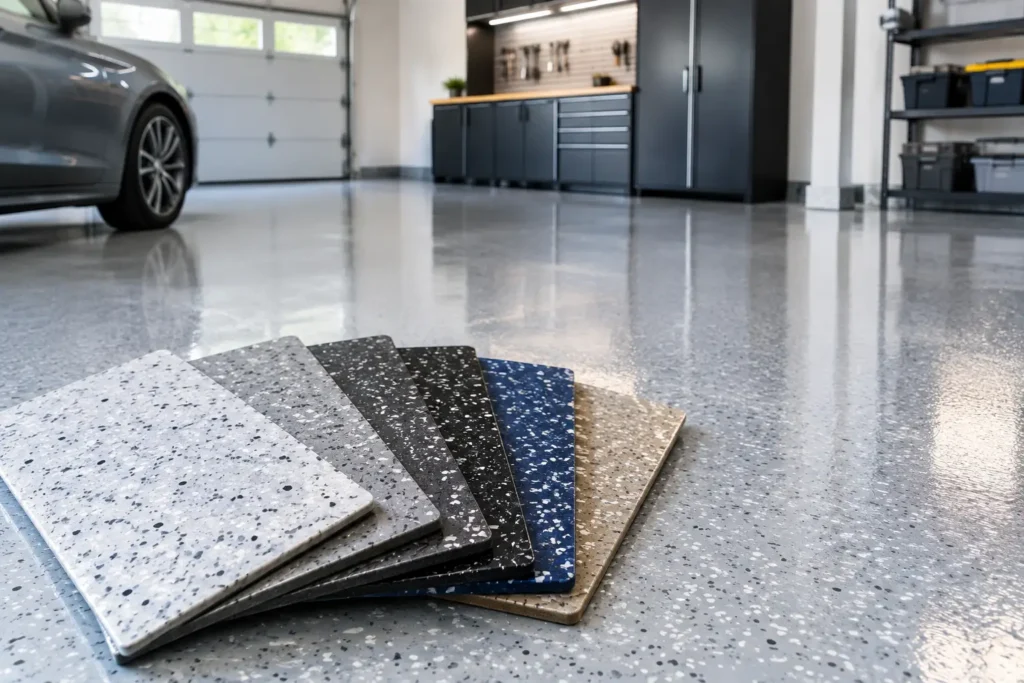
A garage floor does not have to disappear beneath tyres, tool cabinets and storage boxes. The top epoxy garage colours can make this hard-working space feel sharper, lighter and deliberately designed, whether it is used for a cherished car, a home gym, a workshop or simply a more polished entrance to the house. The right choice balances visual impact with the realities of dust, oil, rainwater and daily movement.
Colour is rarely an isolated decision. It changes how large the garage feels, how clean it appears between washes and whether shelving, cabinetry and vehicles stand out or blend in. A premium epoxy floor also offers the opportunity to build depth through flakes, metallic movement or a refined tonal finish, rather than settling for a flat industrial grey.
Start with the way the garage is used
Before choosing a shade, consider what the floor needs to do. A garage used for parking will benefit from a finish that disguises tyre marks and the occasional trace of road grime. A workshop may call for a lighter surface that reflects more light onto benches and tools. If the space doubles as a showroom, studio or entertaining area, the floor can become a much stronger architectural feature.
Natural light matters just as much. Many UK garages have limited glazing, so a very dark floor can make the room feel enclosed unless it is balanced with excellent lighting and pale walls. Conversely, an all-white or very pale floor can look exceptional in a carefully maintained display garage, but may reveal every leaf, footprint and spill in a busy family home.
There is no single best choice. The most successful garage floor is one that looks considered on day one and remains practical in month eighteen.
Top epoxy garage colours for modern homes
Mid-grey: the confident all-rounder
Mid-grey remains one of the most enduring epoxy garage colours for good reason. It is composed, contemporary and forgiving. It sits comfortably alongside black storage systems, timber worktops, white walls and almost any vehicle colour, while softening the visibility of dust and minor marks better than very light finishes.
A plain mid-grey can feel minimal and architectural, particularly with a satin finish. Add a subtle blend of charcoal, silver and pale grey flakes and it gains texture without becoming visually busy. This is often the right direction for homeowners who want a garage to feel upgraded but not over-styled.
Charcoal and graphite: dramatic with discipline
Charcoal, graphite and near-black epoxy floors create a striking, premium base. They work especially well in garages with strong LED lighting, dark joinery or a monochrome scheme, and can give a performance-car space a more gallery-like character.
The trade-off is maintenance visibility. Dust, dried water spots and pale debris can show more clearly on a dark solid floor. A charcoal flake system is usually more forgiving than a completely uniform dark surface, as the variation breaks up small marks. For a design-led result, pair a graphite floor with warm white walls or natural timber details so the space feels intentional rather than gloomy.
Pale grey: clean, open and quietly luxurious
Pale grey offers the light-reflecting quality many garages need, without the clinical feel of pure white. It can make a compact single garage appear more generous and works beautifully where the space connects to a utility room, hallway or contemporary extension.
Choose a shade with a little warmth rather than a blue-toned grey if the garage has low natural light. A gentle stone, mushroom-grey or soft concrete effect can feel more welcoming, while still supporting a crisp modern interior. Decorative flecks in white, silver and soft grey help reduce the appearance of everyday debris.
Greige and warm stone: a softer residential approach
For garages that are visually connected to the home, greige, taupe and warm stone epoxy finishes offer a less industrial alternative. These colours complement oak cabinetry, brickwork and warmer exterior palettes, creating a transition that feels more like part of the property than a separate utility zone.
Warm neutrals suit clients who want a seamless, calm finish rather than a motorsport-inspired look. They are particularly effective in multipurpose garages used for storage, exercise or hobbies. A lightly textured finish gives the surface depth while keeping the colour scheme understated.
Blue-grey: polished without feeling predictable
Blue-grey has enough character to distinguish a garage from the rest of the house, yet remains practical and restrained. Slate blue, steel blue and deep blue-grey tones work well with silver, white and black vehicles, as well as brushed metal shelving and contemporary lighting.
Avoid choosing an overly bright blue unless the desired effect is deliberately bold. Richer, muted shades age more gracefully and are easier to live with. A blue-grey base with a restrained black, white and metallic flake mix can give the floor a tailored, high-specification appearance.
Decorative flake blends: depth that earns its place
Flake systems are among the most practical and visually adaptable choices for garage floors. Rather than relying on one solid colour, decorative flakes are broadcast into the epoxy to create a layered, terrazzo-inspired surface. The result has movement, texture and far greater forgiveness than a flat finish.
Popular combinations include grey, black and white for a crisp contemporary look; charcoal and silver for a darker scheme; or stone, cream and soft grey for a warmer feel. The scale and density of the flakes influence the finished character. Fine, tonal flakes feel refined and subtle, while higher-contrast mixes create a more energetic, workshop-led aesthetic.
This is a finish worth sampling in the actual garage. Light changes the perceived colour, and a flake blend that looks reserved in a small sample can read quite differently across a full floor.
Colours to approach with care
White epoxy floors have undeniable visual impact. In a car collection space or immaculate show garage, they can look outstanding, bouncing light around the room and creating a crisp, almost studio-like setting. In a garage used through wet winters, however, white demands a higher level of cleaning and will reveal tyre transfer, soil and rust staining quickly.
Bright red, racing blue or vivid yellow can be effective when the garage has a clear theme, branded commercial identity or a genuine motorsport influence. Yet they can also date faster than neutral shades and may limit future changes to cabinetry, wall finishes or the use of the space. If colour is central to the vision, consider introducing it through walls, storage or feature markings while keeping the main floor more timeless.
Very glossy dark epoxy also deserves thought. It delivers depth and drama, but can show dust and reflect overhead lights strongly. A satin or lightly textured topcoat may provide a more composed everyday finish, particularly where the garage sees regular use.
Finish, texture and light affect the final colour
The same pigment can look entirely different depending on the topcoat. Gloss amplifies colour depth and reflection, while satin feels softer and more architectural. A textured decorative finish reduces the visual impact of small scuffs and brings practical slip resistance, particularly useful where wet shoes, rainwater or wash-downs are expected.
Lighting should be planned alongside the floor, not added afterwards. Cool white LEDs can pull grey epoxy towards blue, while warmer lighting can enhance taupe and stone finishes. In a garage that is both a practical workspace and a statement environment, layered lighting at the ceiling and around work zones gives the resin surface the presence it deserves.
The substrate also affects the result. Cracks, moisture and contamination in an existing concrete slab must be properly assessed and prepared before a decorative epoxy system is installed. Colour selection is the exciting part, but professional preparation is what allows the finish to remain crisp, bonded and durable.
Making the choice feel personal
The strongest garage schemes take cues from the property and the people using it. A detached workshop behind a period home may suit warm stone flakes and timber storage. A newly built home with anthracite window frames may call for graphite and silver. A commercial unit can use colour zoning to create a polished customer-facing area while retaining a hard-wearing finish in the working space.
At Resinize, colour is treated as part of the surface design rather than an afterthought. Samples, surrounding materials and the expected level of use all help shape a finish that feels bespoke, not selected from a generic chart.
Choose a colour you will still enjoy when the garage is full, the weather is poor and life is busy. The best epoxy floor does more than look impressive in an empty room – it gives the everyday space beneath your feet a sense of craft, order and lasting character.