
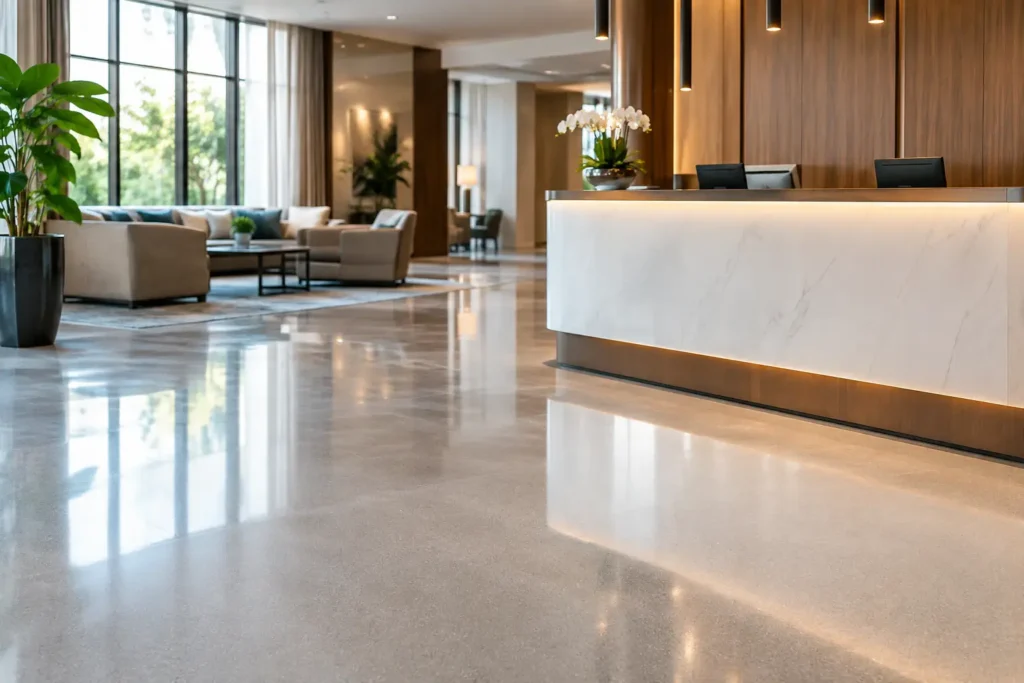
A hotel floor is never simply a background finish. It carries suitcase wheels through the lobby, absorbs the pace of breakfast service, frames first impressions at reception and must still look composed after a busy weekend. Hotel resin flooring gives designers and operators the opportunity to create a continuous, distinctive surface without choosing between visual impact and everyday performance.
For boutique hotels, spa retreats and design-led aparthotels in particular, flooring has become part of the guest experience. The right finish can make a compact entrance feel more expansive, bring calm to a bedroom scheme or give a bar an atmosphere guests remember. Resin makes that level of visual control possible while answering many of the practical demands of hospitality.
Why hotel resin flooring suits design-led spaces
Unlike tile, timber or carpet, resin is poured and finished as a continuous surface. There are no grout lines interrupting the design and far fewer places for dirt, moisture or spills to settle. That visual stillness is one of its strongest qualities. It allows furniture, lighting, artwork and joinery to take centre stage while the floor quietly unifies the room.
The design possibilities are equally compelling. A soft concrete-effect resin can give a restaurant or breakfast room a relaxed, contemporary character. Terrazzo-inspired finishes introduce movement and material richness without the joints associated with traditional tiled terrazzo. Metallic resin can create a dramatic feature in a cocktail bar, private dining space or statement washroom, where reflected light becomes part of the interior.
Colour is not limited to a narrow set of off-the-shelf options. It can be selected to complement a hotel’s palette, from warm mineral neutrals and muted stone shades to deeper, more theatrical tones. The aim is not merely to choose a floor colour, but to craft a surface that belongs to the wider identity of the property.
That said, the most expressive finish is not always the right answer. A busy metallic effect may be ideal for a small feature area but overpowering across a large guest corridor. A quieter, finely textured finish often has greater longevity in spaces designed to feel timeless. Sample-led decisions are valuable here, because resin responds differently to natural light, warm hospitality lighting and surrounding materials.
Where resin performs best in a hotel
Resin can be specified across a wide range of hotel settings, but each area should be considered on its own operational demands. The visual brief matters, yet so do footfall, moisture, cleaning routines, acoustic needs and the condition of the existing substrate.
Reception, lobby and circulation spaces
Reception is where a hotel’s design language is introduced. A seamless floor can create a generous sense of flow from entrance to desk, lounge and lift lobby, especially where rooms are open-plan or modest in footprint. It also gives the design team freedom to work with curved counters, sculptural seating and bespoke lighting without a grid of tile joints competing for attention.
Corridors need a more measured approach. They experience concentrated footfall, wheeled luggage and frequent cleaning, so a hard-wearing resin system with the correct protective finish is essential. Resin is easy to maintain, but it is not immune to abrasion. Choosing an appropriate build-up and establishing sensible maintenance procedures protects its appearance over time.
Guest rooms and suites
In bedrooms, resin flooring can deliver an understated, contemporary base that feels particularly suited to minimalist, coastal or urban interiors. Its seamless quality works beautifully with built-in joinery and can continue into dressing areas to make a suite feel more considered and connected.
Comfort should be part of the conversation. Resin is a hard surface, so it will not offer the softness or acoustic absorption of carpet. Rugs, upholstered furniture, curtains and carefully designed underlay elsewhere in the room can help create warmth. Underfloor heating is another attractive pairing, giving a clean visual result without compromising comfort underfoot.
For many hotels, resin works best as one part of a layered room scheme rather than a replacement for every soft material. The balance between refined minimalism and guest comfort is what makes the room feel inviting.
Bathrooms, spas and changing areas
Bathrooms are an obvious setting for seamless resin, particularly when a calm, spa-like finish is the objective. With the right system, resin can be used across floors and selected wall areas, reducing visual clutter and creating a sense of enveloping continuity. It can also be formed around awkward details where conventional tiles would need multiple cuts.
However, wet areas demand specialist specification. Slip resistance, drainage falls, substrate preparation and waterproofing cannot be treated as afterthoughts. A glossy surface may look beautiful in a sample, but a suitable textured or matt finish is generally the wiser choice where bare feet and water are part of daily use. Design and safety must work together.
Bars, restaurants and back-of-house areas
Food and beverage spaces benefit from resin’s hygienic, easy-clean surface and its ability to withstand regular use. In guest-facing bars and restaurants, the finish can reinforce the mood of the venue, whether that means an elegant mineral palette or a more expressive decorative treatment.
Back-of-house kitchens, stores and service routes require a different emphasis. Here, chemical resistance, slip performance, impact resistance and practical cleaning procedures take priority. Heavy-duty commercial resin coatings can be highly effective, but the system should be selected around the actual operational environment rather than the appearance of a front-of-house installation.
The details that determine a lasting finish
A striking resin floor begins well before the final coat is applied. The condition of the subfloor is critical. Moisture, cracks, contamination, uneven levels and movement joints all need to be assessed before installation. Resin follows the quality of the preparation beneath it, which is why experienced workmanship matters as much as the chosen colour or effect.
Programme planning also deserves attention. Resin systems are installed in stages and need appropriate curing time between layers. In a live hotel, that may mean phasing works around occupancy, protecting adjacent finishes and scheduling noisier preparation outside guest-facing hours. A well-planned installation limits disruption without rushing the process that gives the floor its durability.
Finish selection is another practical decision. High gloss can make a reception area feel polished and luminous, but it will reveal marks and scratches more readily than a satin or matt finish. A subtly textured surface can offer better grip, though it may require a little more care during cleaning than a completely smooth one. There is no single best option, only the finish that best fits the location, lighting and service expectations.
Maintenance without compromising the design
One of the attractions of resin is that there are no grout lines to scrub or individual tiles to replace. Regular sweeping and damp mopping with suitable, non-abrasive products will usually keep a resin floor looking its best. Entrance matting is especially worthwhile, reducing grit that can gradually dull a surface in high-traffic zones.
Avoid treating a resin floor as indestructible. Dragging furniture, using harsh chemicals or allowing spills to sit unnecessarily can affect the protective finish. Hotels with busy public spaces should build floor care into their housekeeping procedures and review high-wear areas periodically. Small interventions made early are far simpler than allowing damage to become visually distracting.
For a property with a strong visual identity, this care is not simply operational. It protects the atmosphere guests notice from the moment they arrive.
A floor that supports the whole guest experience
Hotel flooring has to work harder than most surfaces. It must welcome, guide, withstand, clean easily and look right in photographs as well as in person. Resin offers a rare combination of creative freedom and technical capability, allowing public spaces, private rooms and practical areas to feel connected without becoming identical.
The strongest result comes from treating resin as an architectural finish rather than a late-stage flooring choice. Consider how light moves across it, how guests will walk on it, what the team will ask of it each day and how it will age alongside the rest of the interior. When those decisions are made with care, the floor becomes more than a durable foundation. It becomes part of the hotel’s signature.