
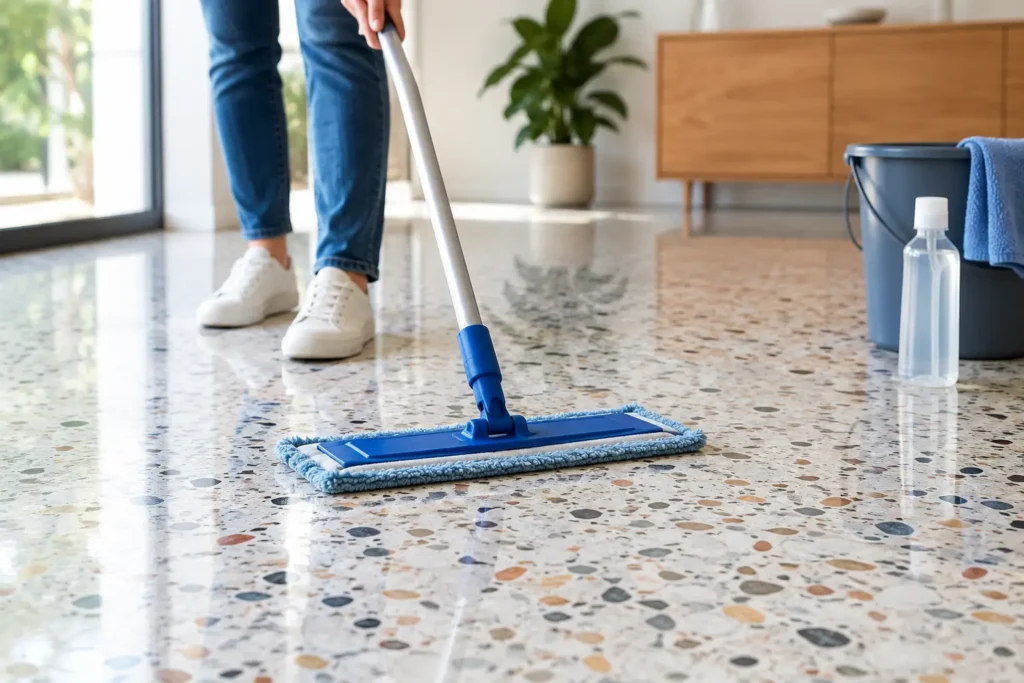
A terrazzo resin floor earns its place through detail: the movement of decorative aggregate, the depth of the resin and the calm, uninterrupted feel of a seamless surface. Knowing how to maintain terrazzo resin means protecting that considered finish without turning everyday cleaning into a complicated routine. With the right habits, a well-installed floor can continue to look polished, expressive and ready for real life.
Start with the finish, not a one-size-fits-all cleaner
Terrazzo-inspired resin is not a single material with a single maintenance rule. It may be an epoxy or polyurethane system, finished with a particular sheen and designed for a domestic hallway, a busy retail setting or a practical kitchen. The decorative appearance may resemble traditional terrazzo, but the care requirements are those of the resin system beneath the surface.
For that reason, the installer’s aftercare guidance should always take priority. A surface installed for a bathroom or residential living space may need a different approach from a heavy-duty commercial coating in a warehouse or garage. The same is true of matt and gloss finishes: both are durable, but their appearance can respond differently to residue, scuffs and cleaning products.
The good news is that resin’s seamless construction makes cleaning more straightforward than maintaining grout lines, joints or porous natural stone. Dirt has fewer places to settle, and the floor can be kept looking refined with regular, gentle attention.
How to maintain terrazzo resin day to day
The most effective care is simple: remove loose grit before it is walked across the floor, then clean with a damp microfibre mop as needed. Fine sand, soil and small stones are more likely to dull a surface through repeated abrasion than ordinary household dust. This matters particularly in entrance halls, kitchens, retail spaces and any area that connects directly to outdoors.
Dry mop, vacuum using a soft floor setting, or sweep regularly. Avoid hard bristles and be mindful of vacuum attachments that may drag grit along the floor. In a family home, this may be a quick daily pass in high-traffic areas and a more thorough clean once or twice a week. In commercial settings, the right frequency depends on footfall, weather and the nature of the work taking place.
When wet cleaning is required, use warm water with a pH-neutral cleaner formulated for sealed or resin floors. The mop should be damp rather than saturated. Excess water is rarely helpful, even on a seamless surface, as it can leave streaks or residue when it dries. Change the water when it becomes visibly dirty rather than spreading soil back over the floor.
After cleaning, allow the area to dry naturally or buff gently with a clean, dry microfibre pad if a more even finish is wanted. This small final step can make a noticeable difference to the clarity of a decorative terrazzo effect.
Deal with spills while they are fresh
Resin flooring is valued for its resistance to everyday spills, but resistance is not an invitation to leave staining materials in place. Wine, coffee, cooking oils, sauces, ink, hair dye and strongly coloured liquids should be blotted promptly with a soft cloth, then cleaned with a mild neutral solution.
Blot rather than scrub. Vigorous scrubbing with an abrasive pad can alter the sheen in one concentrated area, particularly on a matt surface. For oily marks, use the recommended floor cleaner and rinse the cloth frequently. If a mark remains, seek advice before escalating to stronger products. The wrong chemical can create a larger visual issue than the original spill.
Keep abrasive materials and harsh chemicals away
The quickest way to compromise a resin finish is to treat it like an industrial worktop. Scouring powders, wire wool, rough green pads and highly abrasive cleaners can scratch the top layer and reduce the smooth visual flow that makes terrazzo resin so distinctive.
Strong bleach, solvent-based products, paint stripper, concentrated degreasers and acidic cleaners should also be approached with caution. They may discolour, soften or affect the gloss level of certain resin systems. Even products marketed as powerful floor cleaners can leave a film that attracts further dirt and makes the floor appear cloudy.
A pH-neutral product, clean water and soft microfibre tools will handle most situations. Where a commercial environment genuinely requires a stronger degreasing regime, the cleaning product should be confirmed as compatible with the specific installed system. This is particularly relevant for garages, kitchens and workshops, where oils and contaminants demand a more targeted approach.
Protect the areas that work hardest
Good maintenance is as much about prevention as cleaning. Use quality entrance mats at external doors to capture moisture and grit before it reaches the floor. Choose mats with a non-staining backing, and keep them clean too. A mat full of trapped sand can become part of the problem.
Place felt pads beneath chairs, tables and movable furniture, checking them occasionally for embedded grit. For heavier pieces, use wide protective feet or suitable furniture glides rather than dragging weight across the surface. In dining areas and home offices, this protects the finish from repeated movement in the same small zones.
Chair castors deserve particular attention. Soft castors designed for hard floors are preferable, while protective mats may make sense beneath frequently used desk chairs. In commercial interiors, use suitable protective measures when moving displays, equipment or stock. Resin is hard-wearing, but any finish can be marked by sharp edges under concentrated load.
Direct sunlight is another consideration. Modern resin systems are selected with their intended setting in mind, but prolonged exposure to strong UV light can affect some finishes over time. In bright rooms with large glazing, blinds, curtains or UV-filtering solutions can help preserve consistency, especially where the floor receives intense sun every day.
What to do about scuffs, scratches and loss of sheen
Light scuffs are often surface marks rather than damage to the resin itself. Start conservatively: clean the area with a pH-neutral product and a soft microfibre cloth. Do not reach immediately for a magic eraser, abrasive sponge or polishing compound, as these can leave a patch that reflects light differently from the surrounding floor.
Fine scratches may be less visible once the floor is properly cleaned, but deeper scratches, chips or localised dullness need a professional assessment. The correct remedy depends on the resin type, decorative aggregate, thickness of the finish and the desired sheen. A targeted repair, recoat or professional polish may be possible, but it should blend with the wider surface rather than simply cover the damaged point.
This is where a bespoke installation has a real advantage. A specialist can identify whether the issue sits in the topcoat, the body of the resin or the decorative layer, then recommend a repair that respects the original design. Attempting a DIY fix with a generic coating can change colour, texture or gloss, making the repair more visible than the scratch.
Seasonal care for homes and commercial spaces
British weather changes what a floor has to handle. During wet autumn and winter months, increase dry mopping around entrances and avoid allowing standing water from shoes, umbrellas or deliveries to remain on the surface. In summer, dust and outdoor debris may be the greater concern, especially in spaces with bi-fold doors or frequent access to gardens and terraces.
For businesses, plan cleaning around how the space is actually used. A showroom benefits from regular dust removal and an immaculate, streak-free appearance. A warehouse or garage may need a more structured regime for vehicle residue, tyres or operational debris. The finish should support the environment, but the maintenance plan must reflect it.
A finish worth looking after
Terrazzo resin is designed to make an impression, from a composed kitchen floor to a statement retail interior. Its longevity comes from a balanced approach: gentle routine cleaning, sensible protection in busy areas and professional guidance when damage or difficult staining occurs. Treat the surface as the crafted architectural finish it is, and it will continue to bring colour, character and quiet confidence to the space around it.