
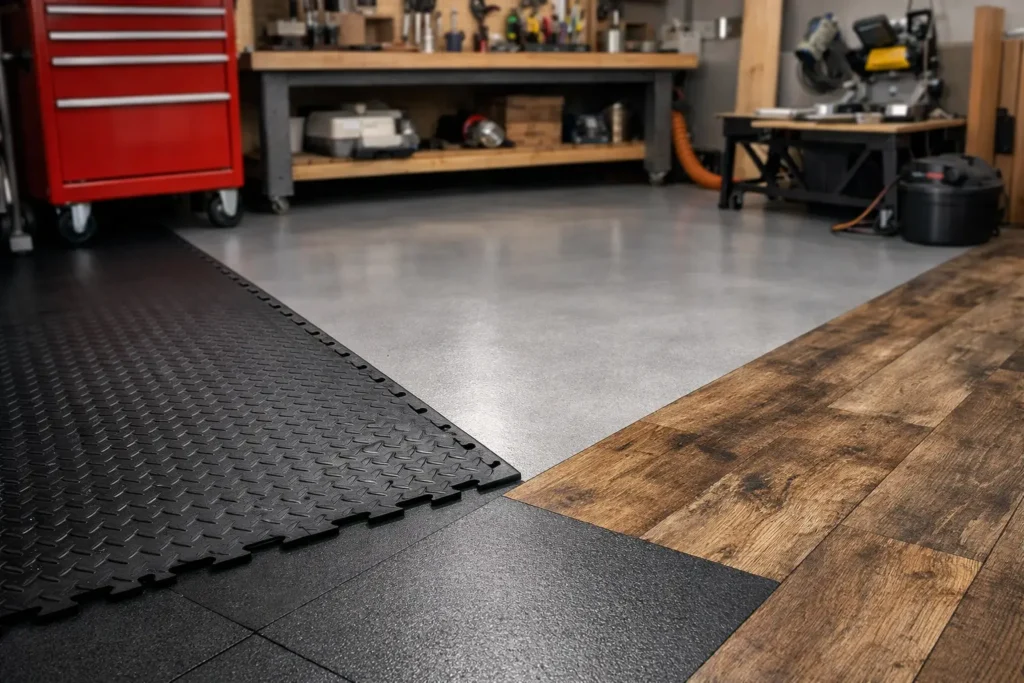
A workshop floor has to cope with more than footfall. It sees dropped tools, wheeled equipment, oil marks, hot tyres, dust, moisture and the occasional ambitious project that gets messier than planned. The best flooring for workshops is not simply the hardest surface available. It is the one that suits how the space is genuinely used, while making it a more practical and considered place to work.
For a home workshop, garage conversion or commercial fabrication space, flooring can set the whole tone. A well-finished floor makes the room feel brighter, cleaner and more purposeful. More importantly, it protects the substrate beneath and makes everyday maintenance far less demanding.
What the best flooring for workshops needs to handle
Before choosing a finish, consider the pressures your floor will face. A joiner’s workshop has different needs from a vehicle bay, a ceramics studio or a light assembly area. The right answer depends on the machinery, materials, traffic and cleaning routine involved.
Most workshops benefit from a floor that is resistant to abrasion, impact, staining and common chemicals. It should also be easy to sweep and mop, rather than allowing dust and debris to settle into joints or a rough concrete surface. Where vehicles, lifting equipment or rolling tool chests are involved, the floor needs enough strength to withstand concentrated loads without chipping or delaminating.
Safety deserves equal attention. A glossy finish may look striking, but a workshop where water, oil or sawdust are regular visitors may need a specified slip-resistant texture. The goal is not a harsh, industrial-looking surface by default. It is a finish designed around the risks and rhythm of the room.
Concrete: practical, but rarely complete
Bare concrete is the starting point in many workshops. It is strong, familiar and initially inexpensive, but it is also porous. Oil, paint and chemicals can penetrate the surface, while dusting concrete can make an otherwise tidy workspace feel permanently grimy.
Polishing or densifying concrete can improve its appearance and reduce dust, especially in a low-to-medium-use studio. It retains an honest, utilitarian character and can work well where a raw architectural look is part of the design brief. However, it does not offer the same level of chemical resistance or stain protection as a professionally installed coating system.
Concrete also moves and can crack over time. Any workshop flooring specification should acknowledge existing cracks, joints and moisture conditions rather than concealing them with a finish that is not suited to the substrate.
Resin flooring: a refined heavy-duty option
For many workshops, resin flooring offers the most balanced combination of performance and visual impact. Applied over a prepared concrete base, an epoxy resin system creates a continuous protective layer with no grout lines to collect dirt, swarf or spilled fluids.
Epoxy is particularly well suited to workshops that need strong resistance to oil, grease, fuel, paint and regular abrasion. It can be specified in a wide range of colours, from clean neutral greys to deeper tones that complement a brand identity or interior scheme. Decorative flake finishes can add texture and visual depth, while helping disguise the day-to-day marks that are inevitable in a working space.
A resin floor is not a one-size-fits-all product. The quality of preparation is fundamental. The concrete must be assessed for soundness, contamination and moisture before installation, then mechanically prepared to give the coating the right profile to bond. This is where a professionally designed system earns its value: the finish is only as reliable as the groundwork beneath it.
For areas exposed to direct sunlight, fluctuating temperatures or more movement in the substrate, a polyurethane resin may be preferable. It offers greater flexibility and better resistance to UV-related colour change than standard epoxy. This can be a thoughtful choice for workshops with large glazed doors, mixed indoor-outdoor use or demanding thermal conditions.
The case for a slip-resistant resin finish
A workshop floor should not force a choice between design and grip. Fine aggregate can be incorporated into resin to create a measured slip-resistant surface, tailored to the conditions rather than made aggressively rough.
There is a trade-off. The more textured the finish, the more effort it can take to mop thoroughly. For a clean, dry hobby workshop, a lightly textured or smooth satin finish may be appropriate. For vehicle maintenance, wet processes or commercial settings, increased traction is often the wiser specification.
Interlocking tiles: quick and adaptable
Interlocking PVC tiles are a popular option where speed of installation matters or access to the concrete substrate may be needed later. They can be laid over an existing floor with relatively little disruption and individual tiles can be replaced if badly damaged.
They are useful in garages and lighter-duty workshops, particularly where the floor is uneven or the project needs a lower initial outlay. Their visual pattern can also introduce a clean, orderly look without the curing time associated with resin.
The compromise lies in the joints. They can trap fine debris and allow liquids to find their way below, especially if the workshop sees frequent spills. Heavy wheeled loads, hot tyres and continual turning can also test the long-term appearance of some tile systems. They are practical, but they do not create the tailored, monolithic finish of a coated resin floor.
Porcelain tiles and other hard surfaces
Porcelain is durable, stain resistant and available in convincing concrete-effect designs. It may suit a design-led studio, garden workshop or customer-facing maker’s space where the floor is expected to feel more like part of the interior than a purely industrial surface.
Yet workshops are unforgiving places for joints. Grout lines require cleaning, can discolour and are vulnerable to impact from dropped tools. A chipped tile can be replaced, but the repair is rarely as discreet as a well-maintained resin coating. Tiles can also feel cold and hard underfoot during long sessions at a bench.
Rubber flooring provides more comfort and sound absorption, but it is generally better reserved for light-duty areas. It can be marked by oils, solvents, sparks and heavy machinery, so it is not normally the first choice for demanding mechanical or fabrication work.
Choosing by workshop type
A hobby workshop used for woodworking, repairs and weekend projects often benefits from a mid-grey epoxy or decorative flake resin. Grey tones are forgiving of dust, while a lightly textured finish gives practical grip without making cleaning difficult.
A vehicle workshop or garage needs stronger chemical resistance and a more deliberate anti-slip specification. Consider the turning forces from tyres, the weight of jacks and axle stands, and the likelihood of fuel, brake fluid or oil spills. A high-build resin system, correctly prepared and installed, gives the space a professional finish that is ready for serious use.
For a creative studio, design workshop or client-facing space, the floor can carry more of the visual story. Concrete-effect resin, subtle metallic movement or a refined terrazzo-inspired overlay can make a functional environment feel intentional and distinctive. The specification still needs to suit wear and cleaning, but there is room for artistry alongside performance.
Commercial workshops should also consider downtime. A fast-curing system may be valuable where operations cannot pause for long, while phased installation can reduce disruption in larger spaces. The cheapest option can become expensive if it fails early or requires the workshop to close for remedial works.
Do not overlook preparation and maintenance
Even the best flooring choice can disappoint when the base is poorly prepared. Moisture rising through concrete, old paint, laitance, weak screed and oil contamination can all affect adhesion. A proper site assessment identifies these issues before a finish is selected, rather than after it begins to fail.
Once installed, a resin workshop floor is straightforward to care for. Regular sweeping removes abrasive grit, prompt cleaning limits staining, and a pH-neutral cleaner helps maintain the appearance of the surface. Avoid dragging sharp-edged machinery across it, and use protective pads beneath static equipment where appropriate.
The strongest workshop floors are designed with the whole space in mind: how it works, how it looks and how it will age. At Resinize, that means treating a hard-working surface as an opportunity to craft a cleaner, more considered environment – one that supports the work while bringing lasting character to the room.
A workshop should feel ready before the first tool is lifted. Choose a floor that can take the impact, simplify the clean-up and make the space a pleasure to return to.