
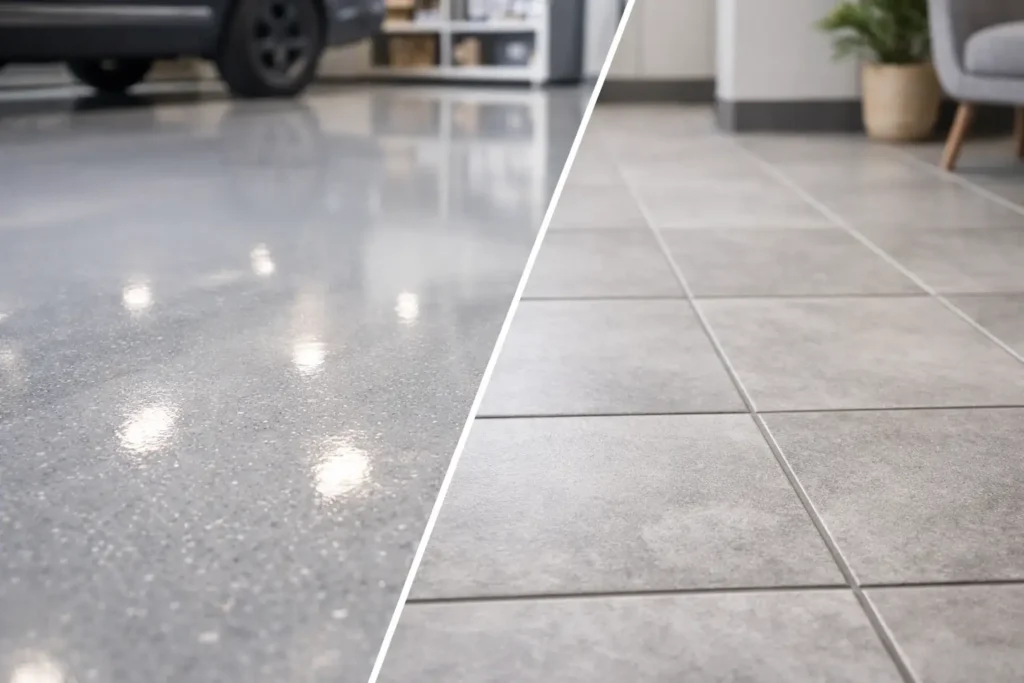
A floor can either quietly support a room or define it. In a light-filled kitchen, a welcoming hallway or a customer-facing retail space, the choice between epoxy floor vs tiles changes far more than the cleaning routine. It affects the sense of scale, the flow between rooms, the way light moves across the surface and how confidently the space stands up to everyday life.
Tiles remain a familiar and well-loved choice, offering pattern, texture and a huge range of price points. Epoxy, meanwhile, brings a more contemporary proposition: a continuous, design-led surface with no grout lines to interrupt the finish. Neither is automatically right for every project. The best choice depends on the room, the existing substrate, the desired visual character and how the surface will be used.
Epoxy Floor vs Tiles: The Design Difference
The most immediate distinction is visual. A tiled floor is made from individual pieces, so the grid is part of the design. This can be wonderfully effective when a space calls for rhythm, heritage character or a decorative pattern. From handmade-looking ceramics to bold encaustic-style motifs, tiles can introduce detail and contrast with confidence.
An epoxy floor creates a single, uninterrupted plane. That continuous finish can make compact kitchens, bathrooms and hallways feel broader and calmer, especially when carried from one area into the next. There are no grout lines slicing through the room, which gives cabinetry, furniture and architectural details more room to breathe.
For clients looking beyond a flat block colour, decorative resin opens further possibilities. Terrazzo-inspired blends can introduce depth and aggregate-like detail without the joins associated with traditional tiled layouts. Metallic epoxy can create movement and a more expressive, artistic finish. Concrete-effect resin offers a softened industrial aesthetic, while carefully selected colours can complement everything from warm timber joinery to crisp contemporary interiors.
Tiles make the pattern. Resin lets the whole floor become the statement.
Cleaning and Everyday Maintenance
Grout is often the deciding factor in kitchens, utility rooms and busy entrances. Even when sealed, grout can gradually collect dirt, cooking residue and moisture marks. Pale grout in particular can become a maintenance commitment, particularly in homes with children, pets or muddy shoes arriving from the garden.
A professionally installed epoxy floor is seamless and non-porous, making routine care straightforward. Regular sweeping and mopping with appropriate, non-abrasive products are usually enough to keep the surface looking sharp. With no grout channels, there are fewer places for dust and spills to settle.
That does not mean epoxy is entirely maintenance-free. Like any premium finish, it benefits from sensible care. Grit should be removed rather than dragged across the floor, harsh chemicals should be avoided unless the system is specified for them, and protective pads beneath heavy furniture remain a good idea. In commercial settings, the cleaning regime should match the resin specification and the level of traffic.
Tiles are also practical to clean, particularly larger-format porcelain with narrow grout lines. The difference is that cleaning tiles involves caring for two materials: the tile face and the grout between each one. With epoxy, the surface behaves as one.
Durability Depends on the Room
Both options can perform exceptionally well, but their strengths are slightly different.
Porcelain tiles are highly resistant to wear, moisture and heat. They are an established solution for bathrooms, kitchens and entranceways, and a good-quality porcelain can look excellent for many years. However, tiles are hard and brittle by nature. A dropped cast-iron pan, heavy tool or sharp impact may chip or crack an individual tile. When this happens, a replacement can be possible, but matching an older batch exactly is not always simple.
Epoxy resin is valued for its tough, bonded finish. The right system can cope with demanding domestic use and, when properly specified, the heavier pressures found in garages, warehouses, retail units and commercial kitchens. It resists many stains and can be tailored with anti-slip properties where water, oils or regular footfall make traction a priority.
The key phrase is properly specified. A decorative living-space floor does not need the same build-up as a workshop floor subject to vehicle movement, and a wet room needs different slip-resistance considerations from a private study. Resin is not a one-product answer. Its performance comes from matching the preparation, primer, resin system and topcoat to the environment.
Installation: Preparation Shapes the Result
Tiles can be laid over a sound, level substrate, but the work still demands precision. The floor needs to be flat enough to prevent lipping, adhesive needs appropriate coverage, and the layout must account for cuts, movement joints and sight lines. Large-format tiles can make a room feel refined, yet they are less forgiving of uneven subfloors.
Epoxy installation is equally dependent on what lies beneath. Resin does not hide a weak or damp floor. The substrate must be assessed, prepared and, where required, repaired before application. Mechanical preparation is often essential to create the correct surface profile and ensure the coating bonds properly. Cracks, moisture levels, previous coatings and changes in level should all be considered before a finish is chosen.
This is one reason bespoke resin flooring should not be treated as a simple paint job. The final surface may appear effortless, but that appearance is built through careful groundwork, controlled application and attention to curing conditions. A beautifully poured floor starts long before the resin is mixed.
Installation timing also varies by project. Tiling may allow phased work but includes adhesive and grout curing periods. Resin systems are applied in layers and need time between coats, as well as a full cure before the floor receives normal traffic. Programme decisions should be made around the wider renovation schedule, particularly where fitted kitchens, sanitaryware or commercial operations are involved.
Comfort, Acoustics and Practical Feel
Neither tile nor epoxy is naturally warm underfoot in the way timber or carpet can be. Both work well with underfloor heating, provided the system and substrate are correctly prepared. In fact, their ability to conduct heat can make them a strong match for heated floors in kitchens and open-plan living spaces.
Tiles can feel very hard, and their joints may be noticeable underfoot in bare-foot areas. Epoxy has a smooth, monolithic feel that many homeowners prefer, particularly in modern interiors where visual calm is part of the brief. The difference is subtle, but it contributes to the overall experience of the room.
Acoustically, hard surfaces will always reflect more sound than carpet. Rugs, curtains, upholstered furniture and thoughtful room styling can soften this. The lack of grout lines in resin may make the space feel visually quieter, but it will not replace acoustic design where noise control is a priority.
What About Repairs and Longevity?
A damaged tile can often be removed and replaced locally, which is one of its practical advantages. Keeping a few spare tiles from the same batch is wise, especially for distinctive colours or patterns. The drawback is that repairs can disrupt surrounding grout and may still be visible over time.
Epoxy can be repaired, but achieving an invisible repair is more complex on decorative or metallic finishes. A plain colour may be easier to blend than a surface with movement, flakes or bespoke tonal variation. In some cases, recoating a larger area produces the most consistent result.
Longevity for either floor is closely linked to quality of installation. Poorly bonded tiles, inadequate movement joints or badly prepared resin will eventually reveal the shortcuts taken beneath the surface. Choosing on initial material cost alone can be expensive when the floor is the foundation of the whole room.
Cost: Compare the Finished Floor, Not Just the Product
There is no honest single price for either option. Tiles range from economical ceramic choices to premium porcelain and hand-finished products. Costs rise with tile size, pattern complexity, substrate levelling, labour and the detail required around thresholds, corners and fixtures.
Epoxy flooring is similarly shaped by the brief. A simple, single-colour coating over a well-prepared floor is very different from a terrazzo-inspired overlay or a multi-layer metallic statement finish. Preparation, moisture management, access, area size and the desired level of slip resistance all influence the final figure.
For a premium project, compare the complete installed surface rather than the price of a tile box against a resin tin. Include preparation, installation, maintenance expectations, expected wear and the visual value the finish brings to the property or business. A seamless floor can become a defining part of the interior, not merely a practical background.
When Tiles Are the Better Choice
Tiles may be the right fit where you want a pronounced pattern, traditional character or the reassurance of replacing an individual damaged section. They also suit projects where the existing finish must coordinate with period features, decorative wall tiles or a very specific ceramic look.
They can be especially effective in smaller areas where the grid becomes an intentional design detail rather than a visual interruption. A carefully chosen tile can bring personality to a cloakroom, porch or fireplace area with a character that resin is not trying to imitate.
When Epoxy Is the Better Choice
Epoxy is particularly compelling when continuity is central to the design. It suits open-plan kitchens, contemporary hallways, bathrooms, garden rooms and commercial interiors that benefit from a clean, uninterrupted aesthetic. It is also a strong option for garages, workshops and retail spaces where durability needs to work alongside a more considered brand environment.
For homeowners and business owners in Essex and London, a bespoke resin finish offers an opportunity to move beyond standard flooring categories. Resinize approaches each project as a surface design exercise as well as a technical installation, balancing the atmosphere you want to create with the demands the floor will face.
The most successful choice is the one that makes sense underfoot and feels right in the room. Start with how you live or work in the space, then choose the finish that gives those everyday moments the setting they deserve.