
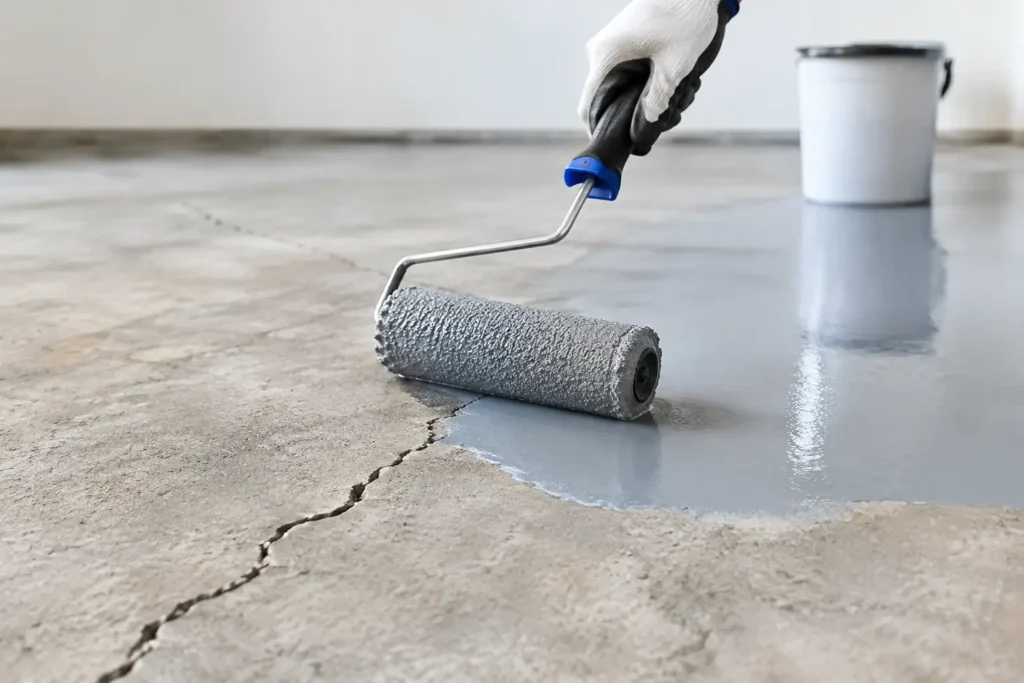
A flawless resin floor can make a room feel calmer, larger and more considered. But if the concrete beneath it is cracked, the question is not simply whether can epoxy cover cracks. It is whether the crack is stable enough to be repaired and concealed without returning through the new finish.
Epoxy can cover many cracks successfully, particularly fine, dormant cracks in sound concrete. What it cannot do is stop a moving substrate from moving. Resin is exceptionally durable, but it is not a structural repair for a slab that is settling, flexing or affected by moisture. The quality of the finished surface depends on identifying that distinction before any decorative coating is poured.
Can epoxy cover cracks in concrete floors?
Yes, epoxy can cover cracks when the underlying concrete is dry, stable and properly prepared. In a domestic kitchen, hallway, garage or commercial unit, minor surface cracking is common and does not automatically rule out a seamless resin finish. A professional installer can open out the crack, remove weak material, fill it with an appropriate repair compound, then grind and level the area before applying the resin system.
Once the floor is prepared correctly, an epoxy or resin overlay can create a continuous, design-led surface with no grout lines to interrupt the space. This is one reason resin works so beautifully over existing concrete. Rather than treating every small imperfection as a reason to start again, the right preparation turns a tired base into a dependable canvas for a new finish.
The word to focus on is stable. If a crack has formed once and is no longer moving, it can often be repaired. If it is still widening, lifting at one edge or appearing alongside signs of settlement, applying epoxy directly over it may only disguise the issue temporarily.
Not all cracks mean the same thing
Concrete cracks for many reasons. Some are cosmetic, caused by normal shrinkage as concrete cures. Others result from movement, poor subfloor construction, loading, changes in temperature or water ingress. They may look similar at first glance, yet require very different responses.
Fine, dormant shrinkage cracks
Hairline cracks are often the most straightforward to treat. They are usually shallow and stable, especially in older concrete that has had time to settle. After mechanical preparation, these can be filled and smoothed as part of the levelling process. A suitably specified resin coating can then provide an elegant, unified finish across the floor.
Wider cracks and broken edges
A wider crack may need more substantial preparation. The crack is typically chased out to create a clean, sound channel, vacuumed thoroughly and filled with a rigid repair resin or mortar. If surrounding concrete is crumbling, it must be removed back to solid material rather than coated over. Skipping this stage risks a weak patch beneath an otherwise premium finish.
Movement cracks and expansion joints
This is where expectations need to be realistic. Expansion and movement joints are deliberately built into concrete to allow it to move. They should not simply be filled with rigid epoxy and forgotten. Depending on the system and setting, the joint may need to be retained, recreated through the finished coating, or treated with a flexible joint solution.
A continuous floor is visually powerful, but performance comes first. In larger commercial spaces, garages and warehouses in particular, honouring necessary movement joints is part of responsible specification. A discreet joint is preferable to a crack travelling through a new surface.
Cracks caused by structural movement
If there is evidence of ongoing settlement, pronounced lipping between either side of the crack, recurring cracks, or concerns about the building structure, resin installation should pause until the cause has been assessed. Epoxy is a surface system, not a substitute for structural investigation. Covering a live problem may make it less visible for a while, but it does not resolve it.
Why preparation matters more than the coating itself
The final resin layer is the part everyone sees, whether it is a terrazzo-inspired overlay, a quiet concrete-effect finish or a dramatic metallic floor. Yet the less glamorous preparation stage determines whether that surface performs as intended.
Professional preparation usually begins with a survey of the substrate. This considers the age and condition of the concrete, the type and pattern of cracking, levels, previous coatings, contamination and moisture. Oil, old adhesive, dust and weak laitance can all interfere with adhesion. In garages and working environments, this assessment is particularly valuable because years of use can leave more beneath the surface than is immediately visible.
Mechanical grinding is then used to create a clean, keyed base. Cracks and local damage are repaired with materials suited to the movement and depth involved, while low areas may be levelled to avoid visible hollows in a seamless finish. The surface is vacuumed meticulously before primers and resin layers are applied.
This careful sequence is not overengineering. Resin is unforgiving of shortcuts because it follows the form of the substrate beneath it. A decorative coating can elevate a space, but it cannot make a poorly prepared floor disappear.
Moisture can be as significant as cracking
A crack may also be a route for moisture. If water vapour is rising through a concrete slab, it can compromise the bond between the substrate and the resin system. Signs may include damp patches, efflorescence, blistering in old coatings or a floor that has no effective damp-proof membrane.
Moisture testing is especially relevant for ground-floor rooms, outbuildings, older properties and spaces being converted from another use. Where readings indicate a concern, a compatible moisture barrier or alternative preparation approach may be required. The right solution depends on the slab and the proposed finish, which is why a site-specific recommendation is more valuable than a one-size-fits-all promise.
Will repaired cracks show through epoxy?
They can, if the repair is rushed or the floor moves after installation. With a stable crack, suitable filler, thorough sanding or grinding, and a well-built resin system, the repair can often be made visually unobtrusive. In many projects, it disappears into the wider finish entirely.
That said, a highly reflective or lightly coloured floor can reveal more of the substrate’s character than a textured or decorative system. A concrete-effect resin might intentionally retain soft tonal variation, while a terrazzo-inspired finish can bring visual depth that makes minor background variations less noticeable. This is where material selection becomes part of the design conversation, not merely a technical decision.
For spaces where a perfectly uniform appearance is essential, the preparation specification may need to be more comprehensive. That can involve additional smoothing layers, more extensive levelling or a build-up designed to provide greater visual consistency. It may add time and cost, but it protects the quality of the finished environment.
Choosing the right resin approach for the space
There is no single answer to crack repair because the demands of a bathroom differ from those of a warehouse. A residential feature floor may prioritise a refined, tactile appearance and easy everyday cleaning. A commercial floor may need to accommodate heavier traffic, point loads, chemical exposure or frequent wheeled equipment.
The resin system should be selected around those realities. Decorative epoxy can be ideal for creating depth, colour and impact in interior spaces. Heavy-duty industrial coatings may require different primers, repair mortars and protective topcoats. In wet rooms, the finish also needs to work with waterproofing and slip-resistance requirements. The strongest result comes from treating the floor as a complete system rather than choosing a topcoat in isolation.
At Resinize, this means looking beyond the crack itself: how the room is used, what atmosphere it should create, how much natural light it receives and what finish will remain beautiful under real daily wear. A seamless surface should feel effortless once complete, but that effect is crafted through considered technical decisions.
When epoxy is not the right answer
Epoxy may not be appropriate when cracks indicate unresolved structural movement, when the substrate is heavily contaminated or saturated with moisture, or when the existing base is too weak to support a bonded coating. In some cases, local repairs and a resin overlay are entirely viable. In others, more substantial remedial work, a new screed or a different flooring solution is the wiser investment.
This is not a limitation of resin. It is the difference between a finish applied for appearance and a surface designed to last. Honest assessment protects both the visual result and the value of the project.
A crack-free-looking floor is possible in many properties, but the best resin surfaces do not rely on concealment alone. They begin with a stable foundation, thoughtful preparation and a finish chosen to suit the life that will happen on top of it.