
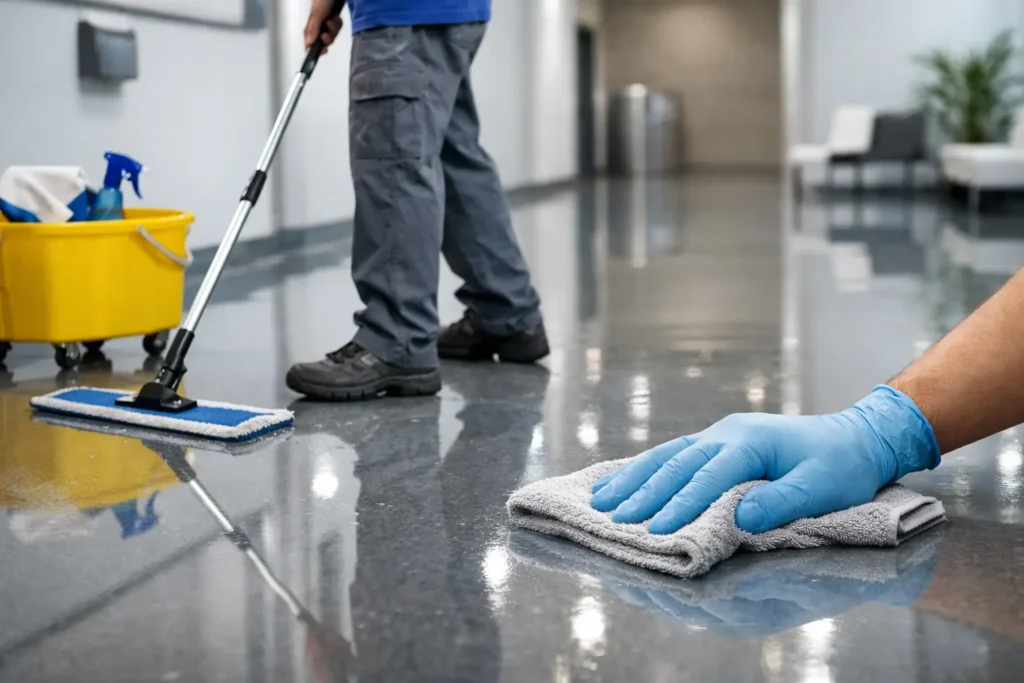
A seamless epoxy floor changes the character of a room before a single piece of furniture is added. Its continuous surface catches the light, amplifies colour and gives kitchens, garages, retail spaces and hallways a considered, finished feel. Knowing how to maintain epoxy floors means protecting that visual impact as well as the coating beneath it.
The good news is that epoxy is designed to be low-maintenance. It does not have grout lines to scrub or joins that collect dirt, and a professionally installed system is built to cope with daily life. The right care is less about intensive cleaning and more about choosing gentle products, acting quickly when spills happen and preventing unnecessary abrasion.
Start with dirt control, not deep cleaning
Most loss of sheen comes from dry grit being walked or dragged across the surface. Fine particles from shoes, pets, prams, trolleys and garden paths can act like very mild sandpaper over time, particularly in busy entrances, workshops and commercial settings.
A soft broom, microfibre dust mop or vacuum with a hard-floor setting is usually enough to remove loose debris. In a quiet residential room, this may only be needed once or twice a week. A garage, shop floor or warehouse entrance may need attention daily, especially during wet weather when grit is carried inside more readily.
Place quality entrance mats both outside and inside external doors where practical. Choose mats that stay flat and do not have an aggressive rubber backing that could trap moisture against the floor. This small detail reduces cleaning time and helps a decorative epoxy finish retain its clarity.
How to maintain epoxy floors with routine washing
For routine washing, use warm water and a pH-neutral cleaner suitable for resin surfaces. Apply it with a clean microfibre mop or a soft mop head, then rinse the mop regularly rather than moving dirty water around the room. The goal is to lift residue without leaving a film behind.
Avoid soaking the floor. Epoxy itself is seamless and non-porous, but excess water is unnecessary and can make the surface slippery while it is being cleaned. A lightly damp mop is generally more effective than a heavily saturated one.
How often you wash depends on the setting. A beautifully finished kitchen or hallway may need a proper mop every one to two weeks, with spot cleaning in between. A busy salon, retail unit or food preparation area will need a more structured cleaning schedule based on footfall, spill risk and hygiene requirements.
If the floor begins to look slightly hazy after cleaning, the culprit is often detergent residue rather than damage. Mop again with clean water, change the water frequently and allow the surface to dry fully. It is a simple correction that can bring back the clean, even appearance people expect from a resin floor.
Choose cleaners with care
Not every household cleaner is kind to an epoxy coating. Strongly acidic or alkaline products, bleach-heavy cleaners, caustic degreasers and solvent-based liquids can dull the finish or affect the protective topcoat if used repeatedly. Abrasive cream cleaners and scouring pads should also stay off the floor.
For ordinary marks, start with the mildest option: warm water and a pH-neutral cleaner. For a more stubborn greasy patch, use a diluted gentle degreaser approved for epoxy surfaces, following the product instructions carefully. Test any unfamiliar cleaner in a discreet area first, particularly on metallic, terrazzo-inspired or highly decorative finishes where light reflection is part of the design.
Do not assume that a product labelled “multi-purpose” is automatically appropriate. A cleaner may work well on tiles and still leave an unwanted residue or cause gradual wear on resin.
Treat spills early, especially oils and colourants
Epoxy floors are valued for their resistance to spills, but resistance is not an invitation to leave liquids sitting for hours. Wipe up wine, cooking oils, sauces, coffee, pet accidents, beauty products and vehicle fluids promptly using a soft cloth or paper towel. Follow with a damp microfibre cloth if needed.
In garages and workshops, petrol, brake fluid, oils and strong chemicals deserve quicker attention. Some substances can soften or stain a coating if left in contact for an extended period, particularly if the floor is warm. Use an absorbent material first, then clean the area with a suitable neutral cleaner rather than scrubbing aggressively.
Dark rubber marks from tyres, shoes or equipment wheels can occasionally appear on pale or glossy floors. They are often surface transfer rather than a fault in the resin. A soft cloth and an approved cleaner will usually lift them. Repeated tyre parking in one spot may call for protective parking mats, particularly in a garage that sees frequent vehicle movement.
Protect the finish from furniture and equipment
Epoxy has excellent strength, but it is not indestructible. A dining chair moved back and forth in the same position, a metal stool leg or a heavy cabinet dragged across the room can scratch any decorative floor finish.
Fit felt pads or soft protective feet to chairs, tables and movable furniture, and inspect them occasionally. Once pads collect grit, they can cause the very marks they were meant to prevent. When moving bulky items, lift where possible or use clean furniture sliders designed for hard floors.
For commercial spaces, consider how wheeled loads travel through the room. Soft, non-marking castors are kinder to the surface than hard plastic wheels, and loading routes can benefit from protective measures where stock, machinery or display units are moved regularly. In heavy-duty environments, the correct resin system and topcoat specification matter just as much as the cleaning regime.
Let the floor cure before asking too much of it
The first stage of maintenance begins immediately after installation. Resin floors may feel dry to the touch before they have reached full chemical cure. The exact timeframe depends on the system, site temperature and coating build-up, so always follow the installer’s guidance before replacing heavy furniture, introducing vehicles or washing the floor.
Rushing this stage can leave pressure marks or compromise an otherwise flawless finish. This is particularly relevant in newly refurbished homes, where decorators, joiners and delivery teams may still be moving through the space. Protect the floor with breathable covering only if advised by the installer. Avoid taping materials directly to a new resin surface.
Know when a mark needs professional attention
Small scuffs and light surface marks are part of life in an actively used space, and many can be reduced through careful cleaning. Deep scratches, chips, widespread dull patches or areas where the coating appears to be lifting should be assessed professionally rather than disguised with household treatments.
A resin specialist can establish whether the issue is limited to the topcoat or affects the coating system below. In some cases, a controlled clean and recoat can refresh the appearance without replacing the entire floor. In others, the answer depends on the original specification, the level of traffic and the cause of the damage.
This is where installation quality pays dividends. A floor specified for a calm residential bathroom has different demands from one designed for a warehouse, a busy retail threshold or a garage with hot tyres and mechanical work. Good maintenance preserves the surface, but the right design and technical preparation make that maintenance straightforward from the outset.
Preserve the character of the surface
A high-gloss metallic epoxy floor will show light, dust and reflections more readily than a muted concrete-effect finish. A terrazzo-inspired resin overlay may disguise everyday debris more effectively, while a pale seamless floor may need more frequent dry mopping simply because marks are easier to see. Neither is better – they create different moods and call for slightly different habits.
That is why care should support the finish you chose rather than fight against it. Keep cleaning products gentle, use mats and furniture protection in high-contact areas, and respond to spills before they become a bigger task. The floor will continue to look intentional rather than merely functional.
At Resinize, we see the best-maintained resin floors as living parts of a space: surfaces that withstand daily use while continuing to carry the artistry, colour and precision that made them worth choosing.