A new seamless floor can completely change the atmosphere of a room, but it is reasonable to ask: does resin smell? During installation and curing, some resin systems do have a noticeable odour. The good news is that this is temporary, manageable, and very different from the smell many people imagine when they think of industrial coatings.
For a resin floor in a kitchen, hallway, bathroom or commercial setting, the quality of the materials, the preparation of the space and the installer’s process all influence how the room feels while work is taking place. A professionally specified resin finish should become a calm, hard-wearing and virtually odour-free part of the interior once fully cured.
Does resin smell once it has cured?
A fully cured resin floor should not give off a persistent smell in normal use. Epoxy and polyurethane resin systems are mixed from separate components, which react and harden to form the finished surface. It is during this mixing, application and initial curing period that an odour may be present.
The character and strength of that odour depend on the product selected. Some systems have a light chemical scent, while others can be more noticeable, particularly in an enclosed room with limited airflow. Decorative metallic finishes, terrazzo-inspired overlays and practical garage coatings may each use different resin specifications, so there is no single answer for every floor.
Once curing is complete and the room has been properly ventilated, the smell should fade away. A resin floor is not designed to leave a lingering chemical presence in a home, retail space or workplace. Its lasting impression should come from the depth of colour, the uninterrupted surface and the way it carries light through a room.
Why resin odour happens during installation
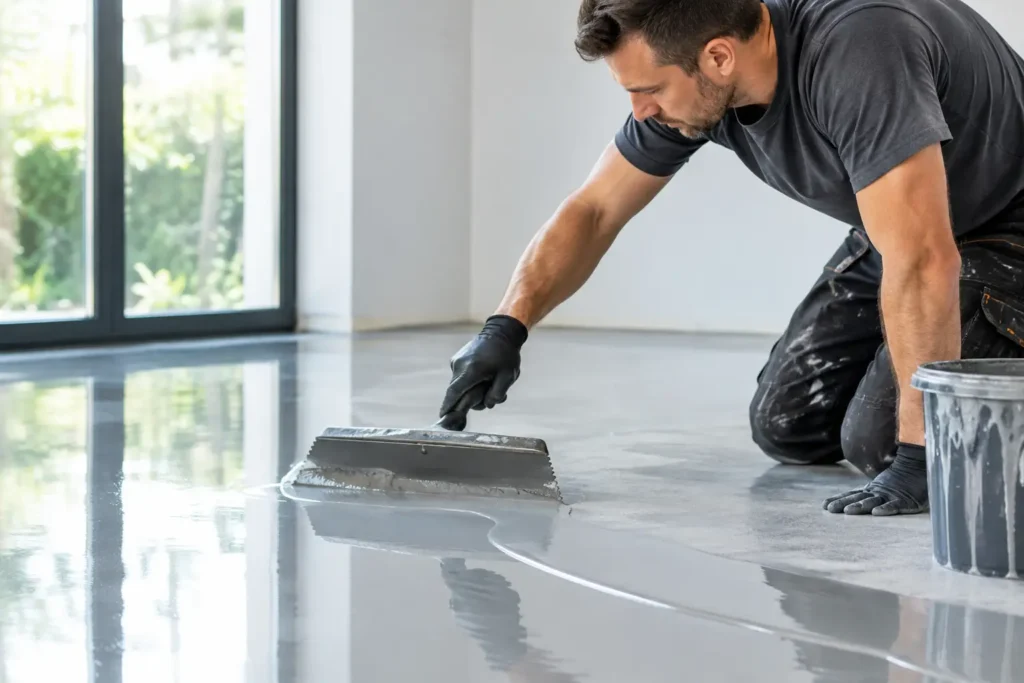
Resin is a reactive material rather than a ready-made solid floor covering. The installer combines components at carefully controlled ratios, then applies the material within a defined working time. As the surface cures, compounds within the system settle and harden.
That process can create an odour, especially in the first hours after application. Temperature, humidity, ventilation and the thickness of the coating all affect cure time. A cool, poorly ventilated space may retain odour longer than a bright, airy room kept at the right temperature.
Preparation work can also contribute. Depending on the existing floor, a project may involve mechanical grinding, local repairs, primers or moisture-control layers before the decorative resin is poured or trowelled into place. These are essential stages in crafting a finish that looks refined and performs properly, but they mean installation is best treated as a planned piece of building work rather than a simple cosmetic update.
The product choice matters
Not all resin systems are alike. Specialist flooring products are selected for their intended environment, whether that is a design-led living space, a busy retail unit, a commercial kitchen or a hard-working warehouse. Lower-odour and lower-VOC options may be appropriate for many residential projects, but the right system must still suit the substrate, expected footfall, cleaning regime and finish required.
A high-gloss metallic floor, for example, needs a system capable of delivering visual movement and depth without compromising durability. A garage floor may prioritise resistance to tyres, tools and oils. The best choice is never simply the product with the quickest cure or the least noticeable initial scent. It is the one that balances appearance, technical performance and the needs of the space.
Ventilation makes a meaningful difference
Good ventilation is the most practical way to manage resin odour during curing. Opening windows where possible, allowing air to move through adjoining spaces and following the installer’s guidance will help the room clear naturally. In a commercial property, installation can sometimes be scheduled outside normal operating hours to reduce disruption.
Ventilation should be sensible rather than excessive. The curing environment needs to remain within the temperature and humidity range recommended for the product. Throwing every window open in the middle of a cold, damp spell may not support the best finish. A professional installer will advise on how to ventilate the room without interfering with the surface as it settles.
How long does resin smell last?
For many projects, the most noticeable smell is limited to the application day and the early stage of curing. It commonly reduces substantially within 24 to 72 hours, although the full curing period can take longer depending on the resin system and site conditions.
This distinction matters. A floor may be safe to walk on before it has achieved its final hardness, and it may feel almost odour-free before it is ready for heavy furniture, wheeled equipment or regular wet cleaning. Your installer should provide clear aftercare guidance covering when to re-enter, when to place furniture back and when the surface can return to full service.
Bathrooms, utility rooms and smaller kitchens can hold smells more readily because they have less air volume and may not have cross-ventilation. Conversely, a larger open-plan space can disperse any temporary odour quickly, provided there is a suitable route for fresh air. Commercial environments vary too: a warehouse with open loading access behaves very differently from a compact salon or enclosed shop unit.
Making installation comfortable at home
If you are planning a resin floor as part of a wider renovation, timing is one of the most useful decisions you can make. It is often easier to install after dusty building work has finished but before final furnishings, appliances and soft textiles are brought back into the room. This gives the floor adequate space to cure and allows ventilation without creating unnecessary inconvenience.
For occupied homes, consider whether children, pets or anyone sensitive to smells would be more comfortable elsewhere during the active installation and initial curing period. This is not about creating alarm. It is simply good project planning, particularly for a kitchen or main living area that the household uses every day.
Keep internal doors closed to rooms that do not need to be accessed, protect nearby belongings as advised, and avoid trying to speed up the process with heaters or fans unless your installer recommends them. Resin rewards patience. Rushing the cure can affect the finish that you have chosen for its precision and visual impact.
When a lingering smell needs attention
A mild scent during curing is expected. A strong odour that continues well beyond the advised curing window is worth raising with the installer. The same applies if a room has not been ventilated as planned, has experienced unusually low temperatures or has a moisture issue in the substrate that may affect the coating system.
Do not cover a newly finished resin floor with rugs, protective sheets or furniture too early in an attempt to hide the smell or get the room back in use. Covering the surface can restrict airflow and may mark a finish that has not reached full cure. The remedy is usually controlled ventilation and time, not masking sprays or aggressive cleaning products.
The installer should be able to explain the material used, the expected cure schedule and the practical steps for your specific room. That reassurance is part of a considered resin project. Bespoke surfaces are not only about selecting a colour, terrazzo blend or metallic movement; they are about understanding how the finish is created and giving it the right conditions to perform beautifully.
A finished resin floor should feel effortless
The temporary scent associated with installation is a short chapter in the life of the surface. Once cured, resin offers the qualities that make it such a compelling architectural finish: no grout lines to interrupt the design, easy day-to-day cleaning, durable performance and an aesthetic that can be quietly minimal or unmistakably expressive.
If odour is a particular concern, raise it at the consultation stage. A sample-led discussion of the room, its ventilation, its use and the finish you want will help shape the right specification from the outset. The most successful resin floor is one that looks extraordinary when complete and has been planned carefully enough that the installation feels considered from first preparation to final cure.