
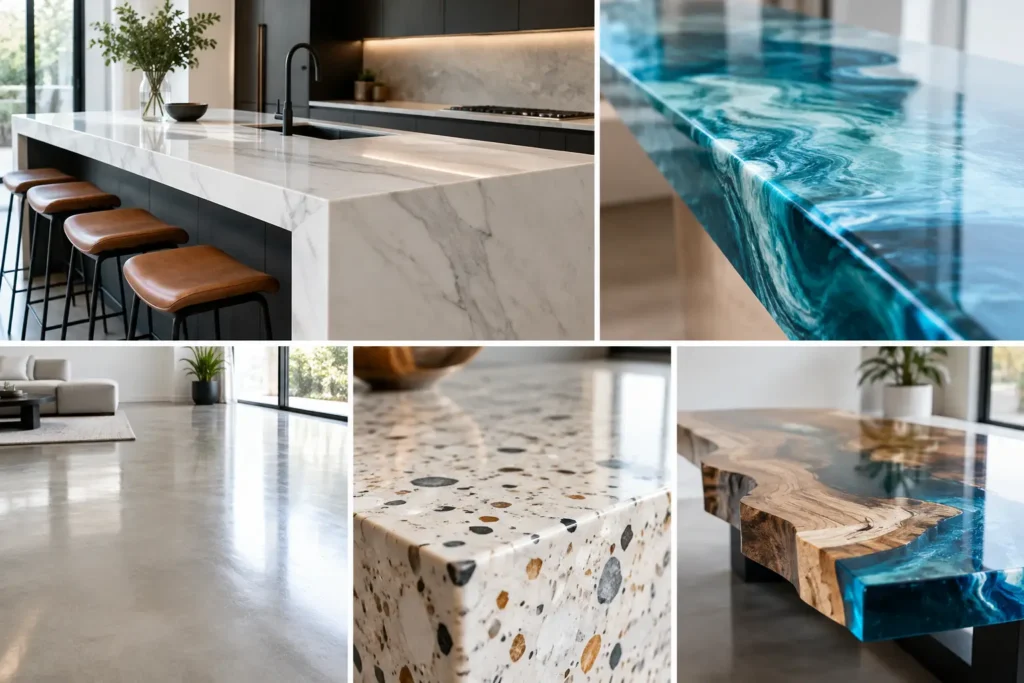
A resin surface should never feel like an afterthought. The most compelling architectural resin surface examples use colour, texture and light to change how a room is experienced, whether that means making a narrow hallway feel calmer, giving a retail unit a stronger identity, or bringing practical durability to a hard-working warehouse. Unlike tiled or plank-based finishes, resin is poured and finished in place, creating a continuous canvas with very few visual interruptions.
That freedom is what makes resin so valuable in design-led projects. It can recede quietly behind beautiful joinery, echo the movement of natural stone, or become the feature that gives an otherwise restrained interior its character. The right choice depends on the setting, the expected traffic, the available light and, crucially, how the space needs to feel.
Architectural resin surface examples for every setting
Terrazzo-inspired overlays for social spaces
Terrazzo-effect resin offers the visual energy of traditional aggregate flooring with a more contemporary, continuous finish. Decorative chips can be selected in anything from soft mineral neutrals to expressive combinations of charcoal, rust, green or brass-toned flecks. Once ground and sealed, the result has depth without the grid of grout lines.
This approach works especially well in open-plan kitchens, entrance halls, cafés and reception areas. In a home, it can connect the kitchen, dining area and garden threshold as one considered surface. In a commercial setting, it brings a sense of permanence and craft to an area that receives constant footfall.
There is a trade-off to consider. A lively chip blend can become the visual centre of a room, so it needs a clear relationship with cabinetry, wall colours and furnishings. For clients who want architectural interest without a busy finish, a quieter palette with smaller aggregate sizes often delivers the better balance.
Metallic resin floors for feature-led interiors
Metallic resin has a fluid, almost geological quality. Pigments move through the material during application, creating shifts of tone that can resemble cloud formations, polished mineral or liquid metal. No two installations are identical, which is precisely the appeal for clients looking for a genuinely bespoke statement.
Deep bronze, smoky graphite and muted pewter suit dramatic lounges, boutique retail spaces, bars and reception zones. Lighter pearl, silver and pale stone shades can create a softer effect in dressing rooms, salons or contemporary bedrooms. The surface responds particularly well to directional lighting, which reveals its movement as people move through the room.
Metallic resin is not usually the answer where a completely uniform appearance is required. Its variation is intentional, and samples should be viewed as a guide rather than a promise of an identical pattern. That individuality makes it an artistic finish, but it also calls for confident design decisions.
Concrete-effect finishes with a warmer edge
Concrete-effect resin delivers the pared-back appeal of cast concrete without the joins, dusting or visual coldness that can accompany some traditional concrete floors. Its softly clouded appearance works naturally with timber, black metal, textured plaster and warm lighting. It is a strong choice for contemporary kitchens, loft-style spaces, home offices and showrooms.
The best concrete-effect surfaces are not flat grey. They hold subtle tonal movement, perhaps with warm taupe, chalk, putty or deeper graphite notes, so the floor feels crafted rather than manufactured. A matt or satin seal can support the understated look while still providing a practical, cleanable finish.
This is often the most versatile option for homeowners who want a calm backdrop for changing furniture and décor. It gives a space visual continuity, allowing architectural details, artwork and carefully chosen materials to take the lead.
Seamless bathroom floors and walls
Bathrooms benefit from surfaces that reduce the number of joints where dirt and moisture can gather. A resin floor paired with complementary resin wall finishes can create a composed, spa-like environment, particularly in walk-in showers and compact en suites where uninterrupted surfaces make the room feel larger.
Colour choices matter here. Soft stone, warm sand and misty grey tones tend to feel restorative, while richer shades can give a cloakroom a more theatrical character. Texture and specification must be considered carefully in wet areas. A beautiful finish still needs appropriate slip resistance, thoughtful falls to drainage and proper preparation beneath the surface.
Resin can provide a refined alternative to tile, but it is not a shortcut around good bathroom construction. The substrate, waterproofing and detailing around drains, thresholds and fixtures all shape the long-term result.
Decorative retail and hospitality floors
For customer-facing spaces, flooring can quietly communicate what a brand values. A seamless resin floor in a tailored colour can carry customers from the door to the counter without competing with product displays. A decorative flake blend can make a salon or independent shop feel energetic and distinctive. A metallic feature area can create a memorable first impression in a hospitality venue.
The practical benefit is just as relevant. Resin floors are straightforward to maintain and can be specified for regular foot traffic, helping busy spaces retain a polished appearance. For retail and hospitality projects, the strongest schemes tend to combine visual ambition with a sensible finish selection: high-gloss may create drama, while satin can be more forgiving of everyday marks and changing light.
Heavy-duty resin in garages, workshops and warehouses
Industrial environments need performance first, but that does not mean accepting an uninspiring floor. Heavy-duty commercial resin systems can create a durable, cohesive working surface for garages, warehouses, workshops and back-of-house areas. They can be designed around operational needs such as vehicle use, impact, abrasion, cleaning routines and resistance to particular spills.
A flake system is a popular choice for garages because it looks crisp, helps disguise everyday dust and offers practical texture. In a warehouse, a single colour can create a clean visual field, with demarcated walkways or work zones included where appropriate. For a client-facing workshop or showroom, that same technical floor can be elevated through a more considered colour palette.
This is where product selection should never be led by appearance alone. Loading conditions, concrete condition, moisture levels and preparation requirements determine what system is suitable. A beautiful floor that has not been specified for its environment is not a premium outcome.
What separates a good resin finish from a great one?
The finish begins below the surface. Resin is only as reliable as the preparation of the substrate beneath it. Cracks, contamination, uneven areas and moisture need to be assessed before installation, not concealed beneath a decorative topcoat. Proper preparation may involve mechanical grinding, repairs, priming and moisture management, depending on the project.
Then comes the design conversation. Samples are invaluable because resin reacts to natural and artificial light, surrounding materials and the scale of the room. A colour that feels elegant in a sample can appear cooler across a large north-facing floor; a subtle metallic movement may feel more pronounced under spotlights. Viewing options alongside cabinet doors, paint colours or key furnishings creates a more confident decision.
Finally, the detailing makes the space feel intentional. Clean edges at skirting lines, considered transitions to adjoining rooms and the right sheen level all influence the finished impression. At Resinize, this combination of technical preparation and material artistry is what turns resin from a coating into an architectural finish.
Choosing the right example for your project
Start with the role the surface must play. A family kitchen needs an adaptable, easy-to-clean finish that still feels special every morning. A bathroom needs moisture-conscious detailing and safe traction. A boutique may need a floor that supports its visual identity without distracting from merchandise. A garage or warehouse needs a system built around the way work is actually done.
It also helps to decide whether the resin should be the hero or the foundation. Metallic finishes, expressive terrazzo blends and bold colours can make a room unforgettable. Concrete-effect resin, quiet terrazzo and neutral seamless coatings create a more restrained architecture that lets the rest of the interior breathe.
The most successful resin surface is not simply the one that photographs well. It is the one that feels right underfoot, performs in daily life and gives the whole space a clearer sense of purpose. Begin with the atmosphere you want to create, then let the material, colour and finish be crafted around it.