
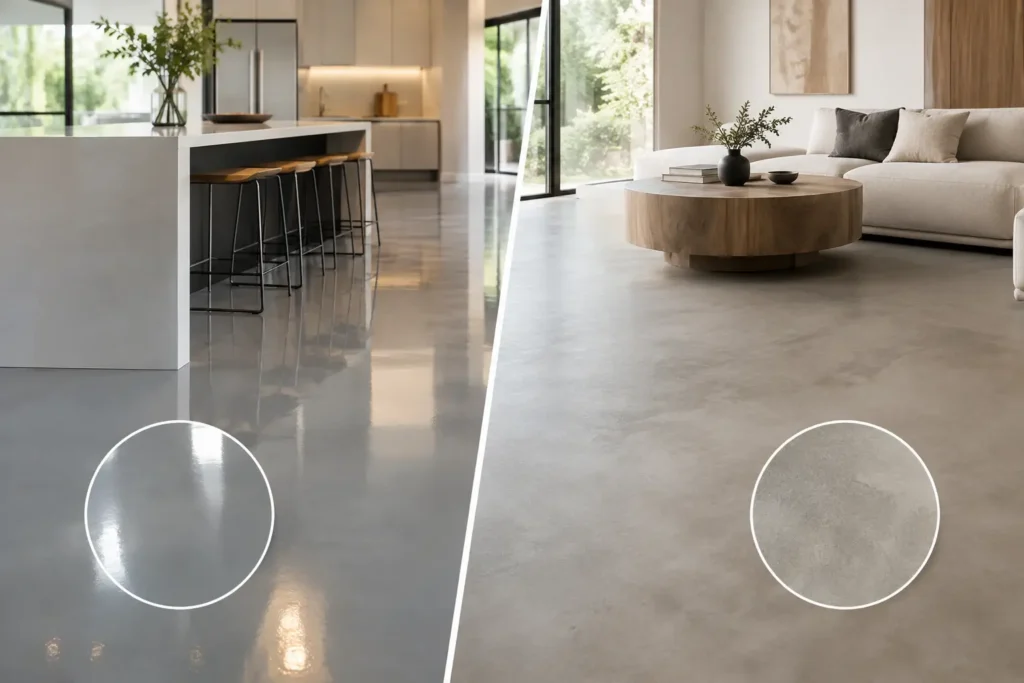
A floor or wall finish can change the entire character of a room before the furniture has even arrived. That is why the choice between epoxy versus microcement is rarely just technical. Both create a contemporary, largely joint-free look, but they deliver it in very different ways – through depth and gloss in one case, and mineral softness and movement in the other.
For a kitchen floor, a boutique retail space, a bathroom wall or a hardworking garage, the right answer depends on how you want the space to feel as much as how it needs to perform. Here is how to make that decision with confidence.
Epoxy versus microcement: the essential difference
Epoxy is a resin-based coating formed when carefully measured components are mixed and applied over a prepared substrate. Once cured, it becomes a hard, continuous surface. It can be high gloss, satin or matt, with a colour range and decorative possibilities that extend far beyond the plain industrial floors many people associate with epoxy.
Microcement is a thin, hand-applied cementitious finish, typically built in several layers with polymers, pigments and protective sealers. Its appeal lies in its lightly clouded, tactile appearance. Trowel marks, tonal variation and subtle movement are part of the design rather than flaws to eliminate.
Neither is inherently better. Epoxy has a more fluid, tailored visual language, from deep single colours and terrazzo-style aggregates to metallic effects. Microcement feels quieter and more architectural, often sitting naturally alongside timber, stone, plaster and matte black details.
Choose the visual mood before the material
The most immediate difference is what each surface does with light.
A decorative epoxy floor can reflect light and give a room a sense of scale. In a dark hallway or a commercial interior that needs presence, this can be transformative. A polished metallic epoxy creates movement beneath the surface, while a terrazzo-inspired resin overlay can introduce aggregate, colour and pattern without the grout lines of traditional tile. Even a restrained, satin resin finish has a crispness that feels considered and contemporary.
Microcement absorbs and diffuses light more softly. It is often selected for calm, pared-back interiors where the goal is a continuous concrete effect rather than a glossy statement. On walls, it can make a shower enclosure, fireplace surround or feature niche feel sculptural. On floors, its gentle tonal shifts can bring character to a minimal scheme.
It is worth being honest about expectation here. Microcement will not look perfectly uniform, because its handmade variation is central to its charm. Epoxy can be highly consistent where a clean colour field is wanted, but decorative resin finishes also carry intentional movement. Samples are essential for both. They allow you to see how colour, texture and sheen respond to the actual light in your room.
Performance under everyday pressure
For demanding floors, epoxy is usually the stronger starting point. Professionally specified and installed resin systems can offer excellent resistance to abrasion, stains and chemical exposure. That makes them particularly suitable for garages, workshops, warehouses, commercial kitchens and retail environments where the floor has to work hard without looking purely utilitarian.
In a home, epoxy is equally compelling in kitchens, hallways, utility rooms and garden rooms. Its continuous finish means there are no grout lines to trap dirt, and the system can be tailored with a slip-resistant texture where needed. The exact finish matters: a mirror-like gloss may be striking, but it is not automatically the right choice for an entrance that sees wet shoes, pets and daily traffic.
Microcement is durable when installed over a stable base and protected with the correct sealer, but it asks more of the substrate and the detailing. It is a thin decorative finish, not a solution for movement, persistent damp or a failing screed. If the background cracks or shifts, the risk of cracking transferring through the microcement increases.
That does not rule it out for floors. It simply means that the preparation, movement joints and protective topcoats must be treated as part of the design. For a quieter residential space with moderate traffic, it can perform beautifully. For a loading bay, busy warehouse or garage where tyres, tools and oils are part of daily life, a heavy-duty epoxy system is generally the more dependable choice.
What about bathrooms and wet areas?
Both materials can work in bathrooms, but neither should be chosen on appearance alone. Microcement is frequently used across walls, floors and shower areas because it creates a cohesive, spa-like finish. Its water resistance relies on precise installation and properly maintained sealing, especially around drains, corners and junctions.
Epoxy can also provide a water-resistant, easy-clean surface and is particularly useful where hygiene and chemical resistance matter. In wet rooms, a suitable slip-resistant specification is vital. A beautiful floor that becomes unsafe when wet is not a successful design decision.
Installation is where the result is won or lost
A seamless finish is only as refined as the work beneath it. Both epoxy and microcement demand careful moisture testing, sound substrate preparation and methodical application. This is not an area for shortcuts.
With epoxy, the existing concrete or screed may need grinding, repair and priming before the resin system is poured or roller-applied. Moisture vapour, contamination and weak areas can compromise adhesion, so the base must be assessed properly. The curing period varies according to the system, temperature and build-up, but access to the area needs to be planned around the installation programme.
Microcement is built through several thin coats, often with reinforcement in key areas, sanding between stages and the application of protective sealers at the end. The process is skilled and expressive, yet it requires control. Inconsistent handwork can look patchy rather than artful; good craftsmanship creates variation with purpose.
For renovation projects, both finishes can sometimes be applied over existing surfaces, helping to avoid the disruption of removing tiles. However, “sometimes” matters. Loose tiles, hollow areas, moisture issues and uneven levels should be resolved first. A site-specific survey is more useful than a blanket promise that any surface can simply be covered.
Cleaning, ageing and repairs
One reason seamless surfaces remain so popular is their straightforward maintenance. Epoxy floors generally need regular sweeping or vacuuming and cleaning with a pH-neutral product. Avoid harsh abrasive cleaners, particularly on decorative or gloss finishes. In commercial settings, the cleaning regime should match the coating specification to protect the appearance over time.
Microcement also benefits from gentle cleaning and avoiding aggressive descalers or bleach-heavy products unless the sealer manufacturer confirms they are suitable. Its protective layer may need refreshing periodically, particularly in wet rooms or high-use areas. This is not a disadvantage so much as a maintenance reality: microcement is a crafted finish whose protection deserves attention.
Repairs look different too. A damaged epoxy area may be repairable, but a local patch can sometimes show depending on colour, age and decorative effect. Microcement repairs can be blended by a skilled applicator, though matching the original trowel movement and patina is never an exact science. Choosing an experienced installer reduces the chance of damage and gives you sensible options if it occurs.
Cost is about specification, not just square metres
Comparing quotes solely by price per square metre can hide the details that decide the quality of the finished surface. The condition of the substrate, edge detailing, room layout, moisture protection, chosen colours, slip resistance and decorative effects all influence the final cost.
A simple epoxy coating for a practical utility area is a different proposition from a bespoke metallic floor with multiple colours and a satin topcoat. Likewise, a small microcement bathroom can involve significant labour because corners, niches, shower falls and waterproofing need patient attention. Small areas are not always simple areas.
The better question is which finish offers the right balance of visual impact, lifespan and upkeep for the particular space. A design-led surface should earn its place every day, not only in the first photograph after completion.
Which finish suits your project?
Choose epoxy when you want a highly durable, easy-clean surface with broad creative freedom in colour, aggregate and sheen. It is especially strong for garages, commercial floors, kitchens, retail spaces and statement interiors where a distinctive resin finish is part of the brief.
Choose microcement when you are drawn to a soft concrete effect, subtle hand-finished variation and a calm, continuous palette. It is well suited to bathrooms, feature walls and residential rooms where a mineral, understated feel is more important than maximum industrial-grade resistance.
There is also room for both within one property. A microcement bathroom may sit beautifully beside a terrazzo-inspired resin kitchen floor, provided the finishes share a considered colour story. The aim is not to follow a trend room by room, but to create surfaces that belong to the architecture and the way you live or work within it.
The most successful choice begins with real samples, an honest assessment of the substrate and a conversation about daily use. At Resinize, that combination of material knowledge and artistry helps turn a practical specification into a surface with genuine presence.