
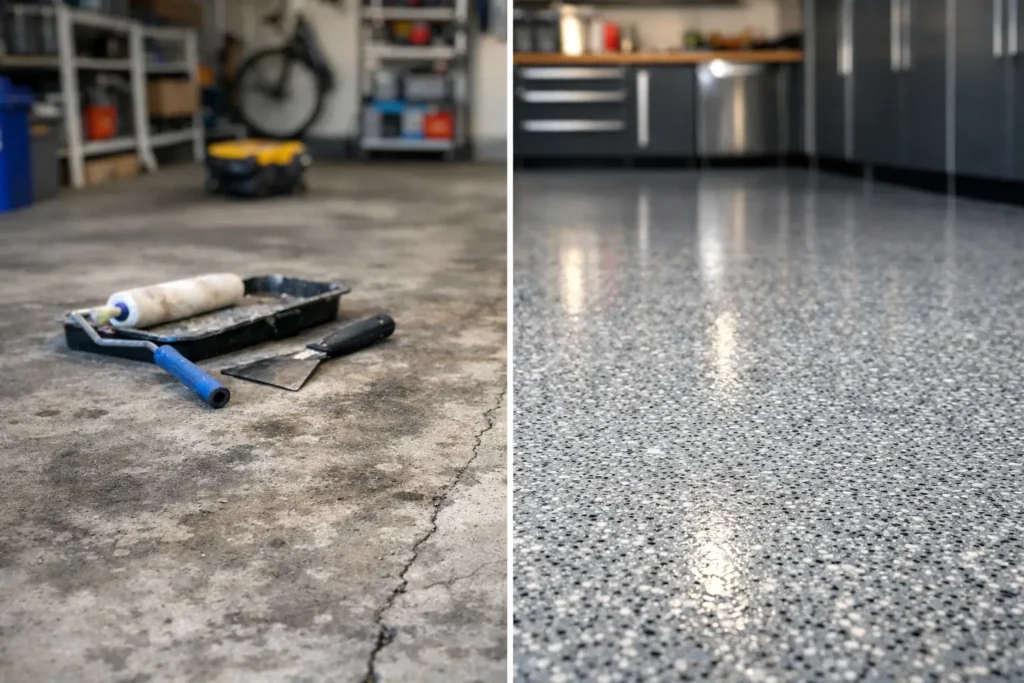
A garage can be one of the hardest-working rooms in a home, yet it is often left with the least considered floor. This Essex garage floor transformation example shows what changes when a stained, dusty concrete base is treated as part of the property’s design rather than an afterthought. The result is not simply a cleaner place to park a car. It is a crisp, purposeful space that feels considered from the moment the door opens.
For homeowners who use a garage for storage, projects, fitness equipment, a prized vehicle or all of the above, the floor has to do more than look sharp. It needs to stand up to tyre marks, dropped tools, damp footwear and the practical mess of everyday life. A professionally installed resin system can bring that performance together with a finish chosen to suit the home.
The starting point: functional, but far from finished
The garage in this example had a typical concrete slab: sound beneath the surface, but marked by years of use. There were old paint traces, ingrained dirt, minor surface imperfections and the familiar patchy appearance that makes a room feel neglected even when it is tidy.
This is a common point of departure in Essex homes. A garage floor may have been poured decades ago, painted as a short-term fix, or simply exposed to continual wear. Bare concrete is naturally porous, so it absorbs spills and dusts at the surface. Standard floor paint can improve the appearance initially, but it may wear through where tyres turn, lift if preparation has been limited, or become difficult to repair without creating visible patches.
The design brief was clear: create a seamless floor with a refined, architectural feel, while retaining the resilience expected of a working garage. Rather than choosing a generic grey coating, the finish was selected to bring depth and character to the room without becoming overly decorative.
Designing the floor around how the garage is used
The best garage floors are not chosen from a photograph alone. The right specification depends on how the space performs day to day. A garage used primarily for a family car has different demands from one used as a workshop, detailing bay or home gym. Moisture conditions, the age of the concrete, existing coatings and the desired level of slip resistance all influence the system beneath the visible finish.
For this project, a mid-to-deep grey resin base offered a confident foundation. Its tone concealed the visual noise that comes with garage life more effectively than a pale finish, while still reflecting enough light to make the room feel brighter and more spacious. A carefully controlled decorative aggregate blend was introduced to add texture and visual movement, giving the surface a terrazzo-inspired quality rather than the flat appearance of a conventional industrial coating.
The final sheen mattered too. High gloss can look dramatic and amplify light, particularly in a display-led garage. It also tends to show dust, tyre marks and footprints more readily. A softer satin finish can feel more understated and forgiving, especially in a space used every day. Neither is automatically better. The choice should reflect the light in the garage, the intended use and the atmosphere the owner wants to create.
Why seamless detailing makes the difference
Tiles may appear to be an obvious upgrade from bare concrete, but grout lines introduce joints that can trap dirt and interrupt the visual flow. They can also become a weak point where a heavy impact occurs. A seamless resin floor creates a continuous field of colour and texture, allowing the garage to read as one cohesive room.
That continuity is particularly effective in garages connected to a utility room, hallway or converted living space. The floor no longer feels detached from the home’s interior character. It becomes part of the wider design story, with a finish that can complement joinery, wall colours and exterior materials.
Preparation is where a lasting transformation begins
A beautiful resin floor is only as dependable as the surface beneath it. The visible coating is the final layer of a carefully managed process, not a cosmetic cover applied over an unknown slab.
In this garage floor transformation, mechanical preparation was used to remove weak material, contamination and remnants of old finishes. This opens the concrete surface so the resin can achieve the required bond. Areas of damage, small cracks and local imperfections were assessed and repaired before the main system was built up.
This stage is not glamorous, but it is central to the final result. Applying resin over dust, poorly bonded paint or moisture-related issues can create problems later, including delamination, pinholes or an uneven appearance. A proper site assessment identifies whether the concrete needs additional repair, a moisture-tolerant primer or a different coating build-up altogether.
There is a practical trade-off here. Fast, low-cost garage coatings often promise a quick visual change, but shortcuts in preparation can compromise their lifespan. A professional installation invests time where it matters most: in creating a stable, clean and properly profiled base for the finish to perform.
Building colour, texture and protection in layers
Once the prepared substrate is ready, the resin system is applied in stages. A primer supports adhesion and helps manage the character of the concrete below. The chosen body coat then establishes the floor’s colour, while decorative elements can be incorporated to achieve a more individual surface.
For a garage, the final protective layer is particularly valuable. It is selected to help the floor resist the routine pressures of vehicle use, cleaning, light chemical exposure and abrasion. Where required, an anti-slip additive can be introduced. This has to be judged carefully: more texture can improve grip, particularly near entrances exposed to rain, but can make a surface slightly less effortless to clean. The right balance depends on whether the garage is a dry vehicle space, a workshop or a frequently wet threshold.
The finished floor in this example had visual depth without excessive sparkle, a subtle tactile quality and a neat edge detail around the perimeter. That restraint is what gives a resin floor its premium quality. The finish feels crafted rather than overworked.
The finished Essex garage floor transformation example
Once complete, the change was immediate. The floor gave the garage a stronger sense of proportion and order, making storage units, tools and vehicles look more intentional against the darker, refined background. Light from the open door travelled across the continuous surface rather than breaking up over patchy concrete and old paint marks.
More importantly, the room became easier to live with. Dust that previously collected from the concrete surface was no longer part of the daily routine. Spills could be dealt with more simply, and the smooth, joint-free finish made sweeping and mopping straightforward. The garage retained its practical role, but it gained the polish of a designed space.
This is where a bespoke resin floor earns its place. It can accommodate the realities of a garage while giving the homeowner greater freedom over colour, aggregate, sheen and overall mood. A deep graphite finish might create a gallery-like setting for a performance car. A lighter concrete-effect resin could suit a multifunctional garage that leads into a contemporary home. A decorative flake system may be the most practical choice for an active family space where visual camouflage matters.
What homeowners should consider before choosing resin
Resin is a strong option for many garages, but the conversation should begin with the condition of the existing floor. Cracks, moisture, oil contamination and previous coatings are all manageable in many cases, yet each affects the preparation and specification required. An honest assessment is more useful than a one-size-fits-all price.
It is also worth considering the garage as part of the home, rather than an isolated utility zone. Will the space remain purely for parking? Is it likely to become a workshop, gym or entertaining area later? Does it connect visually to another room? These questions influence not only the finish but also decisions around slip resistance, edge details and colour.
At Resinize, the approach begins with these practical realities before moving into samples and surface design. That combination of technical judgement and artistry is what allows a floor to feel personal while remaining built for use.
A garage does not need to become precious to look exceptional. With the right resin system, sound preparation and a finish chosen with purpose, it can become one of the most satisfying transformations in the home: a space that works harder, cleans easier and looks considered every time you arrive.